
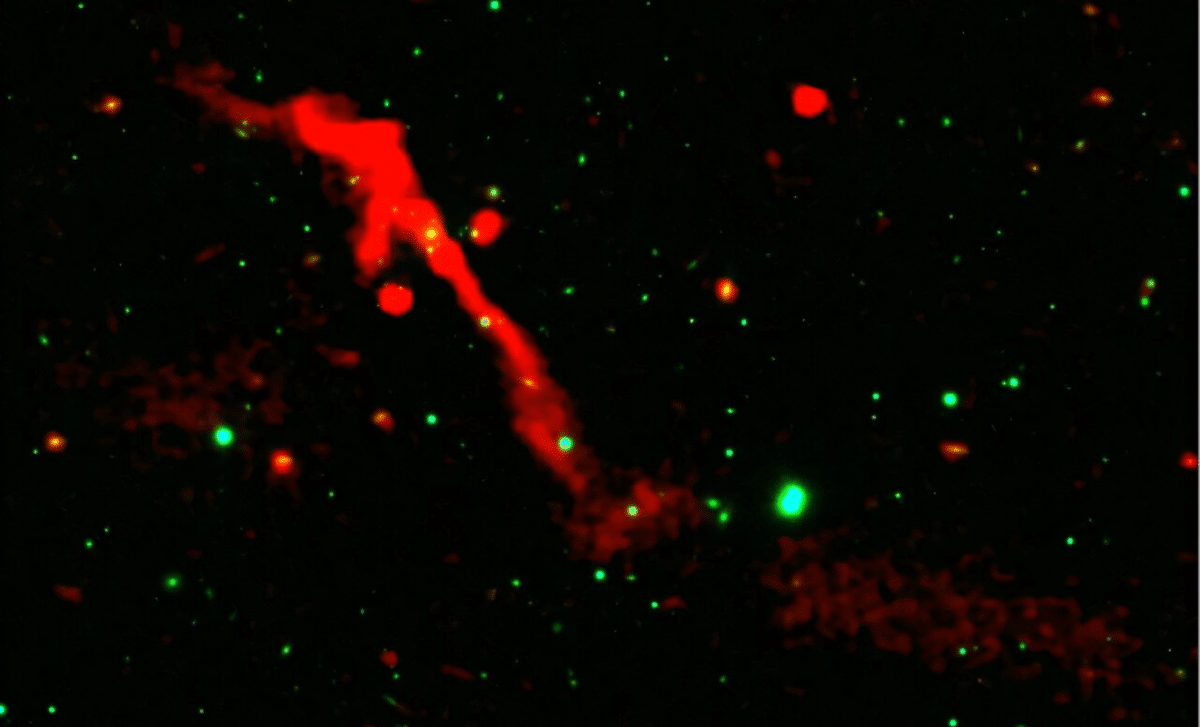
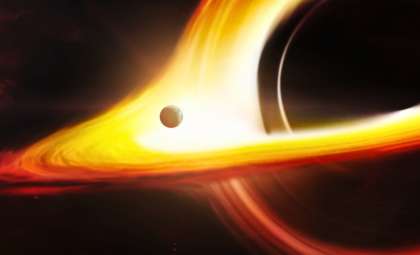
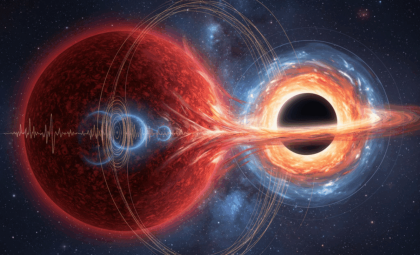
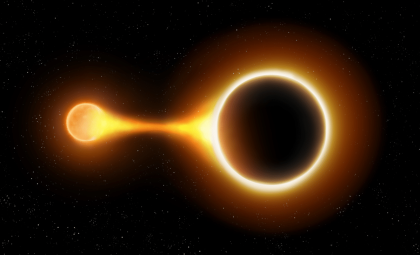
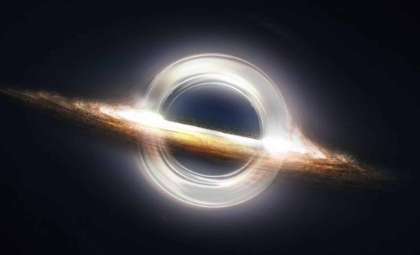
Astronomers have uncovered a remarkable event in the galaxy J1007+3540, where a supermassive black hole has suddenly blasted powerful jets into space following nearly 100 million years of inactivity. This resurgence was identified by an international research team and detailed in the Monthly Notices of the Royal Astronomical Society. The reinvigorated jets are so vast and intense that they’ve been likened to a "galactic volcano" eruption, spanning close to a million light-years.
Black Hole Awakens: A Massive Outburst Across the Cosmos
The central black hole of J1007+3540 had remained silent for an astonishing 100 million years before abruptly reigniting its energetic processes. This revival has fascinated scientists as it highlights the on-and-off nature of supermassive black holes, with their engines cycling through active and dormant phases over cosmic epochs. The emerging jets are causing tremendous disturbances comparable to a volcanic explosion, albeit on a scale that dwarfs entire galaxies.
Lead author Shobha Kumari from Midnapore City College, India, remarked, "It’s as if a cosmic volcano has erupted again after a long slumber—only this eruption can carve structures nearly a million light-years wide."

This new activity sheds light on the intricate and often surprising mechanisms that govern black hole behavior, advancing our understanding of their life cycles and their influence on the wider universe.
The findings published in Monthly Notices of the Royal Astronomical Society confirm that black holes are dynamic entities, alternating between periods of rest and intense activity. In J1007+3540, the central engine has reignited, generating powerful jets before shutting down and then igniting once more. These observations help refine scientific models of black hole behavior and highlight their profound impact on their host galaxies. Moreover, the jets’ interplay with their surroundings reveals key forces shaping the galaxy cluster around them.
Understanding the Episodic Nature of Active Galactic Nuclei
J1007+3540 exemplifies an episodic active galactic nucleus (AGN), where the black hole’s energetic output pulses irregularly rather than maintaining a steady state. This variability is a major topic within astrophysics as it implies that galaxy evolution is more dynamic and complex than once believed.
“This dramatic layering of young jets inside older, exhausted lobes is the signature of an episodic AGN—a galaxy whose central engine keeps turning on and off over cosmic timescales,” explained Kumari.
This discovery strengthens the perspective that black holes actively influence their galaxies, rather than being passive cosmic features.
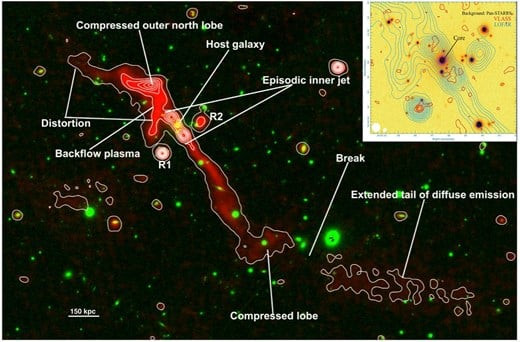
The structure of the jets further illustrates this episodic activity, with radio observations revealing new compact jets embedded within fading plasma from earlier outbursts. These juxtaposed “young” and “old” jet layers mark the multiple cycles of activity typical of such AGNs.
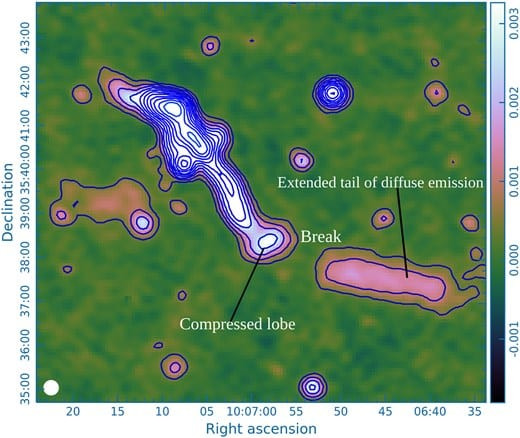
Examining these layered structures provides valuable insight into how a black hole’s energy emissions change over time and how they interact with their galactic environment. The data imply that the black hole’s influence can have prolonged effects on the galaxy’s development.
Galaxy Cluster’s Role in Shaping Jet Morphology
J1007+3540 is situated inside a large galaxy cluster filled with hot, dense gas that significantly impacts the black hole’s jets. As these jets expand, they encounter this dense medium, causing bends and distortions in their shapes. Dr. Sabyasachi Pal, co-author of the study, noted, "J1007+3540 is a prime example where the interaction between episodic AGN jets and the cluster’s hot gas leads to bending, compression, and deformation of the jets." This demonstrates how external galactic environments can directly affect jet formation and behavior.
The research team employed radio telescope arrays like LOFAR (Low Frequency Array) in the Netherlands and the upgraded Giant Metrewave Radio Telescope (uGMRT) in India to capture these detailed images. Their observations revealed how the jets are molded by the surrounding gas, such as the noticeably curved northern lobe shaped by external pressures. These results underscore the importance of studying black holes within the context of their cosmic neighborhood to fully grasp their complex dynamics.
- Categories:
- Physics


0 comments
Sign in to Comment