
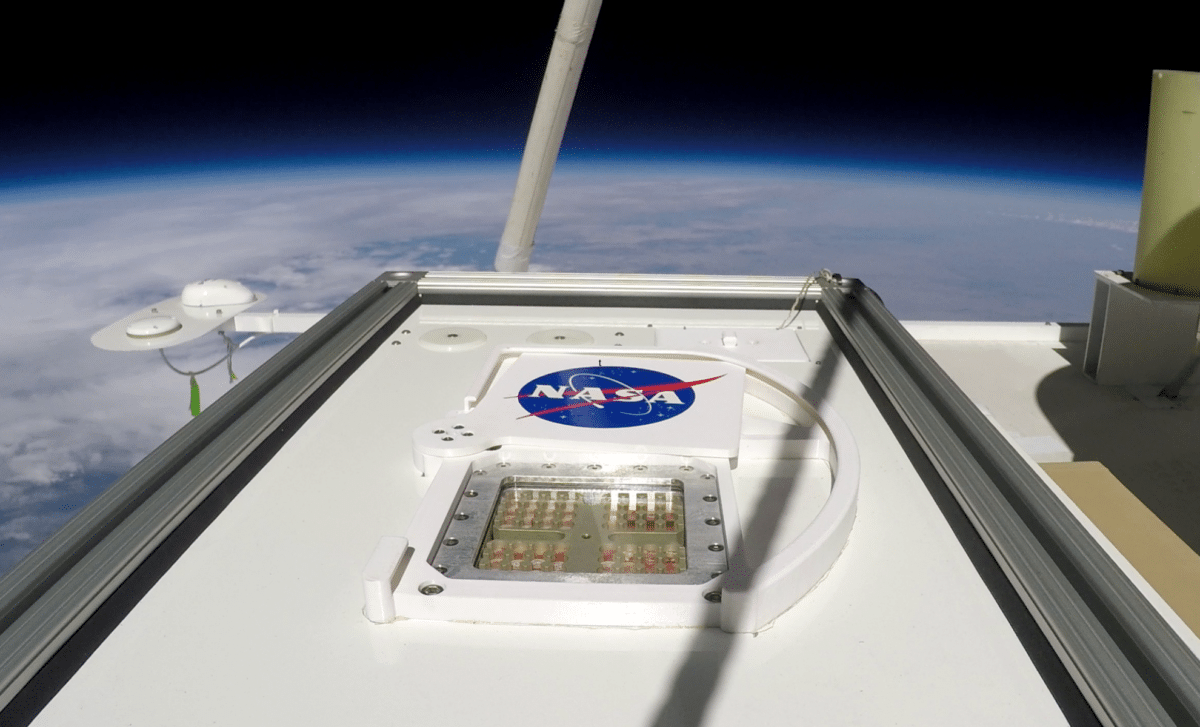
Scientists at the University of Florida have unveiled new evidence showing how certain bacteria survive in extreme environments by drastically lowering their metabolic activity. Published in Microbiology Spectrum, this study sheds light on microbial durability, which is relevant for space exploration and astrobiology research.
Uncovering Microbial Endurance in Hostile Settings
The research described in Microbiology Spectrum highlights how some bacteria enter an ultra-low metabolic state, effectively pausing their cellular functions to survive extreme environments. These conditions range from the vacuum of outer space to the sterile interiors of spacecraft and orbital stations. Under the guidance of Dr. Nils Averesch, the team demonstrated that these bacteria remain viable even in environments typically hostile to most life forms.
“It shows that some microbes can enter ultra-low metabolic states that let them survive extremely austere environments, including clean rooms that naturally select for the hardiest organisms,” said Dr. Averesch, who is an assistant professor in the Department of Microbiology and Cell Science and a member of the Astraeus Space Institute.
Add Cosmo Herald as a Preferred Source

Their results imply that such bacteria might endure conditions aboard spacecraft on long-duration missions and even survive deep-space environments once believed to be uninhabitable.
This breakthrough offers important clues not only about bacterial survival on Earth but also about the potential for life in extraterrestrial environments where traditional survival strategies seem inadequate. The study indicates dormant bacteria can persist without depending on spore formation, expanding our ideas about where life might thrive beyond our planet.
Challenging Traditional Survival Strategies in Bacteria
Unlike many bacteria that depend on spore formation to survive stresses such as radiation, heat, or dehydration, these microbes adopt a different resilience strategy. Dr. Averesch noted,
“What stood out most to me is that these microbes don’t form spores. Seeing a non-spore-former achieve comparable robustness through metabolic shutdown alone suggests there are additional, underappreciated survival mechanisms in bacteria that we haven’t fully characterized.”
This discovery challenges longstanding beliefs, revealing that bacteria can survive harsh environments by entering a suspended state of metabolism—a form of dormancy akin to hibernation. This ability allows them to ‘play dead’ until conditions improve. Understanding this survival mechanism could transform our approach to detecting life in extreme environments like Mars or other planetary bodies, where dormant microbes might endure prolonged harshness without traditional survival adaptations.
- Categories:
- Space






0 comments
Sign in to Comment