
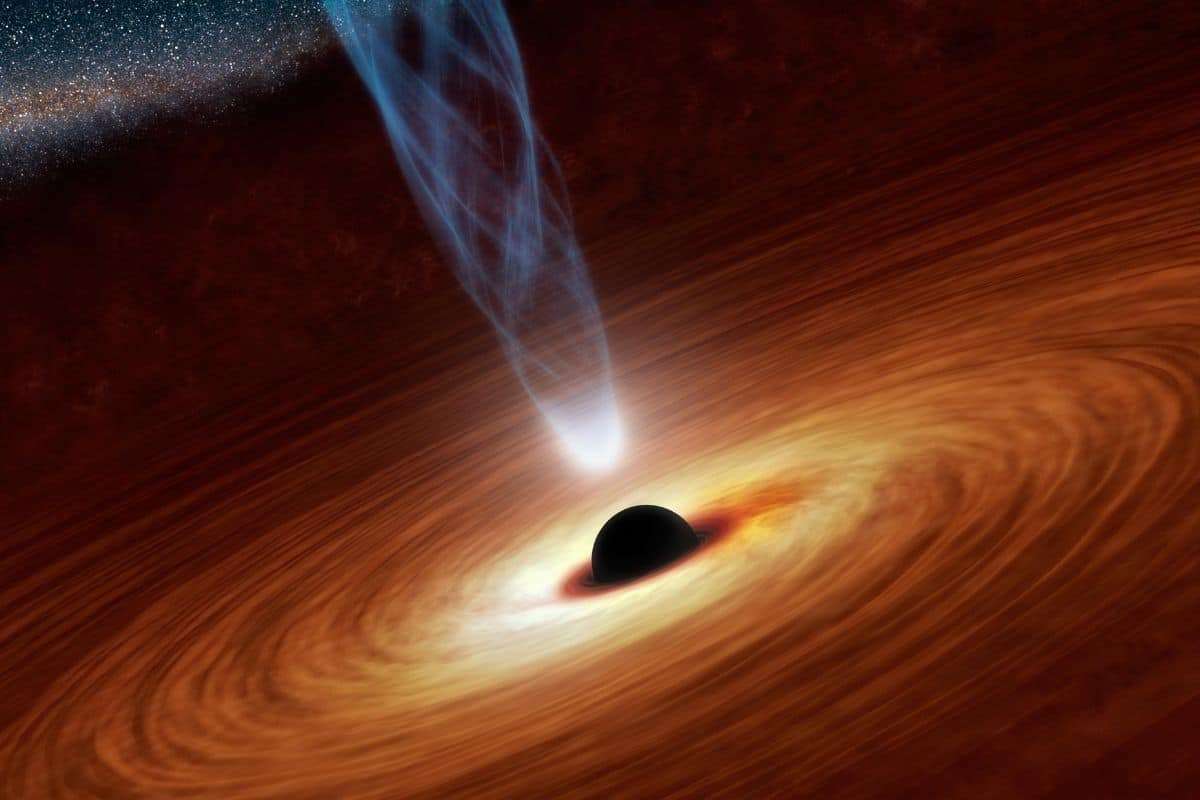
Our grasp of black holes, the flow of time, and the elusive dark energy shaping the universe might be due for a profound revision. Research from the University of Sheffield suggests black holes may not be mere cosmic endpoints; instead, they could give rise to white holes—hypothetical objects that emit rather than absorb matter and energy.
Shifting Perspectives: Black Holes as Catalysts for Renewal
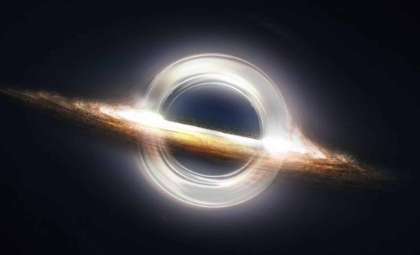
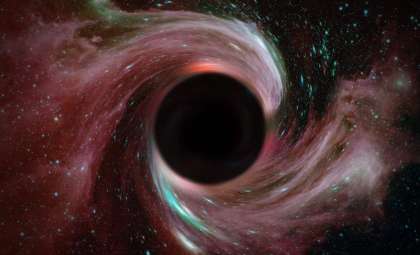
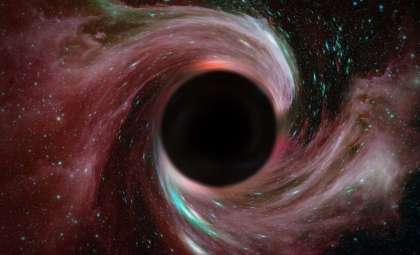
Traditionally, black holes are viewed as cosmic cul-de-sacs. Objects crossing their event horizon—an invisible boundary where even light is trapped—are thought to be irrevocably lost to a central singularity, a zone of infinite density where known laws of physics break down.
The recently released study, featured in Physical Review Letters, challenges this view. It proposes that the singularity inside a black hole might function less as a terminus and more as a bridge to something beyond. The findings draw from quantum mechanics, the science that explains particle behavior at the tiniest scales.
Unlike classical physics, which allows for time to stop abruptly, quantum principles imply that time must persist in some capacity.

Introducing White Holes: The Universe’s Opposite Phenomenon?
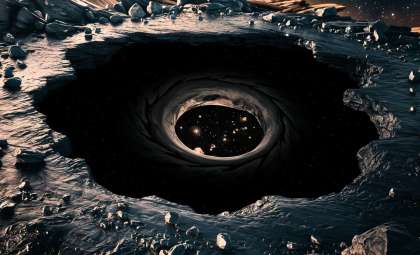
The concept of white holes, though debated and unobserved, is central to this new interpretation. While black holes act as spacetime sinks, white holes theoretically serve as sources, expelling energy and matter outward.
Picture a black hole as a cosmic vacuum drawing everything inward, while a white hole represents its inverse, releasing material back into the cosmos. If the singularity of a black hole is actually a pivot point rather than an ending, it could manifest as a white hole on the other side.
Interplay Between Dark Energy and Temporal Flow
A compelling feature of the study is its connection to dark energy, the mysterious driver accelerating cosmic expansion. The researchers propose that time itself may be entwined with dark energy, meaning that within a black hole, time might transform rather than end, influenced by this pervasive force.
Dr. Steffen Gielen, who co-authored the paper, states:
“In quantum mechanics, time as we understand it cannot end as systems perpetually change and evolve.”
If validated, this theory positions a black hole’s singularity not as a final point but as an origin, possibly connecting to another universe or dimension.
Is Detection of White Holes Possible?
White holes remain theoretical entities as of now. In contrast to black holes, whose presence we infer from their gravitational influence, white holes have not been observed directly. But their absence from observations does not rule out their existence.
If white holes emerge from black holes, questions arise: Where would they materialize? Would they appear spontaneously elsewhere in our universe? Might they inhabit different dimensions or regions beyond our detectability?


0 comments
Sign in to Comment