
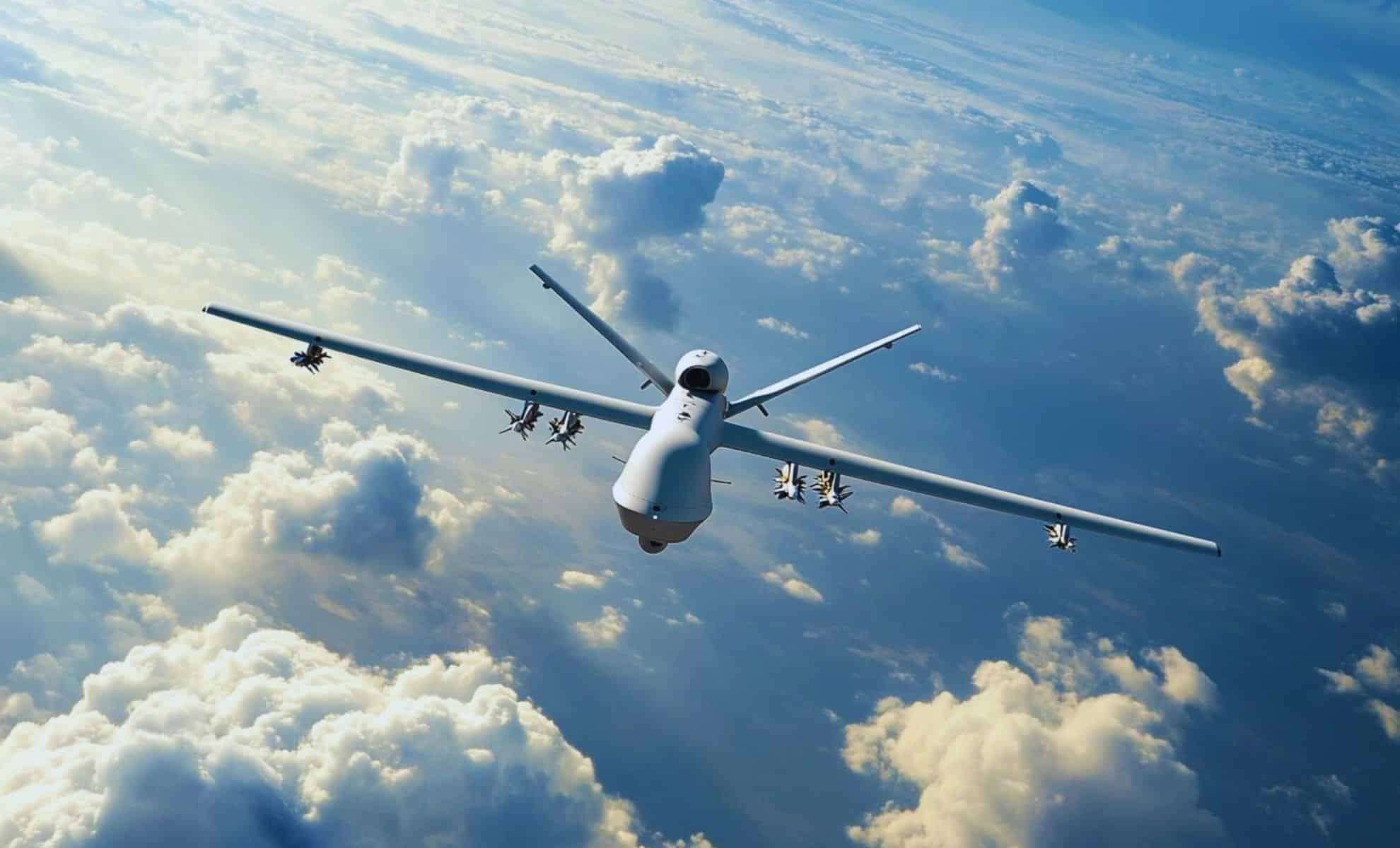
Elon Musk recently made a bold assertion that could revolutionize military aviation: traditional manned fighter jets are outdated. Now part of a U.S. government efficiency initiative, Musk has particularly criticized the F-35 fighter aircraft, labeling it an expensive and inefficient artifact in the age of unmanned drones.
Targeting the F-35 Head-On
Musk openly challenged the F-35, the leading fighter plane in the U.S. military, with no hesitation. “Piloted combat aircraft are a thing of the past,” he stated, emphasizing that such jets primarily expose pilots to danger. Known for his disruptive commentary, Musk took to social media to mock the F-35’s hefty price tag. Despite being recognized as a fifth-generation stealth fighter, the plane has suffered from ballooning costs, technical setbacks, and repeated delays.
According to Musk, drones represent the future in aerial combat, making the F-35 a symbol of outdated defense strategy. “Meanwhile, some are still clinging to manned jets like the F-35,” he remarked alongside a video displaying large formations of drones, contrasting sharply with conventional fighter jets. This sharp critique highlights the F-35’s inability to fulfill its promise as an adaptable, future-ready weapon platform.

Is the F-35 a Costly Failure?
Musk’s critique extends beyond opinion, focusing on the F-35’s towering development expenses and lack of focused combat specialization. To him, the aircraft epitomizes an inefficient endeavor, an ambitious but flawed project trying to do too many things at once.
“The F-35 is an overly complicated and expensive platform without a clear combat specialty,” Musk stated, highlighting the aircraft’s design shortcomings. This directly challenges the massive funds invested by the U.S. military and allied nations on a program often scrutinized for its astronomical budget.
Though Musk’s view carries influence, others, like Mauro Gilli from the Swiss Federal Institute of Technology, defend the program. They suggest that the primary costs arise not from the presence of pilots, but from the sophisticated software and electronics powering the plane’s advanced systems. Musk counters by insisting that drones would be a cheaper and more effective alternative, eliminating the need for a human operator onboard.
Could Drones Fully Replace Pilots?
Musk’s controversial remarks open the door to a profound debate: are drones destined to supplant human pilots entirely, or is this merely an evolutionary step in military technology? He envisions a future dominated by unmanned aerial combat, where robots undertake missions in hazardous environments. Beyond preserving lives, Musk’s vision emphasizes drastic cost reductions and technological advancements.
Critics warn that retiring manned aircraft programs could have significant geopolitical impacts. The F-35 is more than a U.S. tool—it compels global rivals like Russia and China to innovate and keep pace. Dismantling this strategic asset might ease competitive pressure on adversaries, potentially enabling breakthroughs in stealth tech and advanced radar.
While Musk’s views provoke debate, one point remains certain: his concept of warfare’s future, centered on drones replacing pilots, challenges the established military paradigm.
- Categories:
- Aircraft ,
- Tech










0 comments
Sign in to Comment