
Recent research proposes that unstable dark matter could have triggered the formation of the universe’s earliest supermassive black holes significantly earlier than traditional theories suggest. This concept could clarify why these enormous black holes appear so rapidly in cosmic observations, addressing a longstanding mystery about their swift growth following the Big Bang.
Observations from the James Webb Space Telescope have uncovered giant black holes in the universe’s infancy, inconsistent with conventional gradual formation theories. Scientists at the University of California, Riverside and partners have explored the possibility that dark matter may decay, releasing subtle bursts of energy.
Minute Energy Bursts Fueling a Cosmic Chain Reaction
Yash Aggarwal describes that every decaying dark matter particle emits an incredibly small amount of energy — approximately “one billion trillionth” the power of a AA battery. Although minuscule, this release was sufficient to impact conditions in the early cosmos.

“Our study suggests that decaying dark matter could profoundly reshape the evolution of the first stars and galaxies, with widespread effects across the Universe,” he stated.
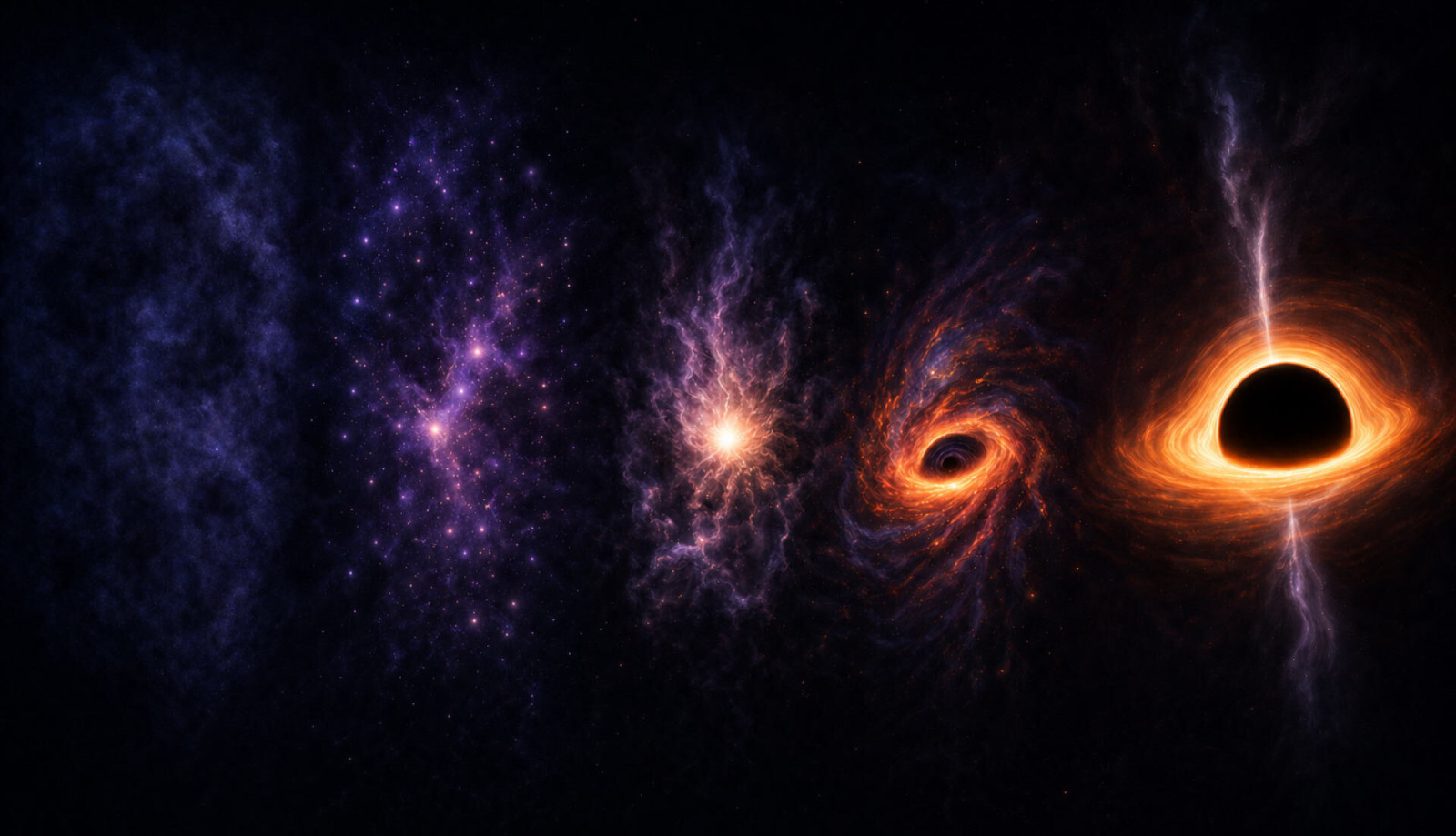
In that era, galaxies mainly consisted of clouds composed of pure hydrogen gas. These clouds were highly reactive, so even minimal energy injections could destabilize them and accelerate their gravitational collapse.
Early Galaxies as Sensitive Dark Matter Sensors
Dr. Flip Tanedo from University of California, Riverside, views the first galaxies as natural detectors, sensitive enough to respond to tiny energy inputs such as those released by dark matter decay.
“The first galaxies are essentially balls of pristine hydrogen gas whose chemistry is incredibly sensitive to atomic-scale energy injection,” he explained. “These are the properties that we want for a dark matter detector — the signature of these ‘detectors’ might be the supermassive black holes that we see today.”
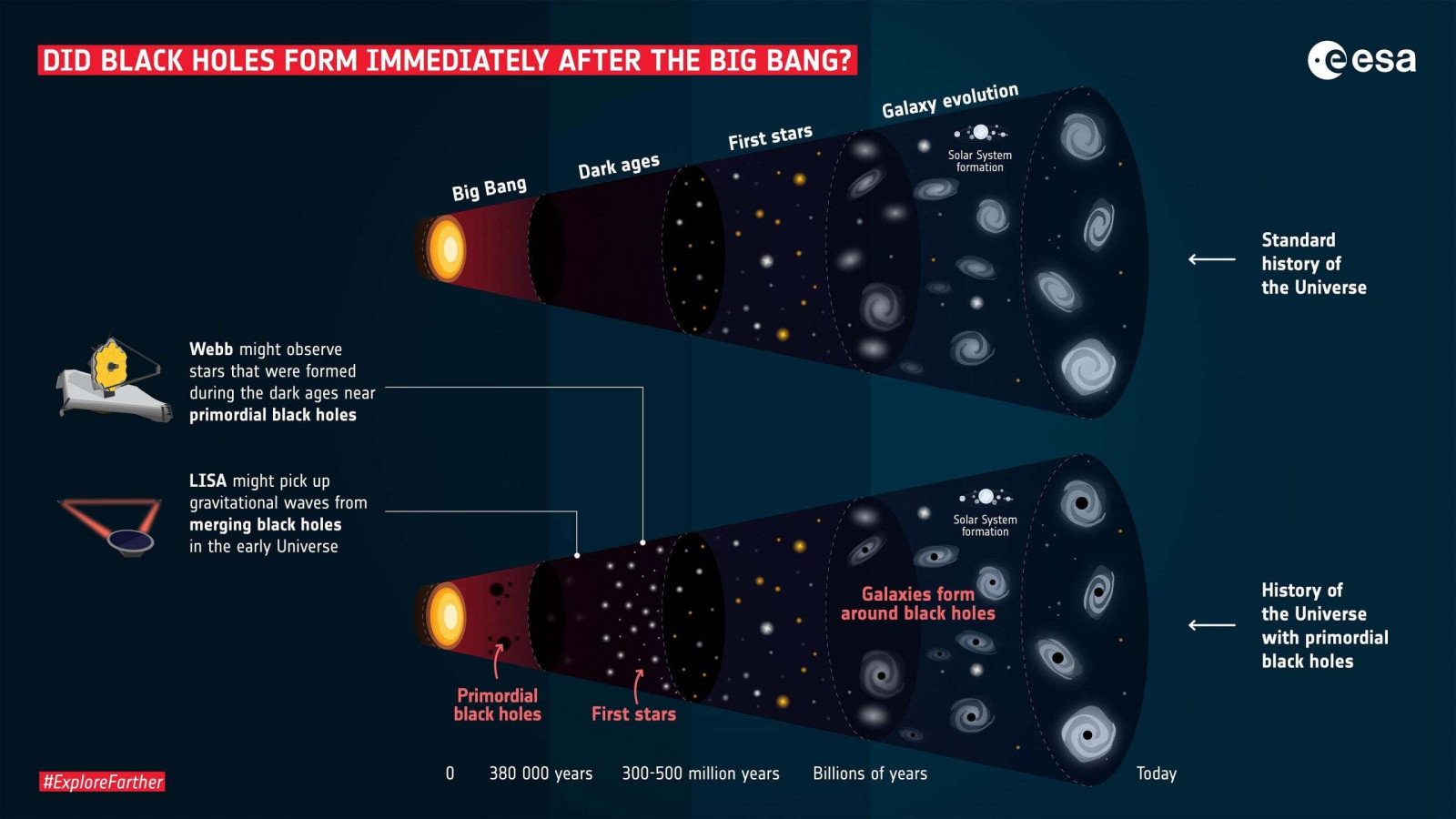
It’s possible the supermassive black holes we observe now bear the imprint of these ancient cosmic processes. Instead of observing dark matter directly, scientists are detecting its influence on the formation of early cosmic structures.
Precise Conditions Enabling Rapid Collapse
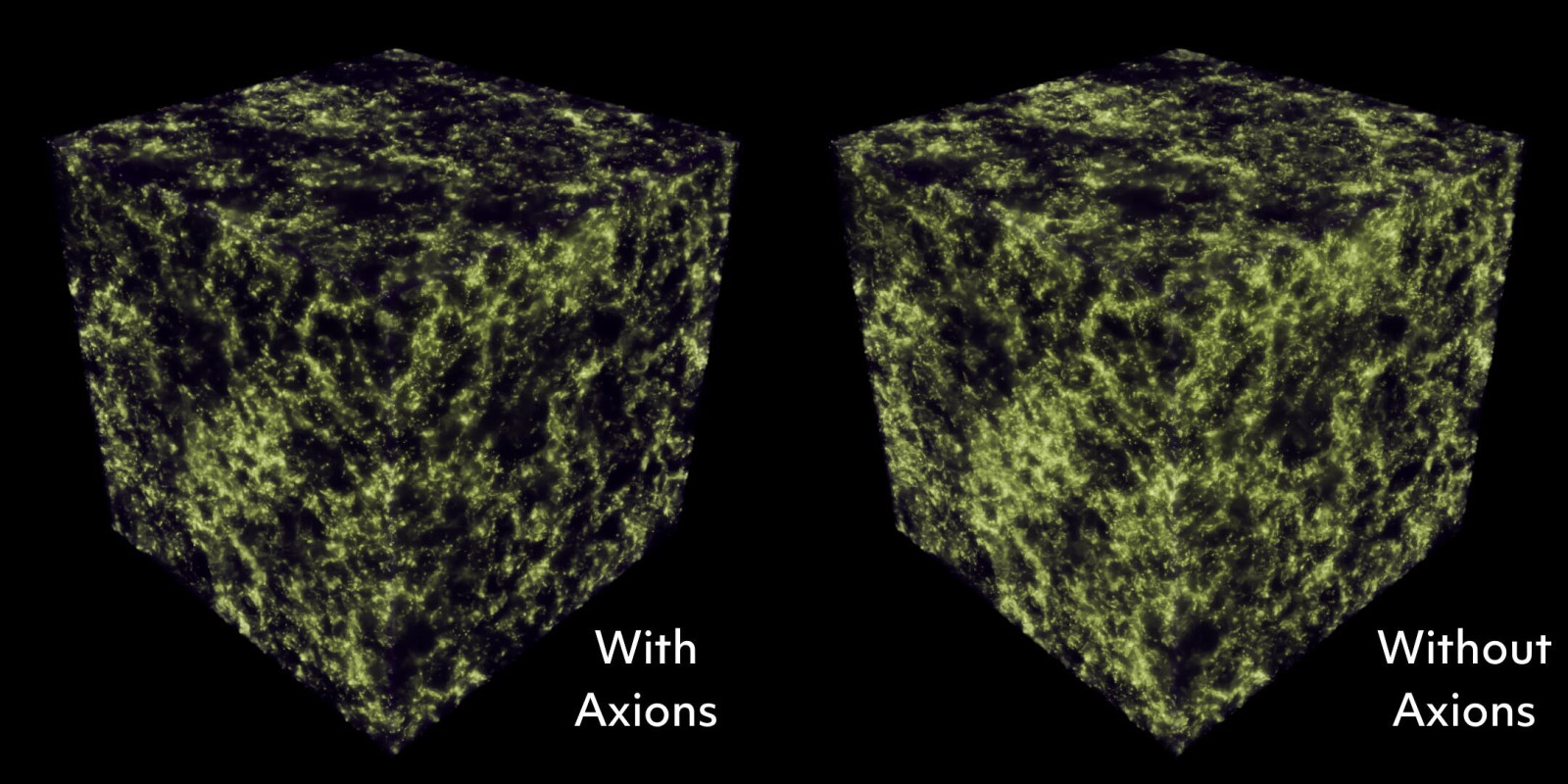
The researchers simulated gas behavior under the influence of decaying dark matter particles, including candidates such as axions. They identified a narrow mass window — between 24 and 27 electronvolts — where these interactions promote accelerated collapse.
“We showed that the right dark matter environment can help make the ‘coincidence’ of direct collapse black holes much more likely.” said Dr. Tanedo.
This evidence supports the formation of direct collapse black holes, bypassing slower accumulation phases. Published on April 14, 2026, in the Journal of Cosmology and Astroparticle Physics, the work represents a collaborative effort bridging astrophysics, cosmology, and particle physics.
“The work stemmed from a series of coincidences that brought the right people together at the right time, including a series of workshops that connected particle physicists, cosmologists, and astrophysicists to discuss the big questions in their field,” hed added. “In the same way, the support for interdisciplinary work helped make the ‘coincidence’ leading to this work possible.”
- Categories:
- Astronomy


0 comments
Sign in to Comment