
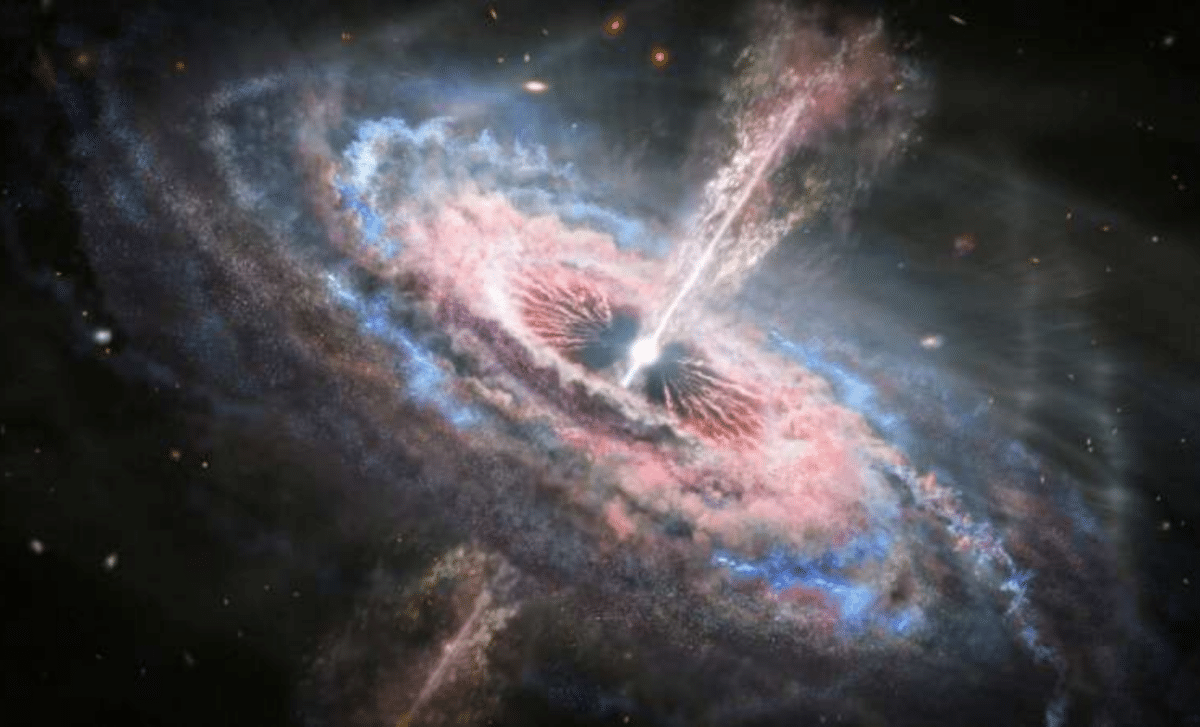
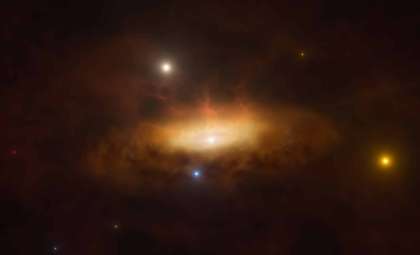
Supermassive black holes—the colossal enigmas at the heart of most galaxies—have traditionally been seen as agents of destruction. Yet, a new study featured in The Astrophysical Journal Letters reveals a surprising twist: these black holes impact not only their own galaxies but also neighboring ones, suppressing star formation across vast cosmic distances. Led by postdoctoral researcher Yongda Zhu at the University of Arizona, the research implies a closer interconnectedness in galaxy evolution, with supermassive black holes acting as dominant forces within a broad “cosmic ecosystem.”
Linked Galactic Evolution: Black Holes as Central Influencers
Until now, astronomers believed that galaxies evolved mostly independently due to their enormous separations. The pioneering work by Zhu and colleagues, published in The Astrophysical Journal Letters, disputes this long-held belief.
“Traditionally, people have thought that because galaxies are so far apart, they evolve largely on their own,” said Zhu. “But we found that a very active, supermassive black hole in one galaxy can affect other galaxies across millions of light-years, suggesting that galaxy evolution may be more of a group effort.”
Add Cosmo Herald as a Preferred Source

Viewing galaxies as interconnected components of a massive cosmic system transforms our perception of how the universe evolves. Zhu compares an active supermassive black hole to a “voracious predator in an ecosystem,” shaping not only its host galaxy’s star growth but also influencing neighboring galaxies’ star formation.
Supermassive black holes in their quasar phases unleash tremendous energy. As they devour nearby matter, these black holes emit intense radiation and powerful winds that wreak havoc on their surroundings. In adjacent galaxies, such energy can thwart the conditions necessary for stars to form, thus throttling stellar birth.
How Quasar Radiation Halts Star Development
A pivotal finding from this research is how the radiation emitted by active supermassive black holes, called quasars, suppresses star formation not only in their host galaxies but also in those millions of light-years away.
“Black holes are known to ‘eat’ a lot of stuff, but during the active eating process and in their luminous quasar form, they also emit very strong radiation,” said Zhu. “The intense heat and radiation split the molecular hydrogen that makes up vast, interstellar gas clouds, quenching its potential to accumulate and turn into new stars.”
Stars form from cold, dense molecular hydrogen gas clouds essential for their birth. However, intense quasar radiation fragments these clouds, breaking down molecular hydrogen and preventing star formation. Remarkably, this disruptive effect extends beyond their host galaxies to impact nearby galaxies' ability to form stars. This discovery fundamentally alters our comprehension of supermassive black holes’ reach and influence across great cosmic expanses.
Quasar Influence Confirmed by JWST Observations
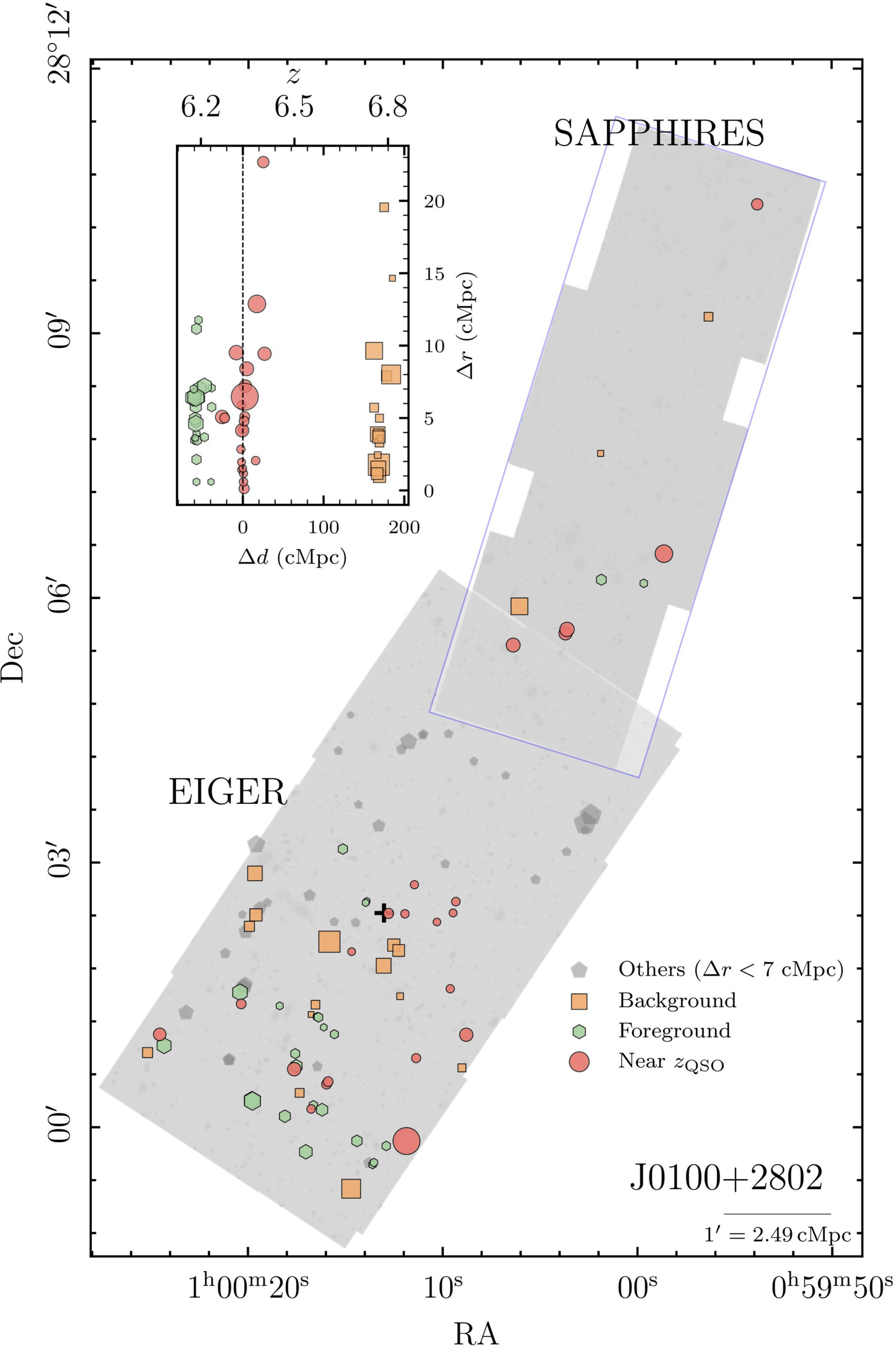
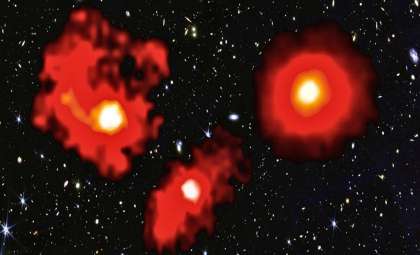
The breakthrough came through the exceptional capabilities of the James Webb Space Telescope (JWST), which revealed the early universe with unprecedented detail. By analyzing emissions from O III—a marker of recent star formation—the team observed galaxies within about a million light-years of the quasar J0100+2802, one of the brightest known quasars, showing diminished O III emissions. This indicated that star production in these galaxies was being suppressed by the quasar’s radiation.
“We were puzzled,” said Zhu. “Was the expensive JWST broken?” he added with a laugh. “Then we realized the galaxies might actually be there, but difficult to detect because their very recent star formation was suppressed.”
Ultimately, this led to the groundbreaking conclusion that quasar radiation impacts star formation not only within its own galaxy but also across neighboring galaxies spanning a radius of over a million light-years. “For the first time, we have evidence that this radiation impacts the universe on an intergalactic scale,” Zhu stated. “Quasars don’t just suppress stars in their host galaxies, but also in nearby galaxies within a radius of at least a million light-years.”
- Categories:
- Astronomy





0 comments
Sign in to Comment