
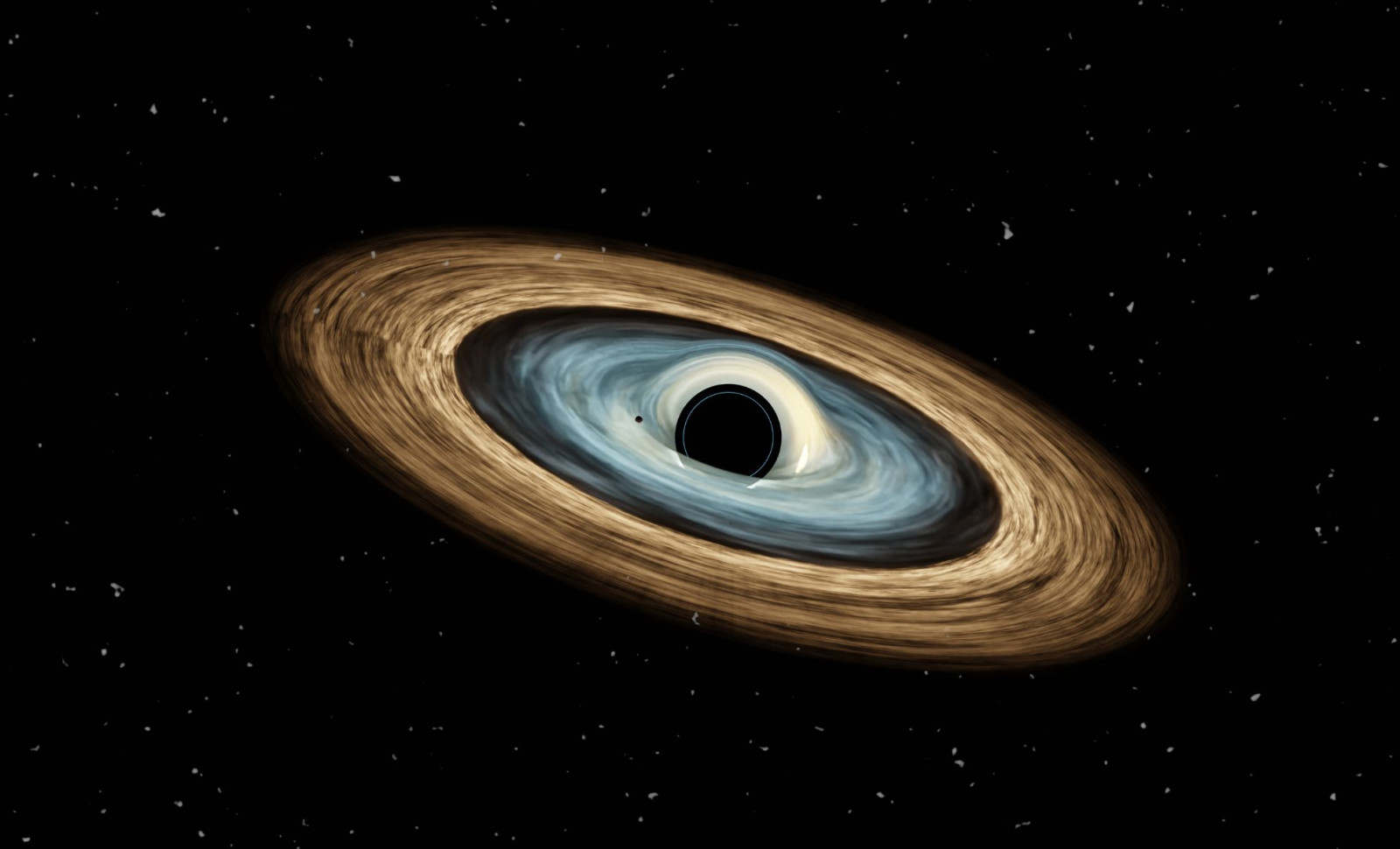
A fleeting increase in brightness from a distant star has enabled astronomers to identify a strange object crossing the line of sight between Earth and the Large Magellanic Cloud. This event lasted around an hour, and researchers suggest it could either be a rare free-floating planet or a primordial black hole, one of the most intriguing and hypothesized entities in modern astrophysics.
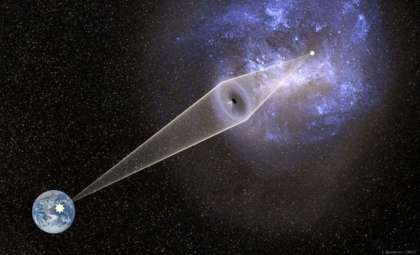
The detection was made using the Dark Energy Camera (DECam) during a project aimed at locating compact bodies that evade direct observation. Instead of observing light generated by the object itself, scientists utilized gravitational microlensing to detect its presence.
The results have been detailed in a paper published on arXiv, pending peer review. While exploring various possible explanations, the team’s analysis favors the object being part of the Milky Way’s dark matter halo rather than traditional star populations in the Milky Way or the Large Magellanic Cloud.

A Momentary Glimpse of a Faraway Star
This phenomenon was recorded as astronomers monitored stars within the Large Magellanic Cloud, a satellite galaxy orbiting the Milky Way. They observed a star briefly brighten as an unseen mass passed across its light path.
Known as gravitational microlensing, this effect occurs because NASA explains that a massive object bends space-time, acting like a lens that temporarily amplifies light from a more distant source. While often linked to stars or galaxies, this phenomenon can also reveal the presence of planets and other compact objects.
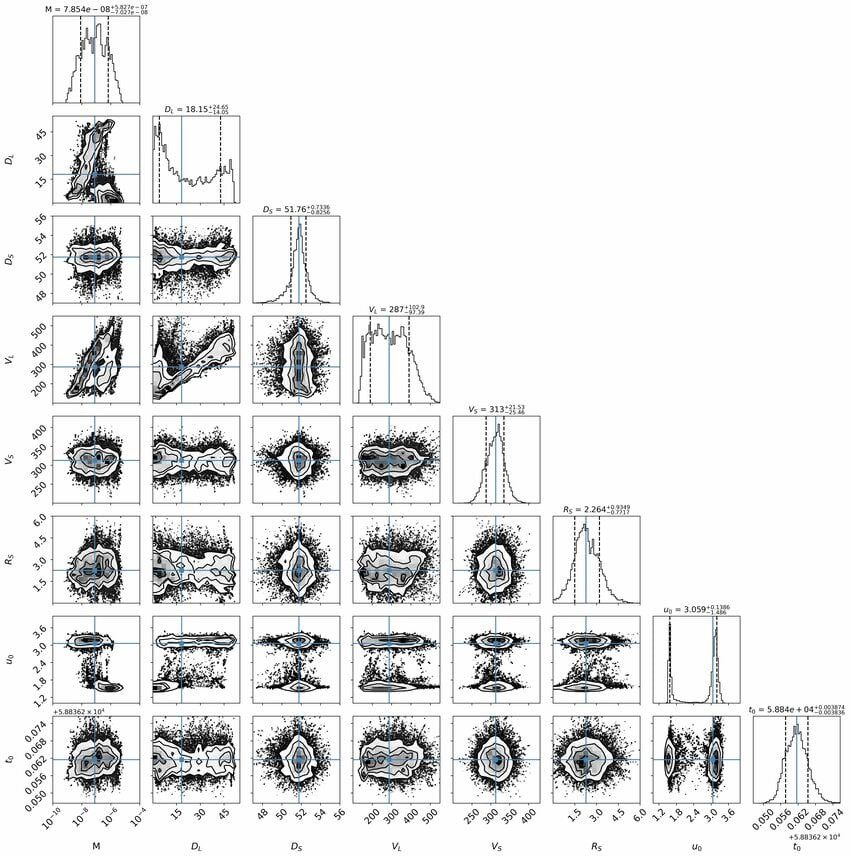
The brief event lasted nearly one hour. In their study, the authors describe it as “a one hour-long microlensing event.” They named the lensing object Phoebe. Because microlensing detects gravitational effects rather than light emission, it serves as a vital method to uncover otherwise invisible objects.
The Crucial Importance of Phoebe’s Position
Pinpointing where Phoebe is located is key to understanding its nature. If it lies within the Large Magellanic Cloud, its mass is estimated at about 0.1 times that of the Sun. This scenario could indicate a free-floating planet or a planet orbiting far from its star.
The authors note that this would be a groundbreaking discovery, marking the first confirmed extragalactic microlensing exoplanet beyond our galaxy. However, they argue that an alternative explanation is more probable.
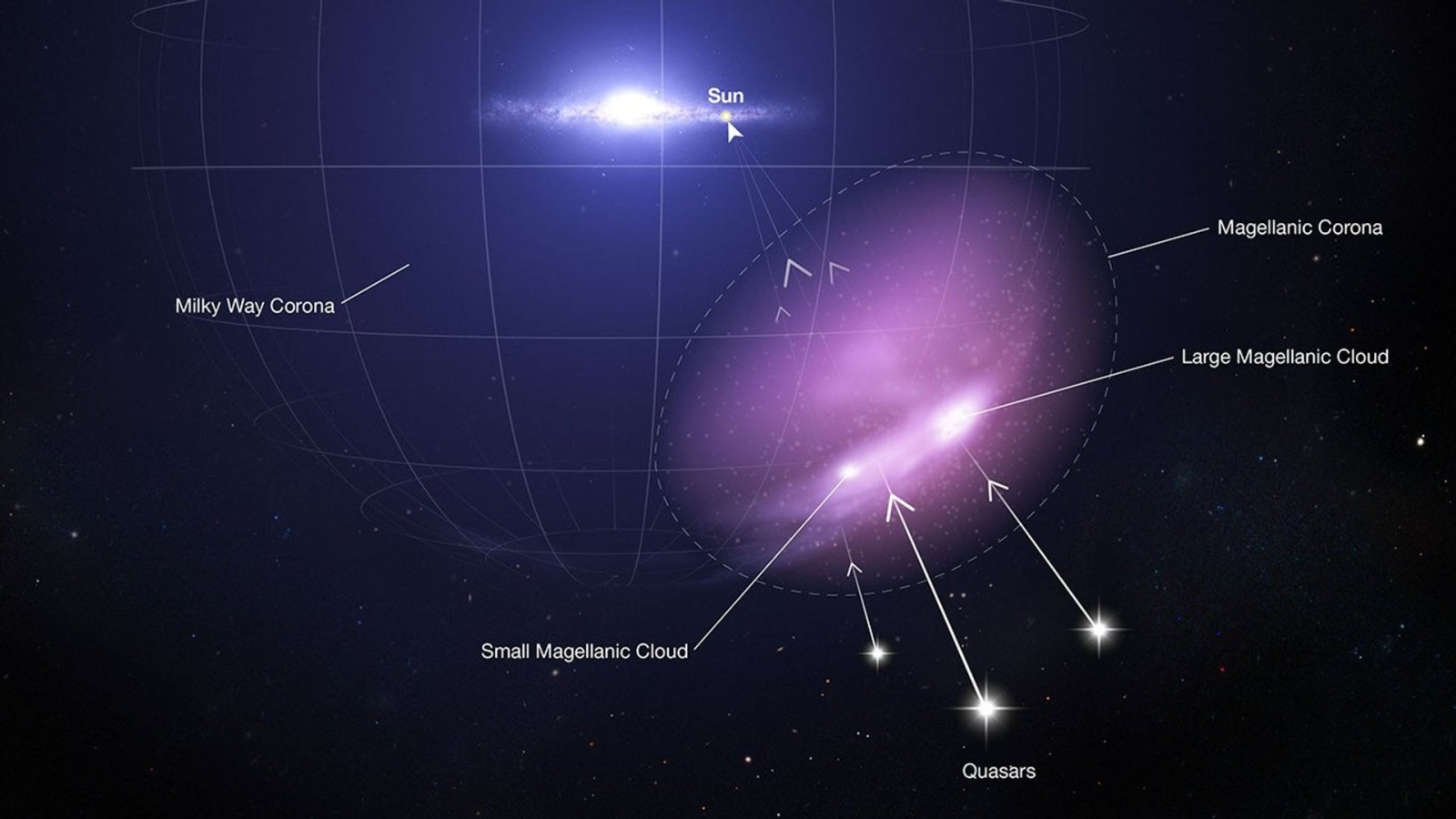
Should Phoebe reside within the Milky Way’s galactic halo, much nearer than the Large Magellanic Cloud, its mass estimate drops sharply to roughly three times that of the Moon. This lower mass places the object outside the expected range for typical stellar black holes and raises new questions.
Potential Evidence for Primordial Black Holes
The team tested several galactic models to assess Phoebe’s likely origin. As noted in the paper, their optical-depth calculations reveal Phoebe is around 100,000 times more probable to be part of the Milky Way’s dark matter halo than any standard stellar population of the Milky Way or Large Magellanic Cloud.
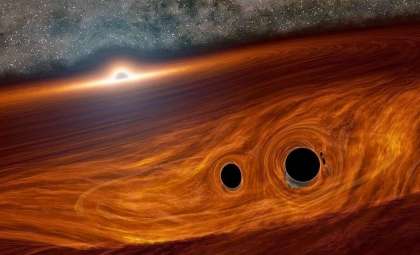
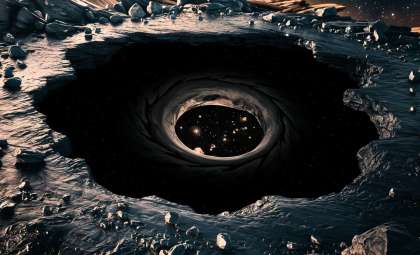
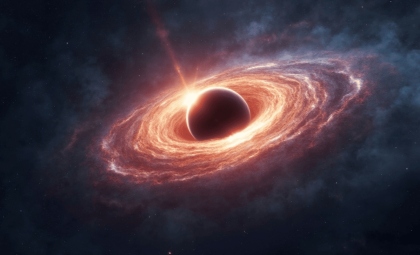
Consequently, the researchers propose Phoebe as “the best candidate for a PBH,” meaning a primordial black hole. Unlike black holes generated by dying stars, primordial black holes are theorized to have originated in the universe’s earliest moments.
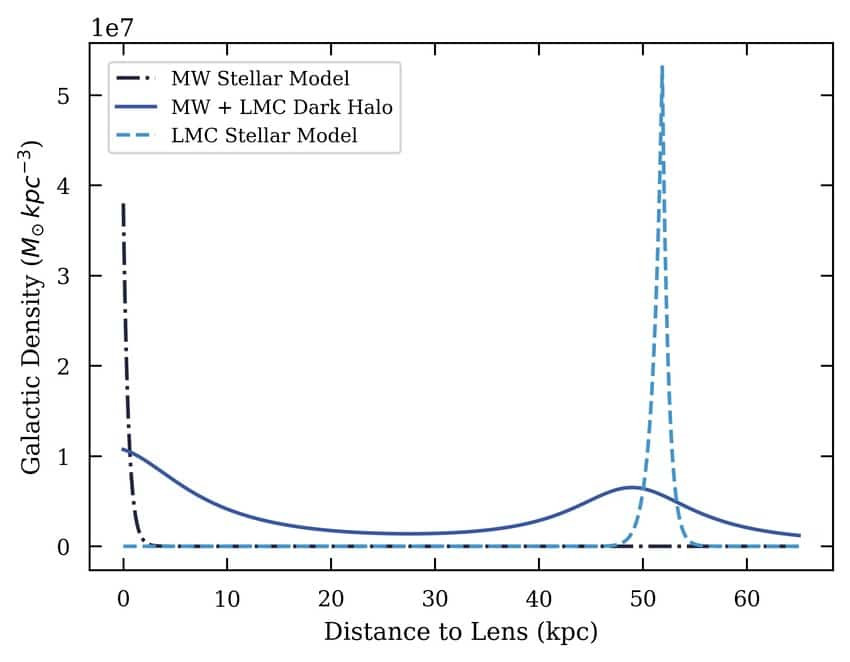
This detection bolsters the hypothesis that a population of small-mass compact objects may exist within the Milky Way’s dark matter. The authors commented that:
“Phoebe suggests a population of compact, lunar-mass objects associated with the dark matter distribution of the Milky Way,” said the study team, adding that: “and potentially opens a new window to the physics of inflation.”
The scientists also highlight the potential for this discovery to "open new avenues in understanding cosmic inflation." Still, they stress that no primordial black hole has been definitively identified yet. This single event requires follow-up microlensing detections to determine whether Phoebe is an unusual planetary body, a compact dark entity, or something even more extraordinary.
- Categories:
- Astronomy




0 comments
Sign in to Comment