
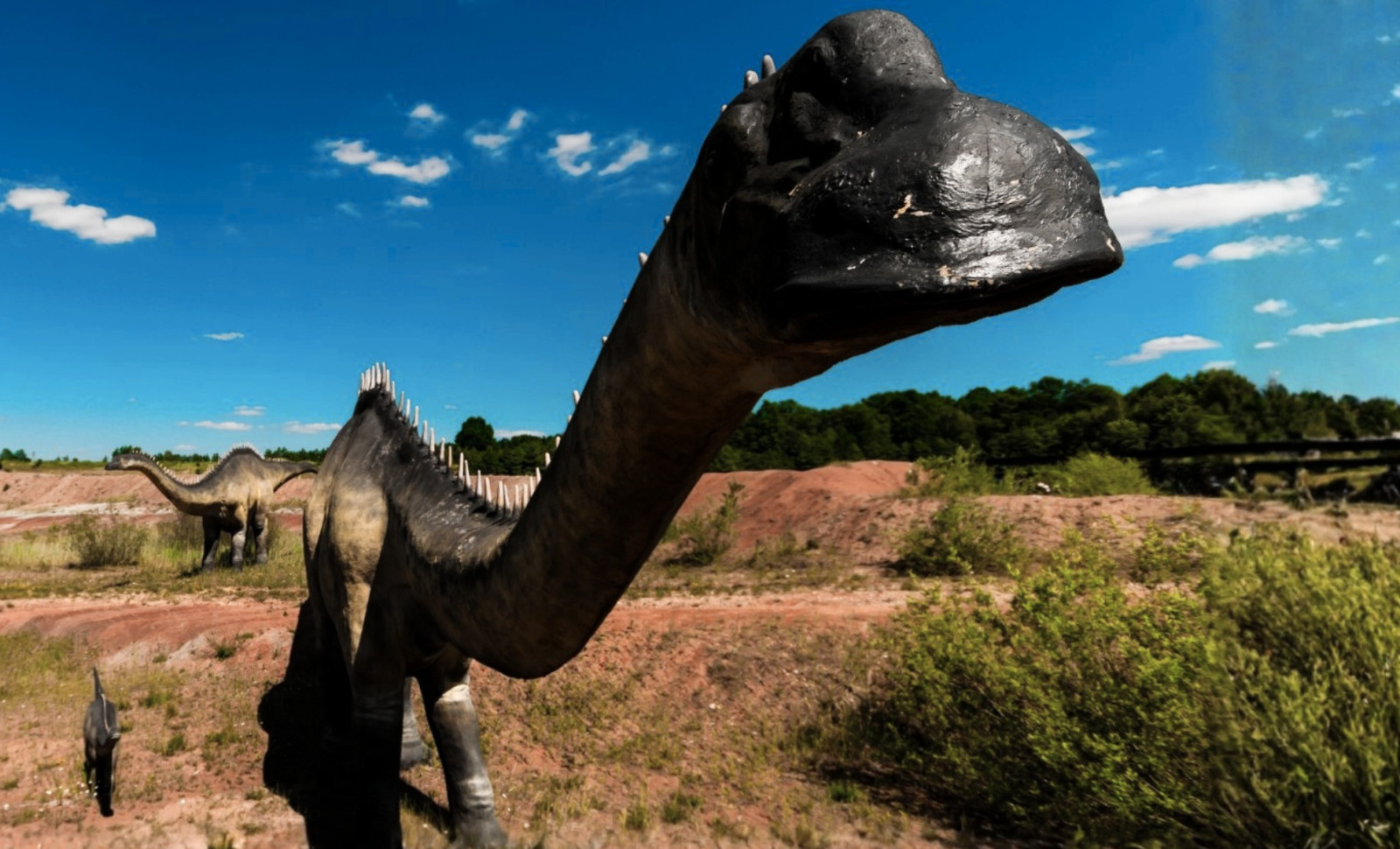
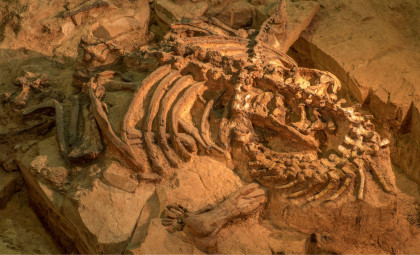
During Thailand’s dry season in 2016, a local resident near a communal pond in Chaiyaphum province spotted an impressive cluster of massive bones exposed by the retreating water. Recognizing their unusual size, the find was promptly reported to paleontologists, sparking a series of excavations.
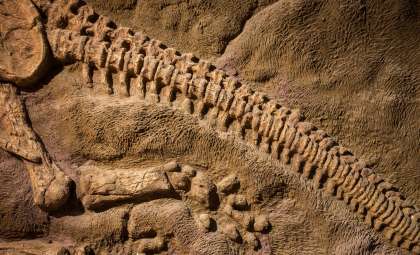
Work spanning multiple excavation seasons from 2016 through 2019, along with additional efforts as recent as 2024, uncovered vertebrae, ribs, pelvic fragments, and limb bones. Following excavation, the fossils were meticulously cleaned, preserved, examined, and compared with known sauropods to establish their identity.
After years of study, a research article published on May 14, 2026, in Nature Scientific Reports formally introduced the fossil as a previously unknown species of long-necked dinosaur. Named Nagatitan chaiyaphumensis, it stands as the largest dinosaur ever discovered in Southeast Asia.

Sauropod’s Size Calculated at 27 Meters in Length
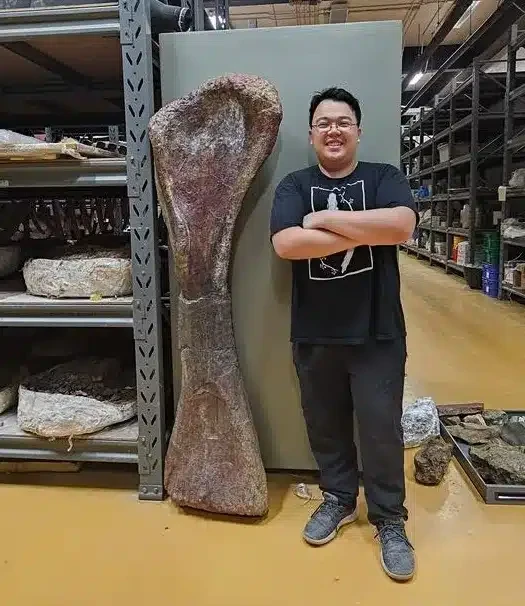
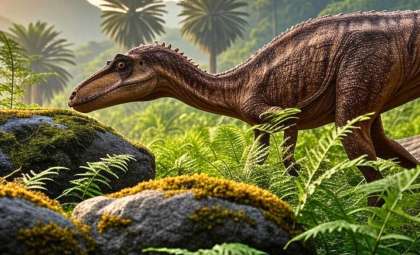
This newly identified dinosaur belongs to the sauropod group, characterized by their extensive necks and tails and herbivorous diet. The research team estimates the creature measured about 27 meters (roughly 89 feet) from head to tail and weighed near 27 metric tons, roughly the combined weight of nine adult Asian elephants. Notably, a recovered front leg bone—the humerus—stretches a remarkable 1.78 meters.
Lead scientist Thitiwoot Sethapanichsakul, a paleontologist at University College London whose doctoral studies specialize in Southeast Asian sauropods, shared that the humerus was taller than his own height when he first examined it.
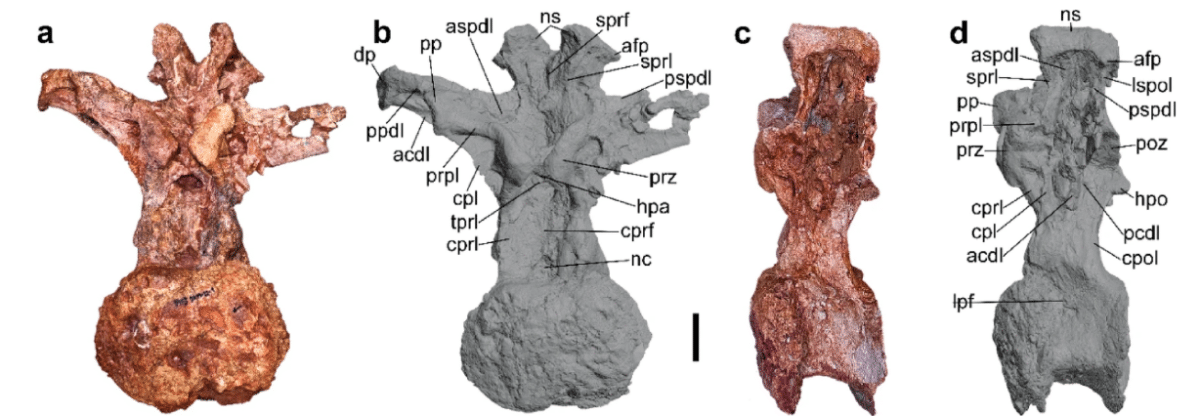
Nagatitan falls within the Euhelopodidae family, a clade of Asian long-necked dinosaurs. Its distinctiveness arises from particular structural traits in its vertebrae, pelvis, and limbs, which the team identified through detailed comparisons with related sauropods documented in scientific literature.
Although skull and dental remains were absent, the researchers inferred feeding behavior based on existing sauropod biology knowledge. The right femur, retrieved in fragmented pieces, was estimated to be nearly 2 meters long when whole.
The Naming Honors Mythology and Discovery Site
The genus name "Nagatitan" weaves together cultural and scientific significance. "Naga" references a mythological serpent figure revered in Thai and Southeast Asian traditions, symbolizing water bodies where the fossils were found.
"Titan" alludes to the immense giants of Greek mythology, highlighting the dinosaur’s colossal stature within its region.
The species name "chaiyaphumensis" pays tribute to the province where the fossils emerged. Researchers from University College London collaborated closely with Thai paleontologists based at Mahasarakham University, Suranaree University of Technology, and the Sirindhorn Museum. Detailed taxonomic descriptions and evolutionary insights are available in the published paper.
Geological Setting Inspires Informal Moniker
The fossils were uncovered within the Khok Kruat Formation, Thailand’s youngest dinosaur-bearing geological formation dating back to the late Early Cretaceous, approximately 100–120 million years ago. This timeframe gave rise to the dinosaur’s unofficial nickname, "the last titan."
Later rock layers in the region lack evidence of large dinosaur remains, consistent with geological shifts that transformed terrestrial habitats into shallow seas during the late Cretaceous. This environment change led to a scarcity of preserved land-dwelling dinosaur fossils from that subsequent period.
Sethapanichsakul described the discovery in terms of its environment: Northeastern Thailand during the Cretaceous was semi-arid, requiring the dinosaur’s elongated body and extensive surface area to help regulate temperature.
The habitat likely included rivers, inhabited by crocodilians, fish, and fish-hunting pterosaurs coexisting with Nagatitan.
Largest Dinosaur Known from the Region
Nagatitan represents a monumental find within Southeast Asia, being the largest dinosaur ever documented in Thailand and surpassing specimens from nearby countries. Sethapanichsakul observed that this dinosaur likely exceeded Dippy the Diplodocus by more than 10 tonnes, a well-known sauropod fossil displayed in many museums.
While not approaching the mass of the world’s heaviest sauropods, such as South America’s Patagotitan weighing about 60 metric tons or the Asian Ruyangosaurus at around 50 metric tons, Nagatitan’s significance lies in its regional supremacy.
Some giants like Argentinosaurus may have weighed over 70 metric tons, but Nagatitan’s outstanding contribution is defining the scale of dinosaurs that once roamed Southeast Asia.
- Categories:
- Science


0 comments
Sign in to Comment