
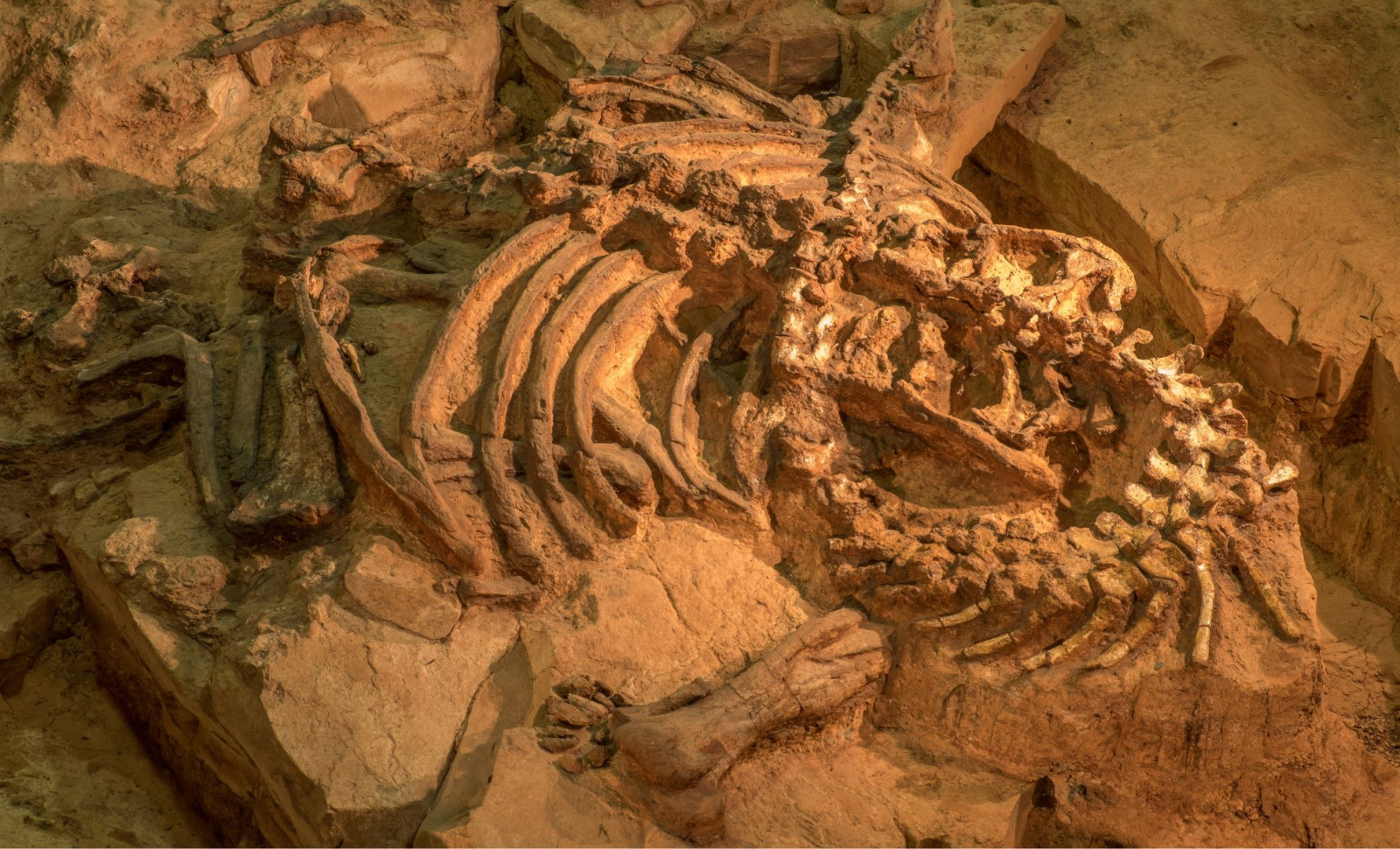
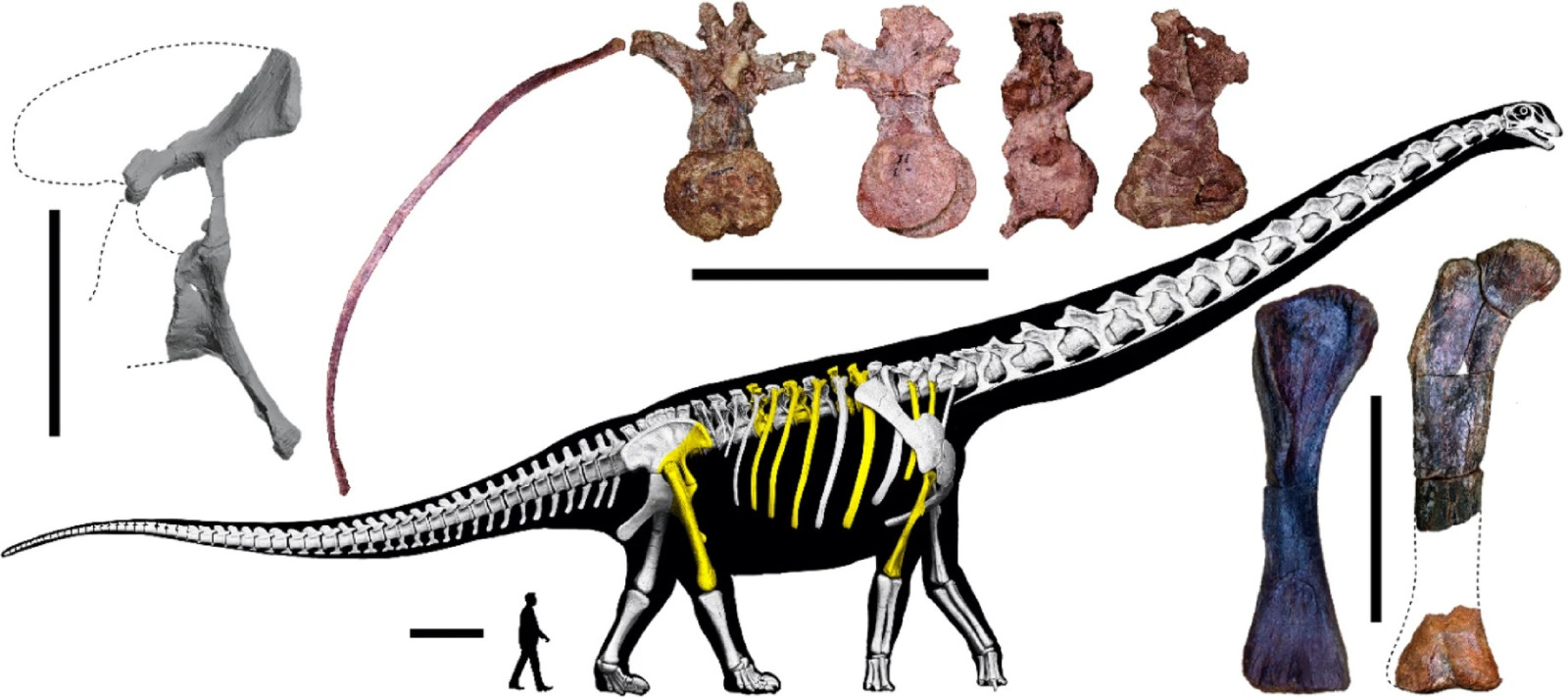
In Thailand, paleontologists have uncovered a gigantic new dinosaur species, now recognized as the biggest ever found in Southeast Asia. Dubbed Nagatitan chaiyaphumensis, this sauropod measured approximately 90 feet long and weighed around 30 tons, surpassing the weight of a Tyrannosaurus rex by more than threefold.
This remarkable find provides insight into the rapid growth of sauropods during the late Early Cretaceous period, about 100 to 120 million years ago. Thitiwoot Sethapanichsakul, a doctoral candidate at University College London and the study’s lead author, describes this dinosaur as belonging to the “upper middle” category of the largest known species.
Thailand’s dinosaur discoveries continue to increase, but Nagatitan is notable both for its sheer size and the exceptional condition of its fossils. The research, published in Scientific Reports, details several skeletal components, including the spine, pelvis, ribs, and limbs.

Enormous Plant-Eater from the Early Cretaceous Era
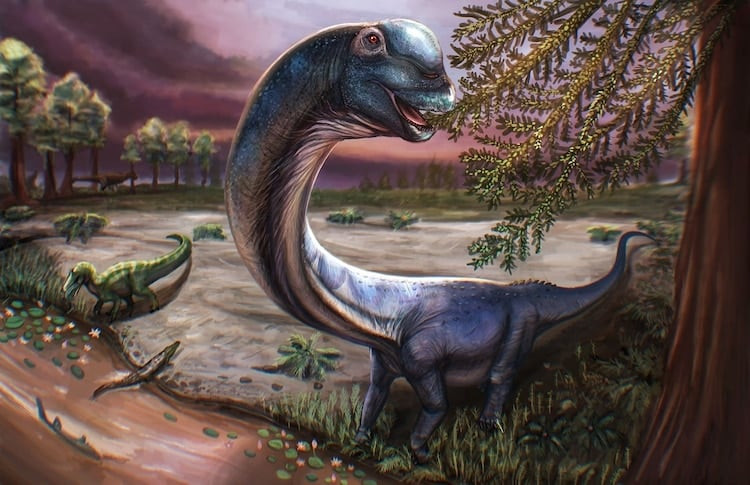
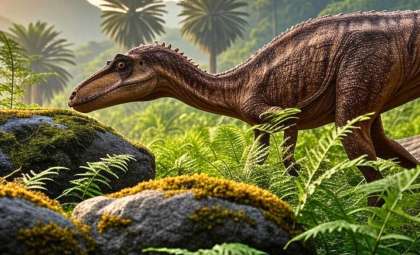
Nagatitan was a herbivorous sauropod characterized by its lengthy neck and tail. Sethapanichsakul notes that this dinosaur thrived during a time when sauropods were evolving to tremendous sizes. While 30 tons is massive, sauropods appearing later in the Cretaceous could reach weights of up to 70 tons.
“Indeed, sauropods are known to have grown very quickly after hatching, and this probably relates to the dangers of predation. The sooner sauropods could become large, the safer they were because they would have been more difficult to tackle,” Paul Upchurch, a paleontologist at UCL and co-author of the study, stated.
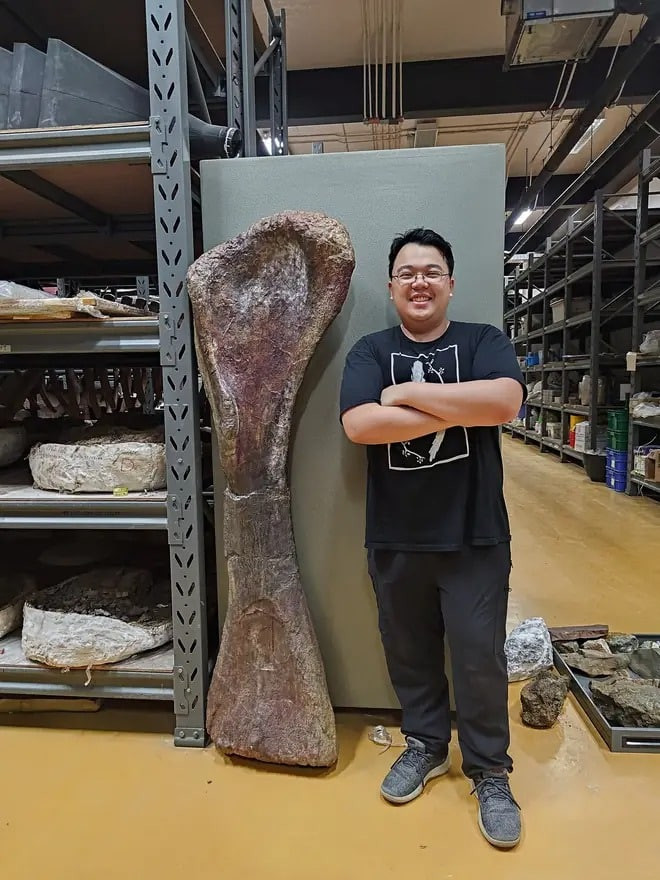
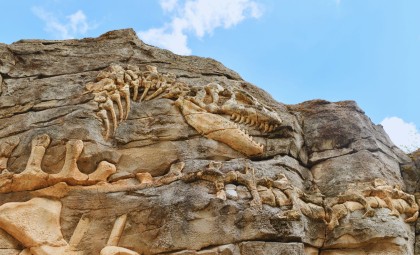
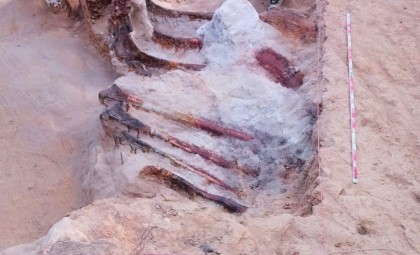
The scientists estimated the dinosaur’s size using the bones they excavated. One forelimb bone measured nearly 6 feet in length. Mathew Wedel, a paleontologist from Western University of Health Sciences who was not involved in the research, praised the fossils as “exceptionally well-preserved material,” with minimal distortion, offering crucial structural information.
“In fact, when I first saw the specimen, the kind of front leg bone is actually taller than me, which is quite surprising.” He added that“This dinosaur is very unique for us, especially in Southeast Asia, because of its size. “It is massive in comparison to what we currently know of.”
A Name Inspired by Regional Legend
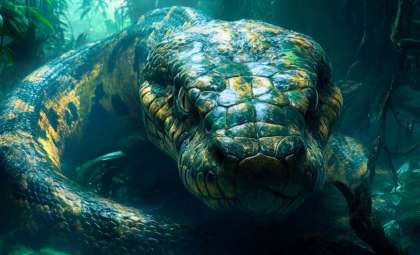
The dinosaur’s name, Nagatitan chaiyaphumensis, reflects both its impressive size and cultural roots. Sethapanichsakul explained that the name merges local mythology with the dinosaur’s giant stature.
“Naga comes from the mythological Naga [serpent creature] that is worshipped in Southeast Asia. Titan just [refers to] size.”
The species identifier, chaiyaphumensis, honors Chaiyaphum Province, the site of the original fossil discovery. Initial findings date back to 2016, with excavations proceeding until 2019 before halting due to funding constraints. Efforts resumed in 2024 after securing new financial backing.
The paper in Scientific Reports suggests this rock layer is likely Thailand’s final major source for large dinosaur remains, dubbing Nagatitan the nation’s “last titan.”
Revealing Southeast Asia’s Giant Herbivore Legacy
Wedel adds that discoveries like Nagatitan enhance understanding of dinosaur existence in less-explored regions. Each fossil discovery contributes to piecing together dinosaur evolution and distribution.
“We are trying to get people, especially in rural areas, to understand the values of paleontology,” Sethapanichsakul added. “And we do that through outreach and things like that, and having a brand-new dinosaur to announce really helps get people excited.”
This species marks Thailand’s 14th officially named dinosaur. The researchers suggest, however, that the geological timeline and environmental shifts imply few additional large dinosaur discoveries are expected in the vicinity. Wedel emphasized that fossils from Thailand offer critical insight into how sauropods adapted and thrived in shifting ecosystems.
- Categories:
- Science


0 comments
Sign in to Comment