

Researchers working in Manila have uncovered minute wear patterns on stone tools that question longstanding views about how and when humans first embarked on open ocean voyages. New evidence from archaeological digs in the Philippines, Indonesia, and Timor-Leste reveals that early modern humans in Island Southeast Asia (ISEA) may have been mastering sophisticated maritime technologies—such as making ropes, fishing gear, and potentially boats—as far back as 40,000 years ago.
These groundbreaking results, detailed in the Journal of Archaeological Science: Reports, imply that innovations in seafaring arose much earlier and independently of other global centers. Found at sites like Ilin Island in the Philippines and Lene Hara Cave in Timor-Leste, the stone tools bear microscopic markings linked to fiber extraction, a necessary step for producing ropes, nets, and bindings crucial in maritime activities.
Alongside these implements, archaeologists uncovered various fishing tools including hooks, sinkers, and net weights, as well as remains from large open-water fish such as tuna and sharks.

Hidden Maritime Expertise from the Distant Past
The investigation led by Dr. Riczar Fuentes and Dr. Alfred Pawlik from Ateneo de Manila University emerged from extensive excavation and detailed microwear examination. Utilizing advanced microscopy, the team detected fine scratches and polish traits on the stone tools, consistent with processing plant fibers used to create cordage.
“Through microscopic scrutiny of stone artifacts dating to roughly 40,000 years ago, we identified clear signs of plant fiber work—particularly techniques that produce rope, nets, and bindings indispensable for boat construction and offshore fishing,” the authors stated in an Ateneo University press release.
Importantly, these tools were closely associated with marine remains requiring deep-water procurement, including bones of large predatory fish. “The fish remnants imply a sophisticated seafaring ability paired with knowledge about seasonal fish migrations,” explained the researchers.
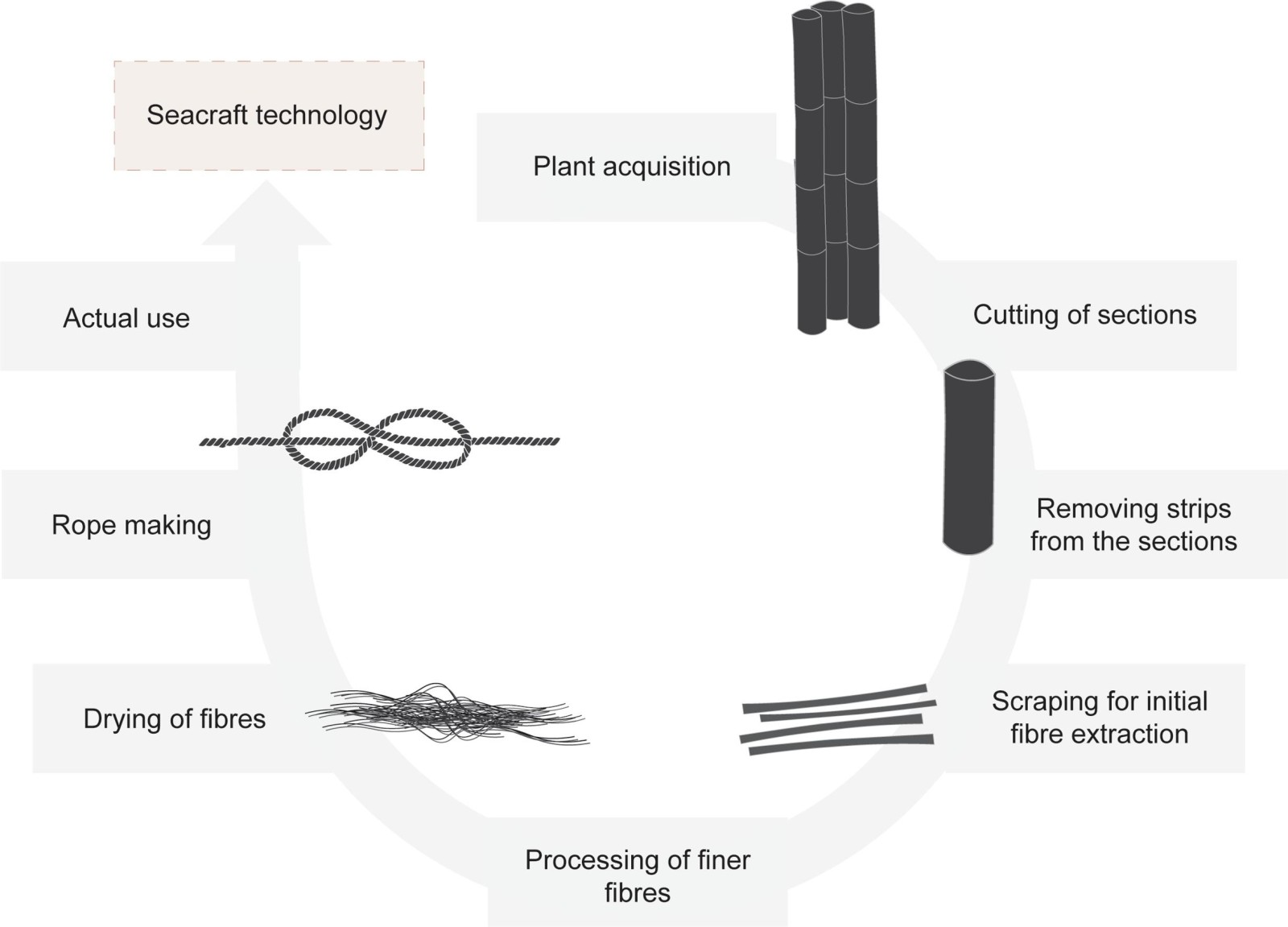
These results corroborate independent studies found in ScienceDirect, linking similar stone tool wear in ISEA to maritime resource gathering and fiber crafting. For decades, archaeological focus remained centered on Eurasia and Africa due to the scarcity of preserved organic materials in tropical regions—a bias now being challenged.
Tools for Fishing and Rope Production Unearthed
Although no direct watercraft or sails have survived—given tropical climates rapidly degrade organic matter and related materials—the indirect archaeological evidence paints a strong picture. Co-occurring stone tools for processing fibers, specialized fishing apparatus dependent on cordage, and remains of pelagic fish species signal a complex maritime technology.
A Popular Mechanics feature highlighted this evolving viewpoint, stating, “The recovered fish bones and tool residues suggest the essential role of durable, carefully crafted ropes and lines for successful deep-sea fishing.”
This assemblage—fiber-processing stones, net weights, hooks, and pelagic fish bones—indicates a level of maritime planning and knowledge that contradicts previous views portraying early Southeast Asians as accidental sea travelers.
Furthermore, geological data confirm large parts of ISEA were never connected to continental landmasses during the last Ice Age, meaning early settlement required deliberate sea voyages. This strengthens the hypothesis that these journeys involved intentional navigation, coordination, and technological skills.
Testing Hypotheses Through Experimental Archaeology
To validate their discoveries, Fuentes and Pawlik established the FLOW Project (First Long-Distance Open-Sea Watercrafts) in collaboration with naval engineering experts from the University of Cebu. Funded by Ateneo grants, the initiative is reconstructing scaled models of Paleolithic watercraft using indigenous resources and inferred manufacturing methods.
This hands-on approach aims to prove whether early fiber-based ropes and bindings could create seaworthy vessels suitable for long-distance ocean travel.
Success in these trials would offer tangible evidence that early humans in the region not only conceptualized but also accomplished complex maritime voyages tens of millennia ago—predating many other acknowledged maritime cultures.
Rethinking the Roots of Maritime Innovation
If embraced by mainstream scholars, these insights could profoundly reshape understanding of early human dispersal and technological development. They dispute the prevailing narrative that advanced technology radiated predominantly out of Africa and Europe, instead highlighting the possibility of concurrent, independent innovation in Southeast Asia.
Moreover, they draw attention to the archaeological biases shaped by preservation challenges, where gaps in the physical record have been mistakenly interpreted as technological absence.
- Categories:
- Science











0 comments
Sign in to Comment