
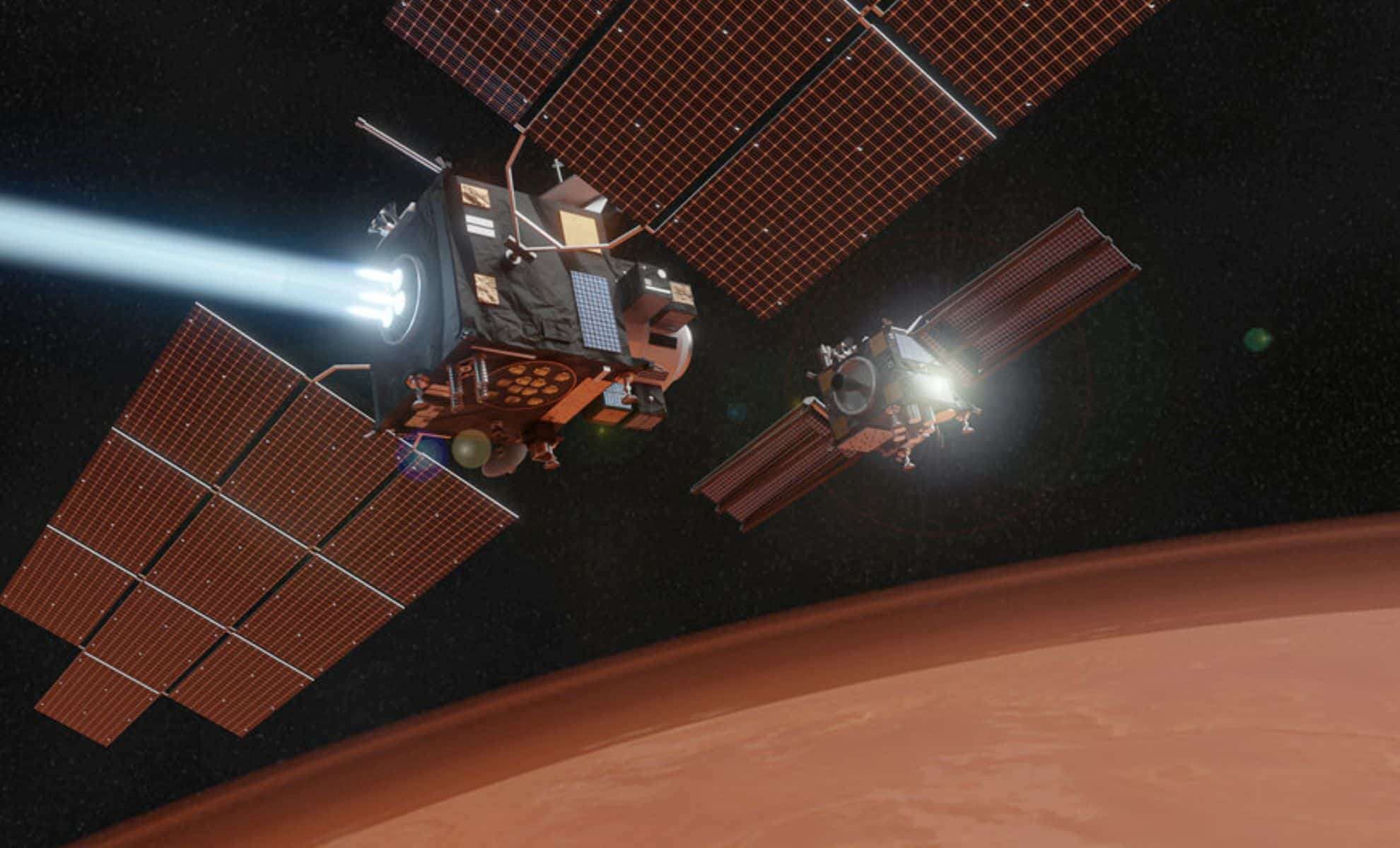
On July 7, 2025, the European Space Agency (ESA) made a historic breakthrough in space communication by establishing Europe’s inaugural optical link with a distant spacecraft. This pioneering connection, developed in collaboration with NASA, was executed through the Deep Space Optical Communications (DSOC) experiment aboard NASA’s Psyche mission, currently positioned over 265 million kilometers from Earth. The link utilized two optical ground stations in Greece, marking a milestone set to transform communication capabilities for upcoming deep-space expeditions.
Advancing Communication Tech Beyond Radio Waves
ESA’s establishment of an optical link with the Psyche spacecraft represents a critical advancement in deep-space communication. Unlike conventional radiofrequency methods, optical communication systems can transmit data at speeds up to 100 times faster. As ESA’s Director of Operations, Rolf Densing, explains, “Successfully demonstrating deep-space optical communication with a European ground station is a monumental step toward delivering fast, internet-like connectivity to spacecraft far from Earth. This achievement, in partnership with industry, academia, and NASA/JPL, highlights the essential role of global collaboration.”
This breakthrough ushers in an era where high-bandwidth space communication becomes the norm, supporting more complex missions and large-scale data transmissions. Optical communication not only accelerates data transfer but improves efficiency, a necessity for handling the extensive scientific information from future missions.

Technical Hurdles in Creating the Optical Link
Establishing an optical connection across such astronomical distances involved overcoming formidable challenges. As Sinda Mejri, project manager for ESA’s Ground Laser Receiver, points out, “Achieving reliable two-way optical communication required tackling two main obstacles: creating a laser strong and precise enough to target a distant spacecraft and constructing a receiver sensitive enough to detect a faint return signal, which can be just a few photons after traveling hundreds of millions of kilometers.”
Success depended on innovative technology and meticulous coordination among international teams. ESA’s Kryoneri Observatory near Athens deployed a highly focused laser beam aimed at Psyche, while the spacecraft responded by sending back a signal received at the Helmos Observatory, situated some 37 kilometers away. The receiver’s extraordinary sensitivity ensured that even the faintest signals could be captured and decoded despite the vast distance.

Global Cooperation Drives Innovation
This achievement highlights the vital importance of international partnerships in pushing forward space technology. ESA’s collaboration with NASA and numerous global contributors, including companies like qtlabs (Austria), Single Quantum (Netherlands), NKT Photonics Ltd (UK), and academic institutions such as the National Observatory of Athens, was key to success. Mariella Spada, ESA’s Head of Ground Systems Engineering and Innovation, describes it as “a remarkable accomplishment. Years of technological progress, international standardization, and innovative solutions have laid the foundation for the Solar System Internet.”
The project exemplifies how global and private sector cooperation is vital to the future of space exploration and communication, offering a glimpse of how upcoming missions may rely on international networks and joint technological efforts.
The Future of Deep-Space Data Transfers at ESA
ESA’s breakthrough extends beyond a single experiment and signals a future where optical communication stands alongside radiofrequency systems to meet growing data demands. Andrea Di Mira, Project Manager for the Ground Laser Transmitter system at ESOC, stresses, “Optical communication can deliver speeds 10 to 100 times greater than today’s radiofrequency systems. Integrating both technologies is crucial to handling the increasing volumes of data from planetary and deep-space exploration.”
This success supports plans for ESA’s ASSIGN initiative, which aims to create an interoperable communication network mixing radiofrequency and optical links. This network will provide robust, secure communications for institutional and commercial missions alike. Further discussions on the ASSIGN program are anticipated at the upcoming ESA Council Meeting at Ministerial Level (CM25) in November 2025.
- Categories:
- News










0 comments
Sign in to Comment