
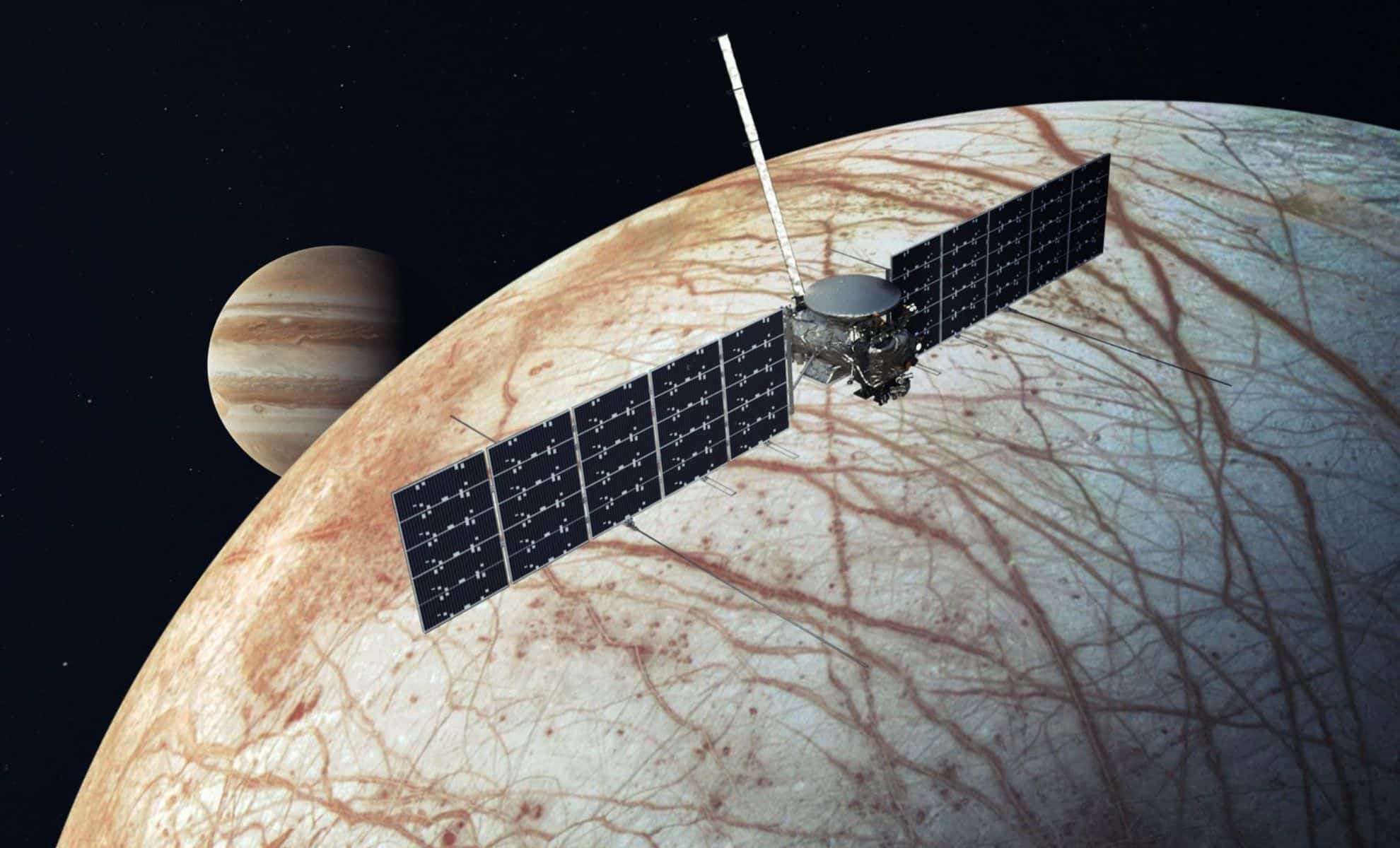
During its voyage to Jupiter's moon Europa, NASA's Europa Clipper spacecraft conducted a vital Martian flyby on March 1, 2025, utilizing this close pass to calibrate its sophisticated thermal imaging instruments. This encounter enabled the spacecraft to secure detailed infrared images of Mars, which are critical for fine-tuning its sensors before arriving at Europa in 2030. These infrared snapshots are not only pivotal for instrument calibration but also offer a chance to validate the spacecraft's capabilities in preparation for its ambitious scientific investigations. A recent update from the Jet Propulsion Laboratory provides an in-depth look at the mission's advancements and upcoming challenges.
Infrared View Reveals Temperature Variations on Mars
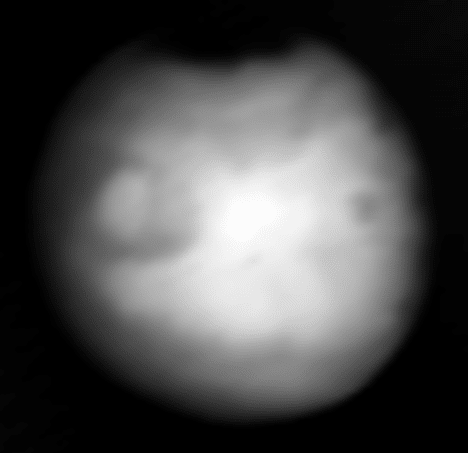
Europa Clipper employed its thermal camera to obtain multiple infrared images, assembling a comprehensive temperature map of Mars. Colors in the images accentuate thermal differences, with red indicating warmer zones and purple marking the coldest regions. The northern polar cap demonstrated chilling temperatures near minus 190°F (-125°C), while milder areas reached around the freezing point, 32°F (0°C). This thermal portrayal provides both captivating imagery and essential calibration data that will enhance the spacecraft's future investigations of Europa's icy crust and beneath-ice ocean.
Harnessing Mars’ Gravity for a Speed Boost
At a close distance of just 550 miles (884 kilometers), Europa Clipper utilized Mars’ gravitational force on March 1 to alter its course and increase its velocity. This gravity assist shortens the spacecraft's travel time to Jupiter, enhancing mission efficiency. Beyond this navigational benefit, the flyby offered a crucial chance to trial the spacecraft's instruments under operational conditions. Over an 18-minute span, the thermal imager captured more than 1,000 grayscale shots, which began transmission back to Earth on May 5.

By cross-referencing these images with extensive data from prior Mars missions such as NASA’s Mars Odyssey, engineers confirmed the accuracy of the Europa Clipper's thermal cameras. “We wanted no surprises in these new images,” stated Phil Christensen, lead scientist for the infrared camera. “Our goal was to capture Mars—a well-studied planetary body—and verify the instruments perform as expected, consistent with two decades of Mars observations.”

Advancing Preparations for Exploring Europa
The chief objective for Europa Clipper is to unravel the mysteries of Europa’s ice shell and assess its potential to host life. Utilizing its thermal sensor known as E-THEMIS, the spacecraft will seek out thermal anomalies signaling recent geological activity. “Identifying temperature differences along fractures may indicate ocean interactions below,” Christensen explained. “Warmer zones could suggest ongoing activity or relatively young surfaces from water outflows.”
This thermal data will be crucial in detecting contacts between Europa’s subsurface ocean and surface ice, offering insights into geological dynamism and habitability prospects. Europa’s cracked and ridge-filled exterior is believed to result from the movement of its hidden ocean, making temperature measurements a key tool in studying this icy world.
Validating Systems for the Long Journey
The Mars encounter also allowed engineers to test combined operations of Europa Clipper’s radar and communication instruments for the first time post-launch. Due to the complexity and size of the equipment, pre-launch integrated testing was not feasible. Preliminary findings indicate these systems operated harmoniously, ensuring the spacecraft is well-equipped to perform ice-penetrating radar studies at Europa.
Additionally, the flyby provided a vital check on the spacecraft’s communication systems under gravitational influences similar to those expected near Europa. By successfully maintaining signal transmissions during Mars gravity passage, the mission team confirmed a key capability necessary for future gravity science experiments upon reaching Jupiter’s moon.
- Categories:
- News








0 comments
Sign in to Comment