
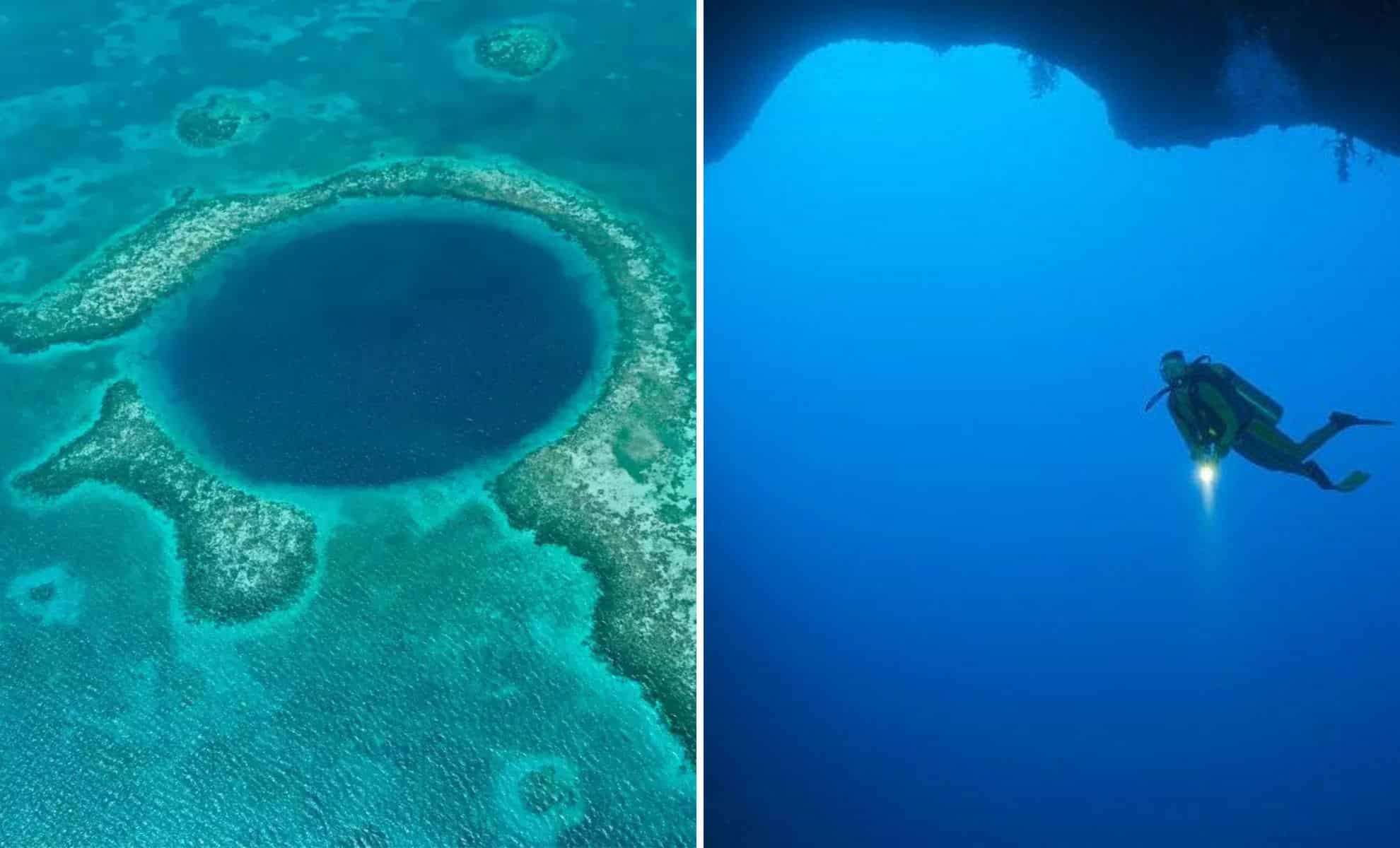
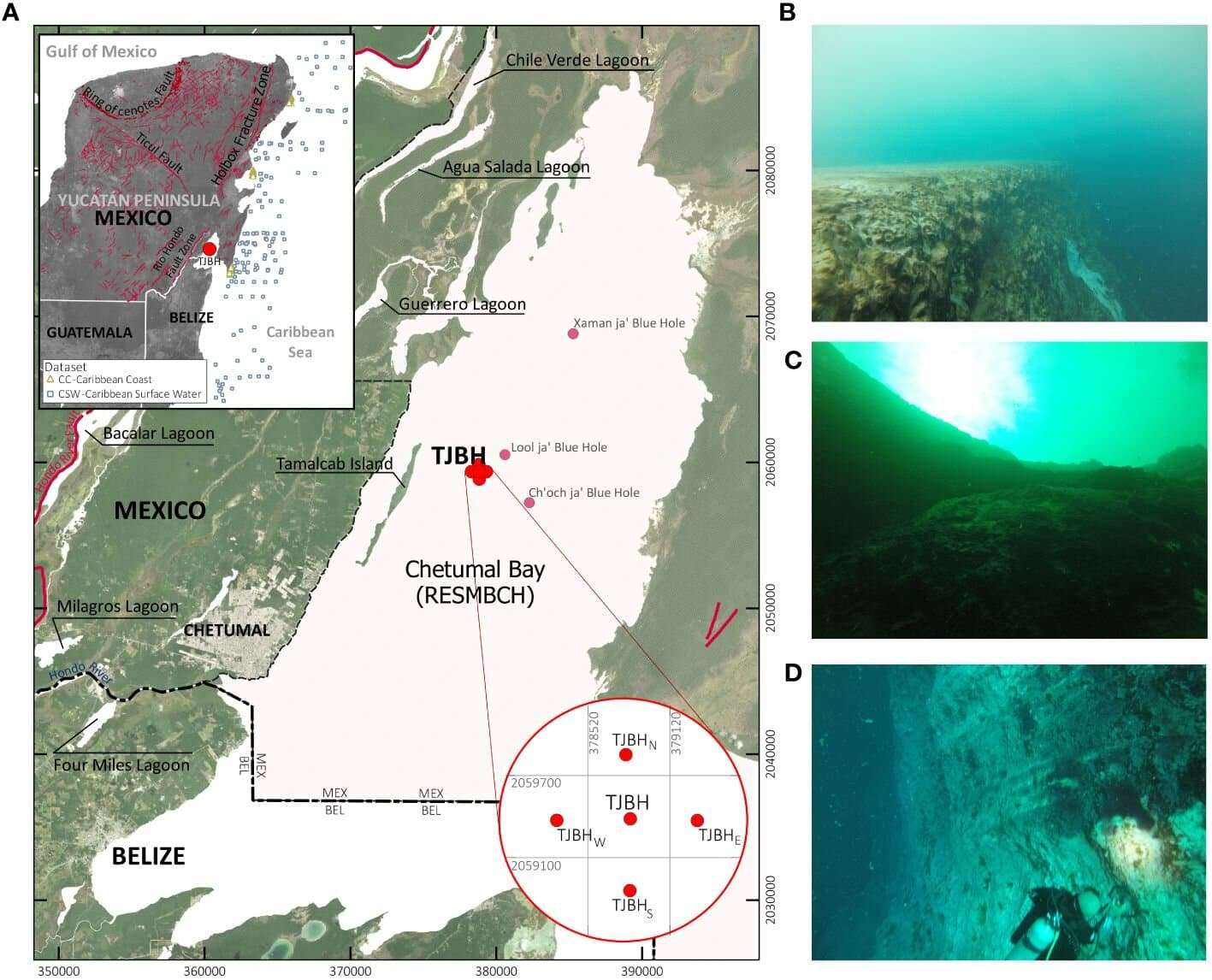
The Taam Ja’ blue hole, an enormous underwater sinkhole located in Chetumal Bay along Mexico’s Yucatán Peninsula, has recently been confirmed as the deepest known blue hole worldwide. Once thought to be around 275 meters in depth, new measurements reveal it reaches a staggering at least 420 meters, surpassing the previous holder, China’s Dragon Hole, which measures 301 meters. Yet, due to equipment limitations, experts believe this enigmatic chasm could extend even further into the planet’s subsurface.
This landmark finding captivates not just because of its vast depth but also due to the geological and oceanographic enigmas it presents. Formed over extensive geologic timeframes, blue holes often support unique biological communities, reveal ancient rock formations, and connect to complex underground water networks. With the updated depth, Taam Ja’ shifts from obscurity to becoming one of the planet’s most fascinating submerged formations.
Delving Into Taam Ja’s Profound Depths
A consortium of oceanographers from Mexican research institutions recently led an expedition that yielded key new insights into the Taam Ja’ blue hole. Their findings, published in Frontiers in Marine Science, stemmed from a December 2023 CTD (conductivity, temperature, depth) profiling mission. Deploying this sophisticated device enabled precise mapping of water properties across various depths, enabling more accurate assessment of the abyss’s magnitude and features.

One standout revelation is that despite advanced instrumentation, the exact bottom of Taam Ja’ remains elusive. The CTD profiler is rated to operate to depths of 500 meters, but unexpected deployment drift meant researchers had to adjust their data by 80 meters. This correction confirmed a minimum depth of 420 meters, but scientists suspect the blue hole may plunge deeper. This highlights the necessity for subsequent explorations with even more robust, cutting-edge submersible equipment to comprehensively chart Taam Ja’s full volume and detect any unseen geological or hydrological phenomena.
The Intrigue Behind Blue Holes
Blue holes are vast submerged sinkholes carved out of limestone bedrock through dissolution processes spanning millennia, forming vertical shafts filled with seawater. Unlike conventional oceanic trenches, blue holes tend to enclose isolated habitats where geological forces and sea currents create distinctive environmental niches. Many of these formations contain layers of oxygen-starved water that preserve ancient sediments, fossils, and rare microorganisms seldom encountered elsewhere.
Iconic blue holes, such as Belize’s Great Blue Hole and Egypt’s Dahab Blue Hole, have long captured scientific interest and attracted deep-water explorers. Yet none approach the profound depth now documented at Taam Ja’. Securing this superlative spot sets the stage for pioneering marine investigations and poses fresh questions about the origin of these abyssal structures and their influence on Earth’s subterranean hydrodynamics.
Could Taam Ja’ Link to the Caribbean’s Hidden Waterways?
The recent expedition uncovered distinct layers of water in Taam Ja’, exhibiting varying temperature and salinity gradients. At depths near 400 meters, the water’s characteristics closely matched those of the adjacent Caribbean Sea, suggesting a possible underground water connection.
This intriguing observation hints at the existence of an expansive, concealed network of caves and channels beneath the Yucatán Peninsula. If confirmed, Taam Ja’ could be a natural passage facilitating exchanges between inland water reservoirs and the open ocean, potentially impacting local hydrology and marine biodiversity in ways not yet fully understood. Additional research will aim to verify whether these deep layers represent living conduits that link the blue hole to the wider oceanic system.
Advancing Ocean Exploration Through Innovation
With its new standing as the planet’s deepest blue hole, Taam Ja’ has become a prime target for further detailed investigations by marine scientists and geologists. Upcoming explorations are poised to deploy remotely operated vehicles (ROVs) and underwater autonomous drones outfitted with high-resolution sonar and pressure-tolerant sensors to map the abyss comprehensively.
The promise of discovery within Taam Ja’ is enormous. Many deep blue holes contain intact geological archives that can reveal ancient climate epochs, past marine life, and elusive microbial ecosystems thriving in extreme conditions. Unveiling the suspected subterranean link to the Caribbean may also shed light on the interactions between ocean currents and coastal waters.
Now transformed from an obscure underwater formation to a scientific priority, Taam Ja’ is at the forefront of marine exploration, deep-sea research, and even astrobiological studies searching for Earth analogs to extraterrestrial ocean worlds, such as the icy moons Europa and Enceladus.
- Categories:
- News








0 comments
Sign in to Comment