
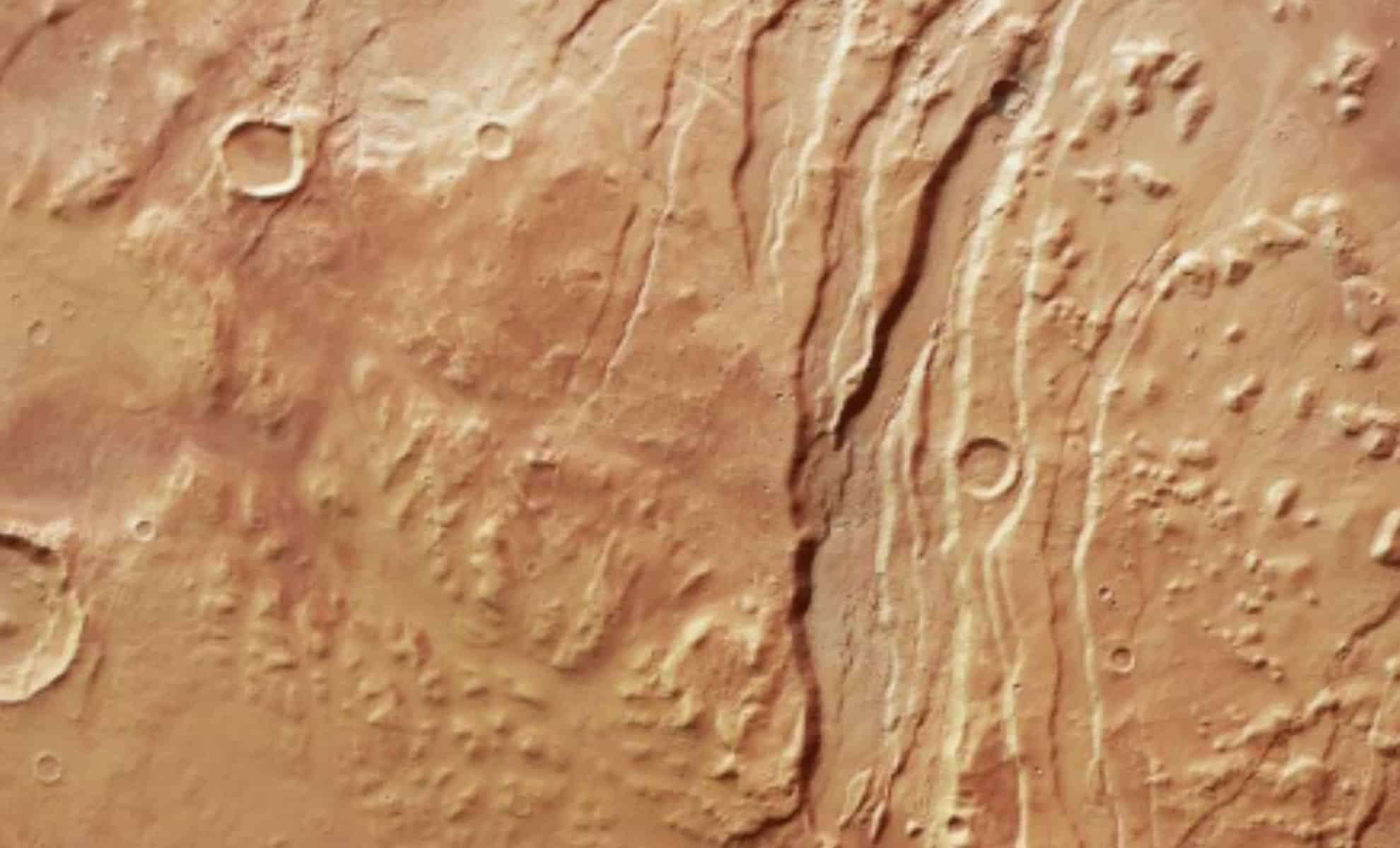
Mars’s vast deserts are home to unusual geological formations that spark scientific curiosity. Among these, Acheron Fossae stands out as a striking network of valleys and fissures etched into the planet’s surface by ancient forces. The European Space Agency’s (ESA) Mars Express orbiter has uncovered pivotal details about this region, offering fresh perspectives on how these features formed and what they reveal about Mars’s distant past. A recent ESA report dives back into the Acheron Fossae landscape to present new clues about Mars’s dynamic early environment.
Understanding Acheron Fossae’s Geological Complexity
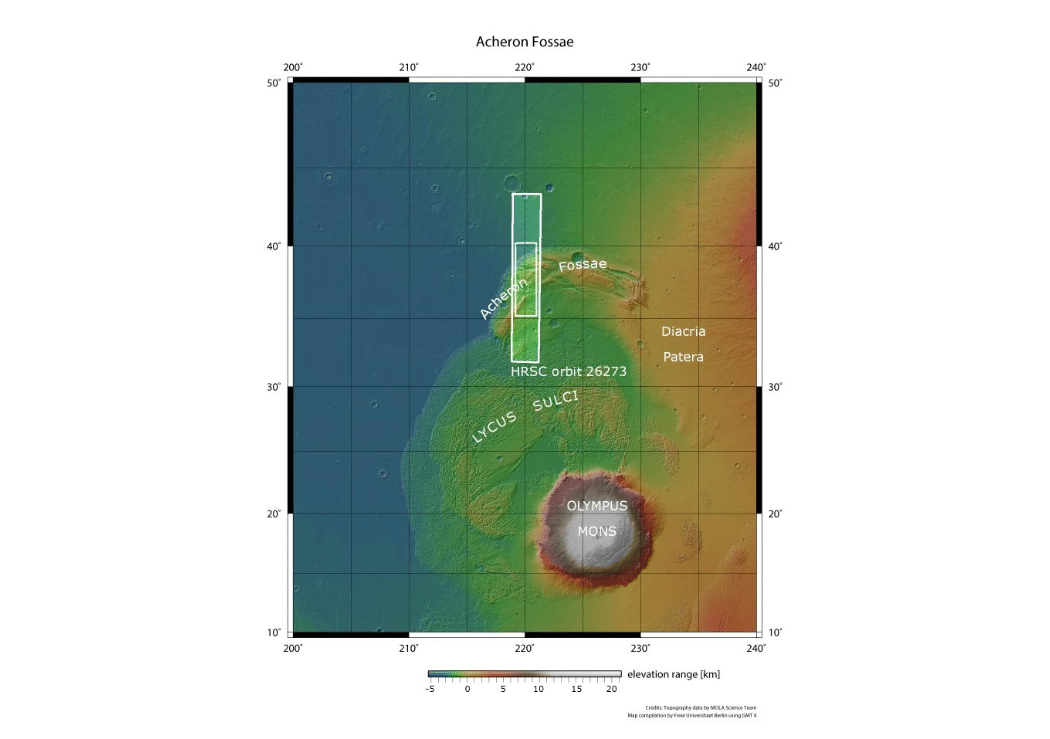
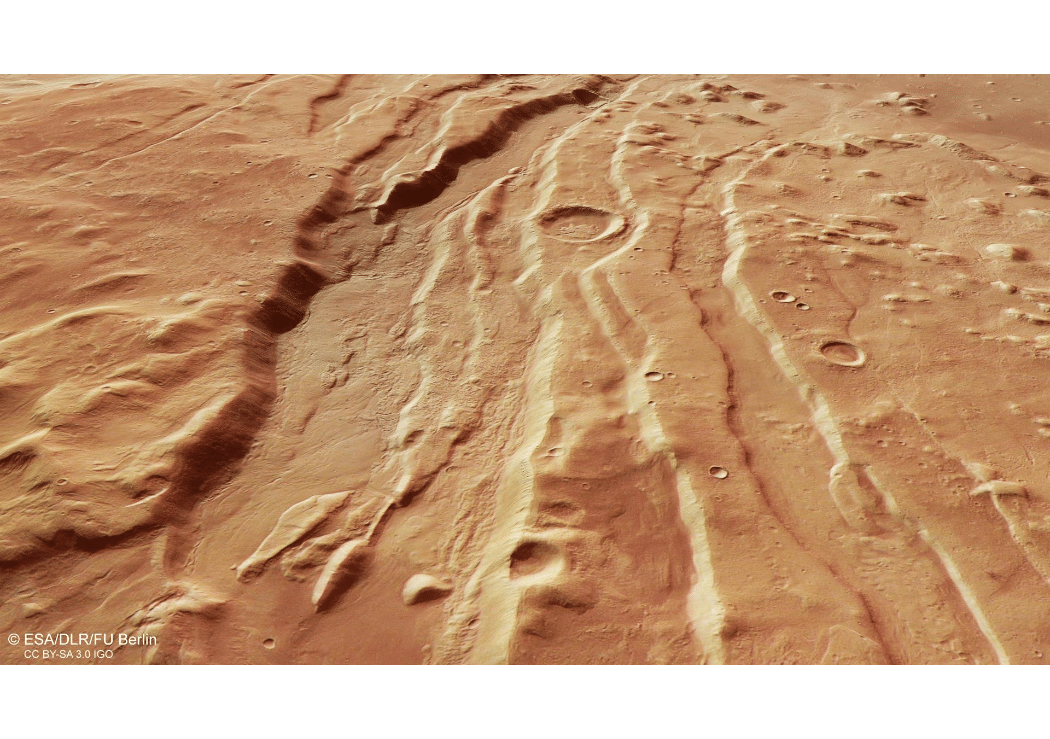
Acheron Fossae is an impressive Martian formation composed of numerous deep fissures, known as fossae, that bisect the landscape. These gaps are not mere surface cracks but the outcome of intricate geological processes dating back more than 3.7 billion years, coinciding with Mars’s most active geological era. The area features a characteristic horst and graben pattern, where elevated ridges (horsts) appear alongside sunken trenches (grabens), indicating that Martian crust has been stretched and fractured by rising molten material beneath the surface.
This region is especially significant because it reflects the planet’s tectonic processes. Unlike Earth’s consistent plate tectonics and volcanic cycles, Mars experienced intense volcanic eruptions and crustal stretching interspersed with quieter periods. The fracturing in Acheron Fossae results from hot mantle material exerting pressure upwards, stretching the crust until it breaks apart. These cracks have endured for billions of years, providing scientists with a rare lens into the geological shifts Mars has undergone.

Acheron Fossae displays diverse terrain features—from fault-like fissures to winding valleys containing ice-rich rocky deposits. By studying these formations, researchers can piece together the environmental conditions on Mars during its early history, exploring how it transformed from a world once hospitable to life into the barren, chilly planet observed today.
Acheron Fossae as a Record of Mars’s Past Climate
Beyond its dramatic geology, Acheron Fossae functions as a geological archive of Mars’s ancient climate. The valley floors, previously sculpted by moving ice and mixed rock, narrate cycles of warming and cooling throughout Martian history. These formations resemble rock glaciers on Earth, where ice and rocks combine to form slow-moving glaciers, which serve as indicators of climate trends by preserving evidence of cold climate phases conducive to ice accumulation.
These sluggish, ice-laden flows, alongside rocky debris, point to significant climatic variations triggered by changes in Mars’s axial tilt. Unlike Earth's relatively stable tilt, Mars’s axial angle has oscillated wildly between 15 and 45 degrees over the past 10 million years. These shifts—known as Milankovitch cycles—have caused ice to shift from poles to equator and back, driving the erosion and deposition processes observed today.
Findings from Mars Express confirm that these climatic fluctuations played a key role in shaping the distinct ice-rich layers preserved in Acheron Fossae. These deposits record cycles of freezing and thawing that have influenced not only the planet’s surface but also its atmosphere across eons.
From Rugged Faults to Smooth Plains: Mars’s Geological Transition
Acheron Fossae also reveals a fascinating geographic shift where rugged fault zones gradually transform into broad lowland plains. On its western edge, the deep cracks open into expansive flatlands, once part of a continuous rock layer that has since eroded under the influence of ice and debris flows. This erosion left behind distinctive knobs—small rounded hills—and mesas, flat-topped structures that stand as remnants of the former rock coverage.
This transition from jagged faults to smoother plains demonstrates Mars’s surface dynamism, shaped by both tectonic forces and climate-driven erosion. Nearby, close to Olympus Mons, the largest volcano in the Solar System, lies a contrasting flat terrain, suggesting volcanic activity may have also played a pivotal role in modifying the local landscape, adding another layer to the complex history of Acheron Fossae.
- Categories:
- News










0 comments
Sign in to Comment