
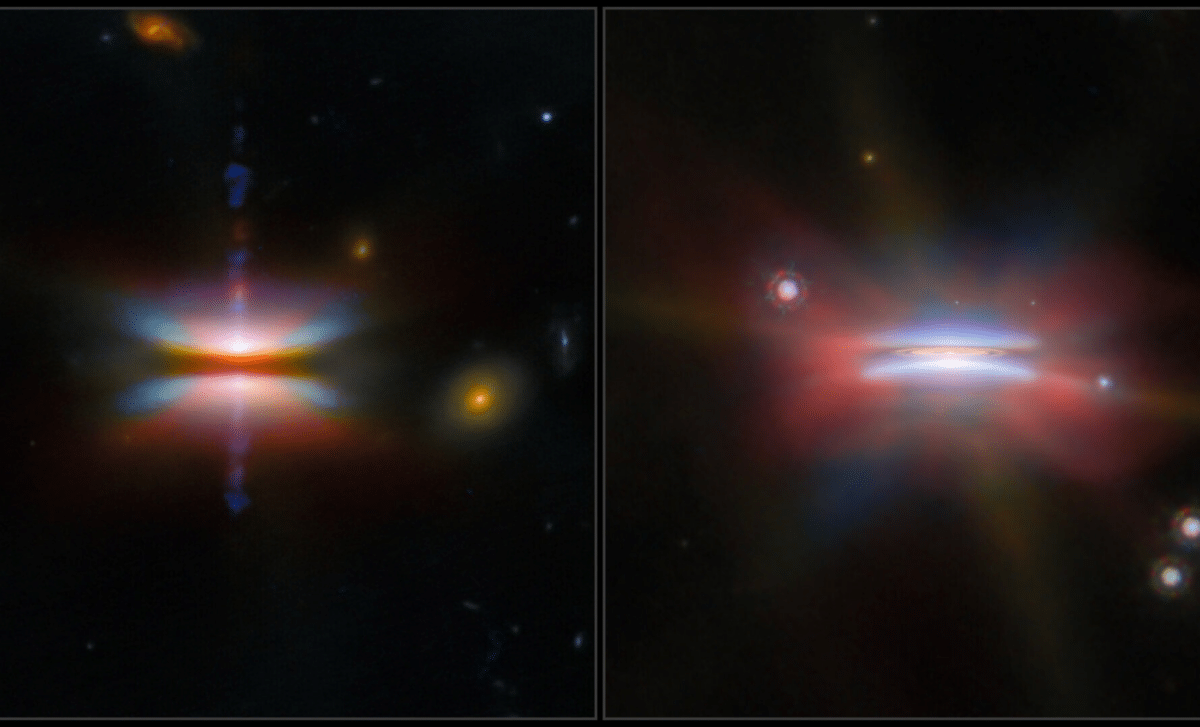
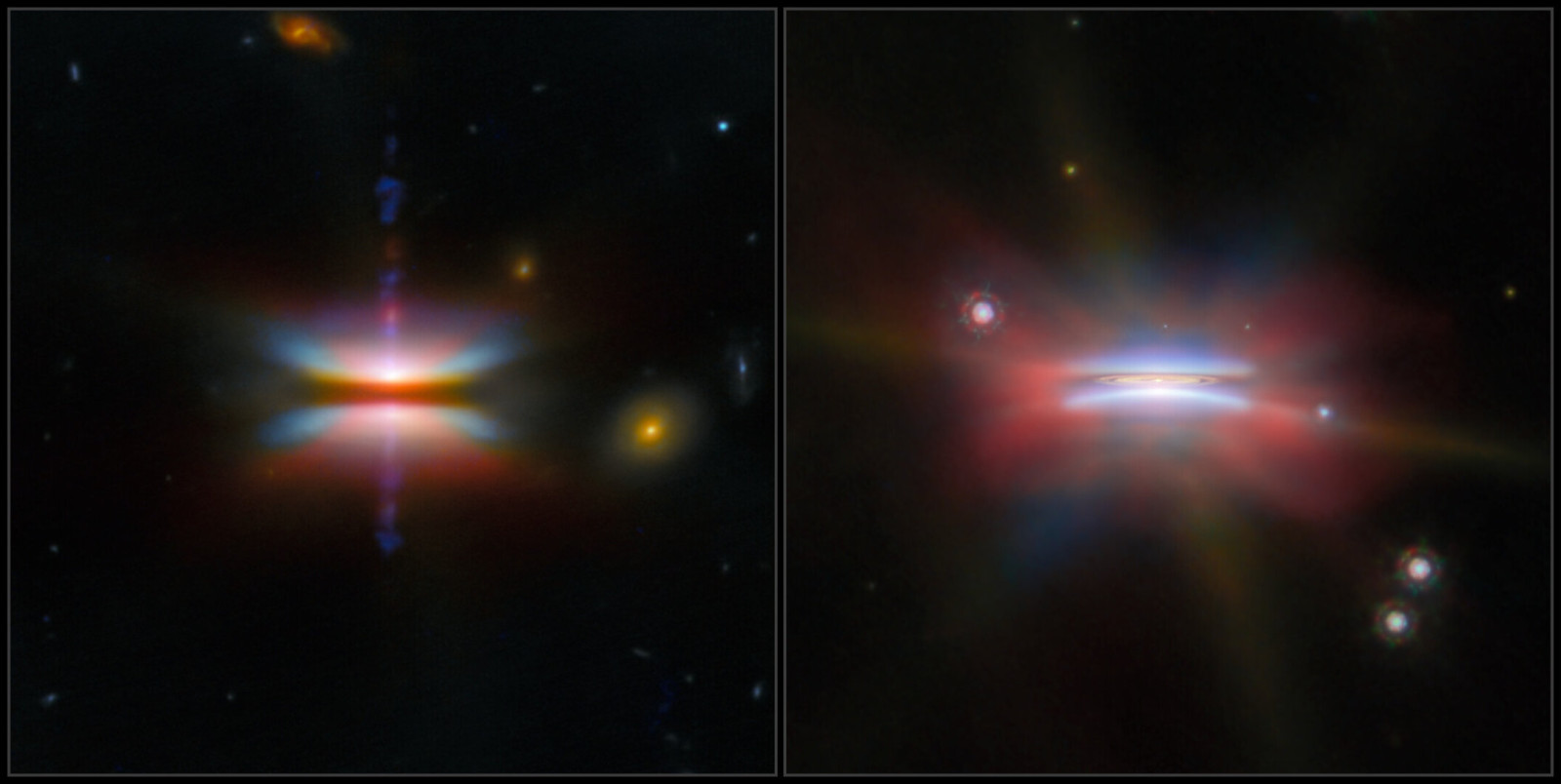
The James Webb Space Telescope (JWST) has captured stunning images of two discs where planets are born. For the first time, researchers have observed these discs from an edge-on perspective, allowing the dense light from the youthful stars at their cores to be blocked. Through detailed observations by NASA’s JWST and the European Space Agency (ESA), scientists are gaining vital insights into how planets emerge from dust and gas swirling in these discs, offering a clearer glimpse into how our own Solar System may have originated. ESA published these significant findings in April 2026, shedding light on the universal mechanisms behind planet formation.
Unlocking the Mysteries of Protoplanetary Discs
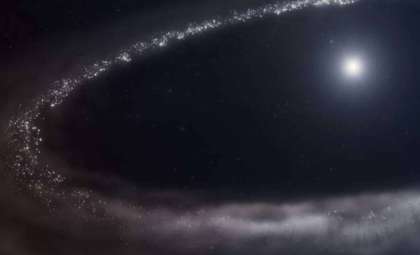
The discs, known as Tau 042021 and Oph 163131, are more than just intriguing celestial objects; they are key to uncovering the early phases of planet creation. Encircling young stars in the Taurus and Ophiuchus constellations, approximately 450 and 480 light-years away from Earth, these discs consist of gas and dust left over from star formation. Over millions of years, this material gradually clumps together, forming planetesimals — small rocky bodies that can ultimately coalesce into planets.
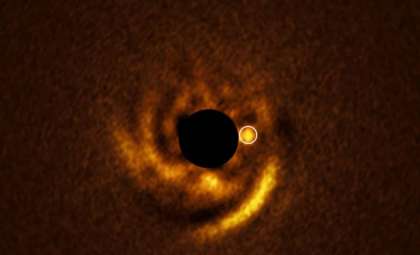
What makes these particular discs remarkable is their edge-on alignment from our vantage point. This rare angle allows scientists to peer through the dust and gas in fine detail, usually obscured by the overwhelming brightness of the central star. By using the Webb telescope to block the star’s intense light, researchers can clearly study the nebula-like structures enveloping the discs, which hold clues about the initial steps of planet formation.

The Unique Advantages of Webb’s Imaging Technology
Captured using Webb’s sophisticated Near Infrared Camera (NIRCam) and Mid-Infrared Instrument (MIRI), the images reveal an intricate variety of dust particles within these discs. The colors—spanning from red to green—indicate various sizes of dust grains and the presence of molecules such as hydrogen, carbon monoxide, and polycyclic aromatic hydrocarbons (PAHs). These components are crucial for decoding the conditions that enable planets to form.
Thanks to Webb’s exceptional infrared sensitivity, it can detect dust grains as tiny as a few microns. Complemented by visible light data from the Hubble Space Telescope, this multi-wavelength approach allows scientists to map the dust distribution with unprecedented clarity. The Oph 163131 disc, for example, displays a notable gap near its center, potentially pointing to a growing planet clearing its orbit.
Implications for the Formation of Planetary Systems Similar to Our Own
These revelations hold particular significance for piecing together the story behind our own Solar System’s birth. Like the stars in this study, the Sun was once encompassed by a protoplanetary disc that gave rise to the planets, moons, and other solar bodies. Examining younger, distant discs helps researchers refine models of how gravitational and material interactions led to the Solar System’s architecture.
The observed dust distributions hint at dynamic processes shaping planet formation zones. Certain regions within the discs seem more favorable for forming gas giants, whereas others may be ideal for smaller, rocky worlds like Earth. Webb’s capability to track these dust gradients offers critical insights into how planetary systems evolve over time.
The Collaborative Spirit of NASA, ESA, and CSA in Advancing Space Science
The remarkable detail present in these images is the fruit of extensive cooperation among NASA, ESA, and the Canadian Space Agency (CSA). Their joint development of the James Webb Space Telescope represents a monumental leap forward in our ability to observe the cosmos. This research exemplifies how cutting-edge technology is revolutionizing astronomical exploration, providing a peek into future discoveries.
ESA’s contributions to this landmark research underscore its essential role in pushing the frontiers of space science. By harnessing the strengths of both Webb and Hubble telescopes, ESA has played a central part in this landmark planetary science advancement and broadened our cosmic knowledge.
- Categories:
- News



0 comments
Sign in to Comment