
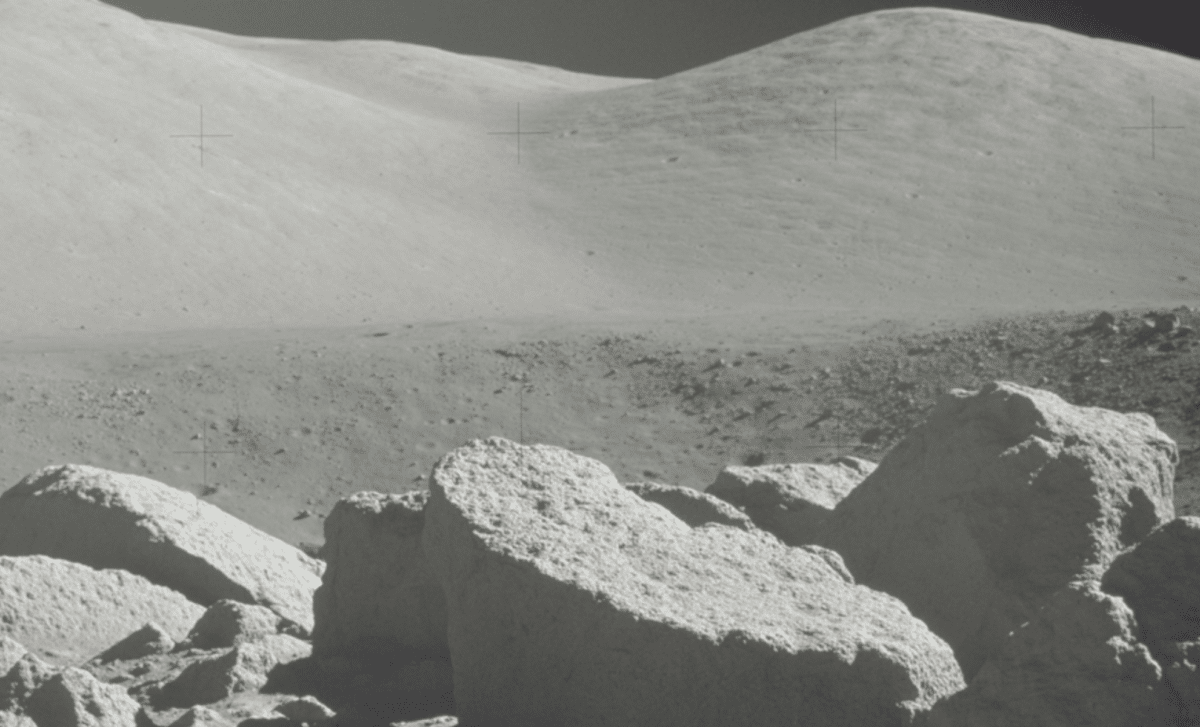
Researchers have uncovered subtle chemical evidence within ancient lunar rock samples that is transforming our understanding of the Moon’s early formation, indicating the surprising presence of oxygen during its creation. As reported by The Conversation, this discovery challenges existing views of the Moon’s chemical environment and prompts fresh inquiries into the intertwined evolution of Earth and its natural satellite.
Subtle Chemical Evidence From Apollo Moon Rocks
Investigations into lunar material retrieved by NASA’s Apollo missions have detected an unexpected chemical marker that defies traditional lunar formation theories. Preserved for decades and recently analyzed with state-of-the-art technology, these rocks reveal isotopic patterns indicating significant oxygen presence during periods previously believed to be oxygen-poor. Variations in isotopes of iron and oxygen serve as the telltale indicators of the conditions under which these lunar samples solidified.
What makes this finding remarkable is the subtlety of the signal — it doesn't appear as obvious oxygen compounds but as faint shifts in isotope ratios, measurable only through highly advanced instrumentation unavailable when the samples were first collected. This suggests that for years, the vital evidence lay hidden until scientific capabilities caught up. The discovery implies that the Moon’s early chemical landscape may have been far more complex and oxygen-rich than earlier models assumed, compelling a reassessment of how its crust developed.

Insights From the Recent Research
As outlined in The Conversation, the findings hint at a more intricate connection between early Earth and the material that eventually formed the Moon. The dominant origin theory involves a colossal collision between Earth and a Mars-sized object, resulting in a hot disk of debris. This scenario predicts that volatile elements such as oxygen would be scarce or redistributed in specific ways.
However, the new chemical signature points to unexpected oxygen retention or integration after the impact. This suggests either that the collision dynamics differed from conventional models or that oxygen was introduced into lunar materials later on. The study proposes that oxygen could have been transported between Earth and the Moon’s precursor debris cloud more effectively than previously understood, indicating Earth's atmosphere or mantle chemistry played a larger role in shaping the Moon’s makeup.
This research reframes the Moon as a celestial body with strong chemical ties to Earth’s formative stages, rather than an isolated entity.
Reevaluating the Moon’s Formative Collision
The implications extend well beyond a minor chemical anomaly. If oxygen was available in noteworthy quantities during critical phases of lunar creation, then the giant impact hypothesis requires refinement instead of dismissal. Scientists must consider possibilities where oxygen was either trapped within molten material or reintroduced during cooling and solidification.
One theory suggests the debris surrounding Earth after the impact could have contained oxygen-rich regions that were not entirely lost. Another considers that interactions with Earth's primitive atmosphere may have facilitated oxygen incorporation into the forming lunar rocks before solidification. Both ideas portray a more dynamic and heterogeneous environment than simplified computational models often assume.
This discovery also prompts questions about the behavior of other elements like hydrogen, carbon, and sulfur during this period, which might also reveal hidden complexities through enhanced analytic techniques.
The Broader Importance For Planetary Science
Beyond updating the Moon’s origin narrative, this breakthrough affects interpretations of how terrestrial planets form within our solar system and around distant stars. The Moon’s surface, which preserves early geological history due to limited recycling, serves as a critical reference frame. New chemical insights can influence planetary formation theories globally.
Gaining a better understanding of oxygen’s role during massive collision events will aid in interpreting data from exoplanets and other bodies formed by similar cataclysms. This highlights the continuous value of reexamining aged samples with cutting-edge technology, as they may hold untapped clues with transformative scientific potential.
With upcoming missions like NASA’s Artemis program aiming to return humans to the lunar surface and secure fresh samples, researchers now possess sharper targets to investigate. Future explorations could determine if this hidden oxygen signature is a localized phenomenon or a widespread feature embedded throughout the Moon’s primordial crust.
- Categories:
- Astronomy







0 comments
Sign in to Comment