
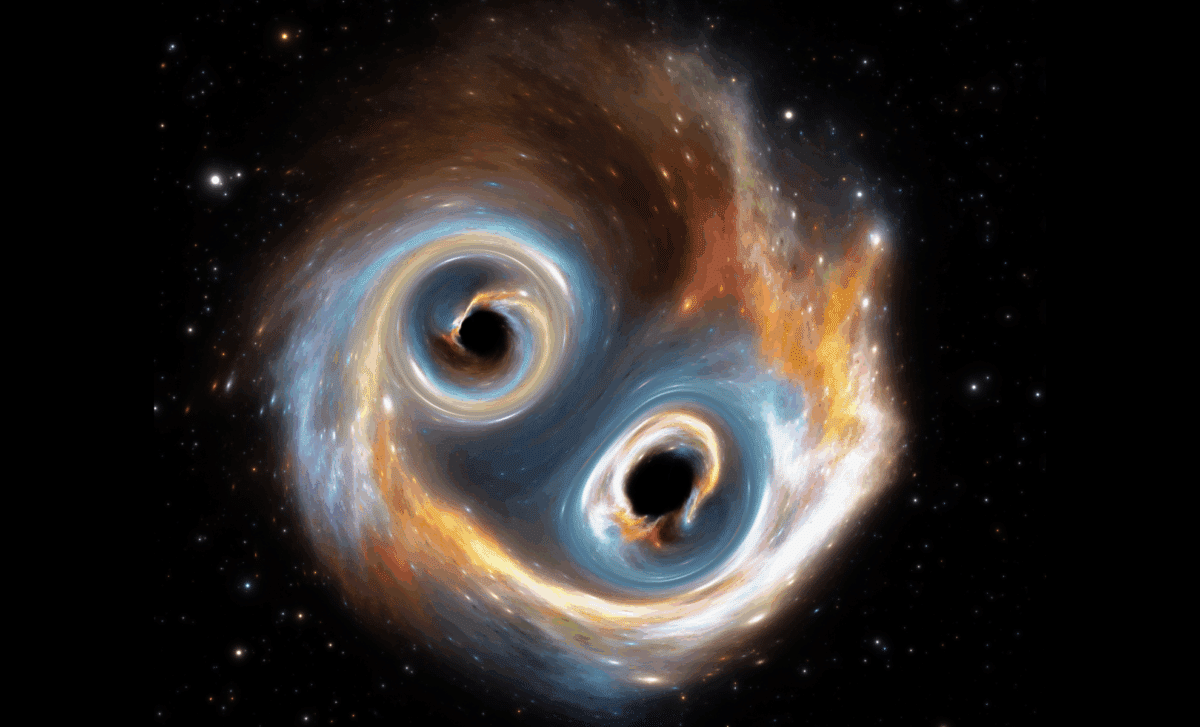
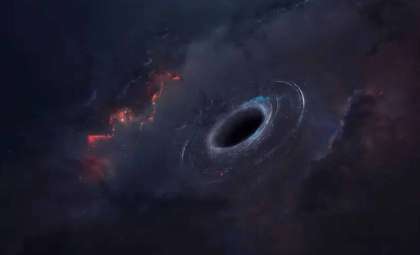
A team of astronomers has released a remarkable image that offers new perspectives on the enigmatic nature of black holes. Featured in the Astrophysical Journal, this discovery represents a major advancement in cosmic research, made possible by the synergy of space-based observatories and innovative technology.
Understanding the Potency and Reach of Black Holes
Black holes rank among the most fascinating and powerful entities in the universe. Their extreme gravity distorts space and time, pulling in everything within their event horizon, including light, which makes them invisible to direct observation. Scientists rely on indirect approaches to investigate these objects. The novel detection of two black holes orbiting each other provides an unprecedented window into their complex dynamics.
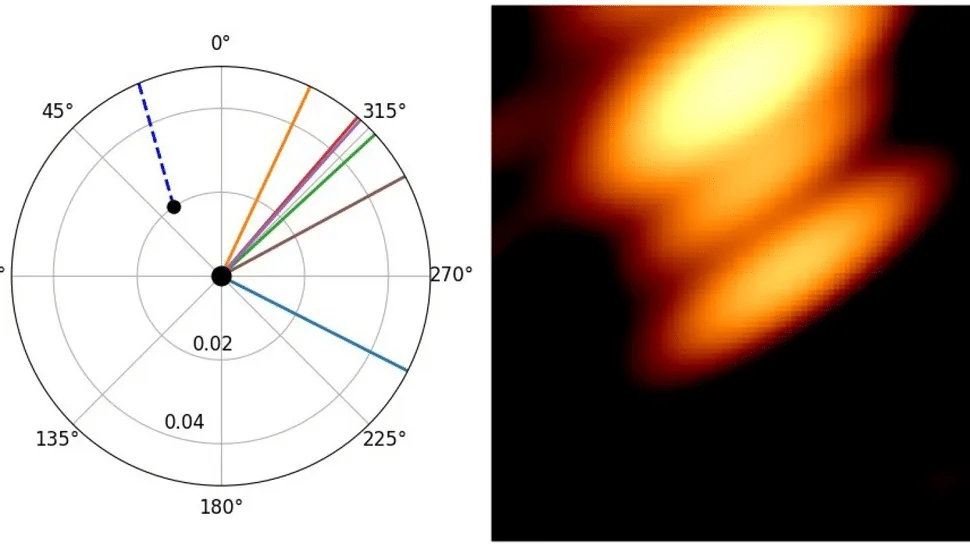
“For the first time, we managed to get an image of two black holes circling each other,” said Mauri Valtonen, the study’s lead author and an astronomer at the University of Turku in Finland.
Add Cosmo Herald as a Preferred Source

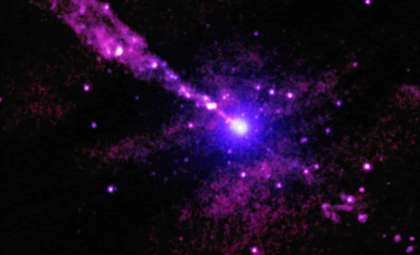
Using refined observational strategies, researchers captured this rare cosmic interaction. The black holes themselves remain invisible due to their nature, but their existence becomes evident through powerful jets of particles they emit—an essential indicator that reveals their activity.
These particle emissions serve as crucial markers for black hole study, offering observable evidence of these otherwise hidden phenomena. As the black holes revolve and interact, they shoot out high-velocity particles detected by advanced telescopes, enabling further exploration of the physical processes involved.
Revealing the Dance of Two Orbital Black Holes
A key highlight of this finding is the clear observation of two black holes locked in mutual orbit. Such a phenomenon has rarely been visually documented, offering scientists a unique opportunity to study black hole mergers and their gravitational dance. These events are closely linked to gravitational waves—ripples through spacetime generated by massive celestial movements.
The interaction between these paired black holes holds critical clues about the evolution of supermassive black holes. Their eventual coalescence releases tremendous energy, potentially affecting surrounding galactic environments. Exploring these mergers enhances our understanding of galaxy formation and the elusive dark matter permeating the cosmos.
Valtonen emphasized the technological significance by explaining,
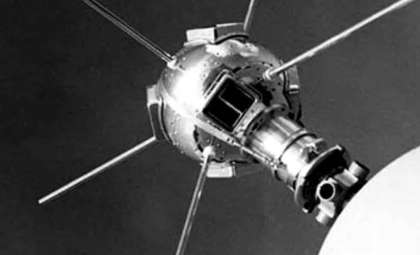
“The satellite’s radio antenna went halfway to the moon, which greatly improved the resolution of the image.”
This capability dramatically boosted image clarity beyond what is achievable with Earth’s telescopes, overcoming previous limitations. Such improvements mark a breakthrough in astronomical imaging, delivering sharper views of distant celestial phenomena.
Technological Innovation and Global Collaboration Fueling New Discoveries
Capturing detailed images of black holes and similar cosmic entities depends heavily on advances in telescope design. Historically reliant on ground-based instruments, astronomers were limited in image sharpness. The inclusion of spaceborne components, including satellites like the one utilized in this research, now enables vastly enhanced image resolution of the universe's farthest reaches.
The satellite’s radio antenna, extending halfway to the Moon, was instrumental in generating these detailed visualizations. To quote Valtonen,
“In recent years, we have only been able to use Earth-based telescopes, where the image resolution is not as good.”
This milestone in space-based observation gave researchers unprecedented insight into the distant black holes, marking a new chapter in their exploration.
The integration of cutting-edge tools with innovative methodologies promises to drive future breakthroughs in astronomy. As scientists continue pushing the limits of observation, greater understanding of the universe’s mysteries seems within reach. Black hole research, once a purely theoretical pursuit, now stands at the forefront of astrophysical investigation.
Black Holes in Science and Society
The remarkable image of two black holes orbiting has sparked interest beyond the scientific community. Black holes have long inspired science fiction narratives while simultaneously captivating researchers eager to comprehend their nature. Growing knowledge about these cosmic powers shapes their role in popular culture as symbols of the unknown and cosmic vastness.
Depicted in films, literature, and television, black holes frequently embody the limits of human understanding and the enormity of space. Yet, each scientific advance peels back part of their mystery. Gaining the ability to observe black holes, even indirectly, ushers in a new era in our cosmic comprehension.
The ongoing fascination shared by scientists and enthusiasts alike enhances the drive to decode how black holes operate and influence the universe. Insights gained here may illuminate the formation of galaxies, stars, and possibly the origins of life, underscoring the powerful relationship between culture and scientific inquiry that propels exploration.
- Categories:
- News




0 comments
Sign in to Comment