

A passionate stargazer in Vermont has successfully imaged the Croc’s Eye galaxy along with the Whirlpool galaxy, capturing strikingly detailed photos after dedicated evenings of observation and meticulous image refinement.
Capturing images of galaxies demands patience, optimal weather conditions, and specialized tools. Although professional observatories frequently analyze these celestial objects, avid astrophotographers are elevating their work with long-exposure techniques that reveal extraordinary details from deep space.
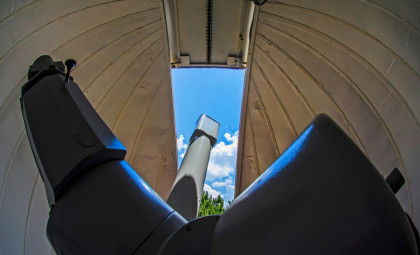
This is precisely the accomplishment of Michele Hernandez Bayliss, who constructed her own observatory in Weybridge, Vermont over the course of two years. Having long enjoyed stargazing, she only recently ventured into astrophotography, producing stunning images of some of the most iconic galaxies visible in the night sky.

Twenty Hours Illuminating the Croc’s Eye Galaxy
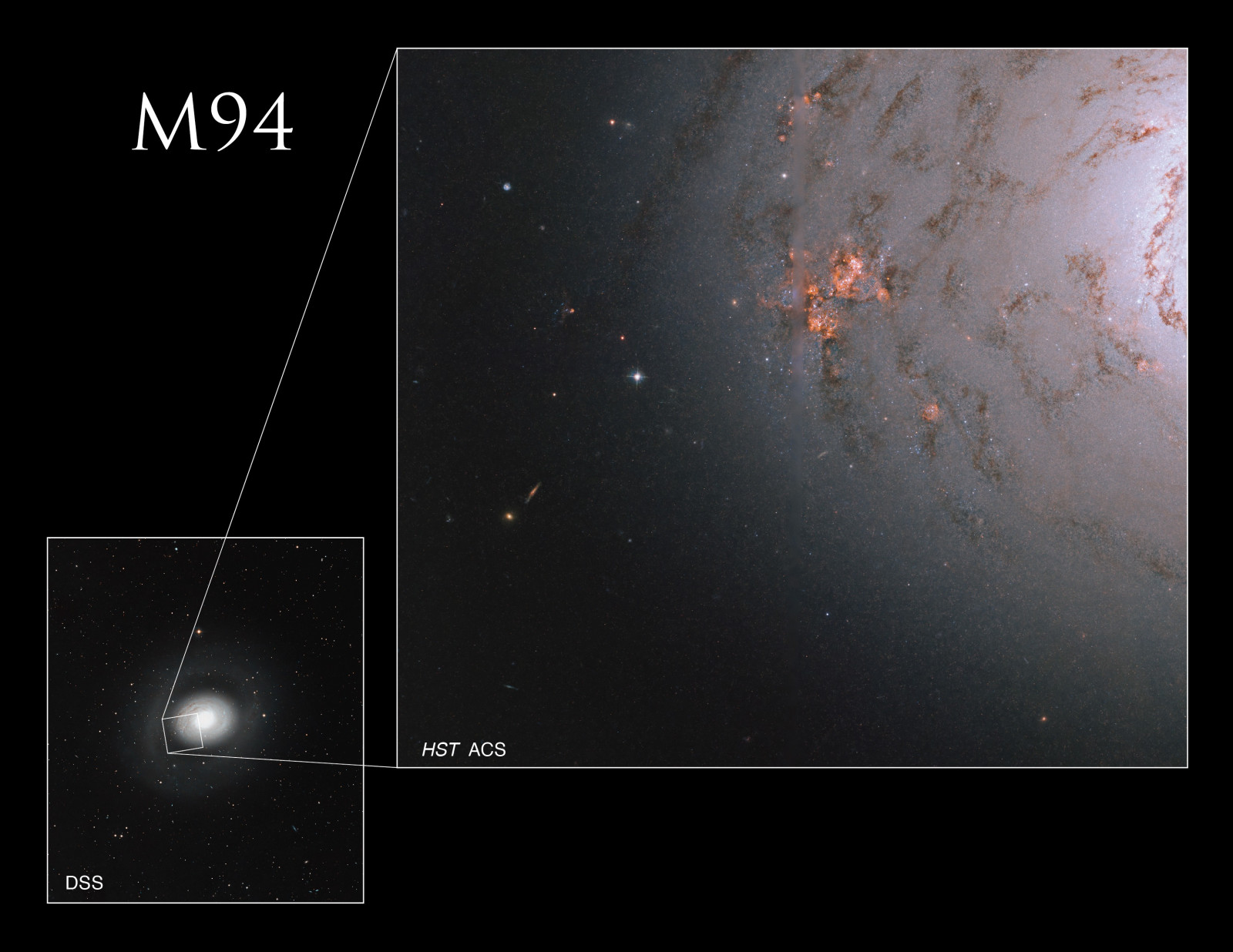
Among Michele’s recent projects was photographing Messier 94, commonly known as the Croc’s Eye galaxy, located in Canes Venatici. Positioned approximately 34 million light-years away, this spiral galaxy has been the subject of in-depth studies, such as a NASA report that highlights its unique characteristics:
“M94 was initially believed to be roughly 30,000 light-years in diameter, two faint spiral arms were recently discovered outside of its core region that extend far out into space. This discovery has effectively tripled the galaxy’s known diameter. M94 is also notable for its deficiency of dark matter relative to other galaxies.”
As reported by Space.com, the final composite image came from approximately 20 hours of data gathered through luminance and RGB filters, later merged to expose the galaxy’s bright core and surrounding details.
The endeavor required more than just data collection. Bayliss noted that the galaxy appeared smaller than expected through her 990 mm telescope, which added complexity during post-processing.
“The tricky part about galaxies is the processing — for the Croc eye, the challenge was that it was a lot smaller than I thought in my 990mm scope but I was able to crop in a bit,” she explained.
Balancing the Brightness Across Galactic Layers
Refining the image of the Croc’s Eye galaxy involved carefully managing the stark brightness contrast between its luminous core and dimmer outer regions. Bayliss shared that she employed HDR compression techniques to simultaneously highlight the central area and preserve faint outer features. She also emphasized meticulous handling of the synthetic luminance channel derived from the LRGB data.
The frequent challenge of unpredictable weather in Vermont posed another obstacle. Effective deep-sky imaging demands clear, moonless nights, which are relatively rare. Bayliss considered having two consecutive cloudless, moon-free nights a remarkable stroke of luck.
“The other challenge is getting dark nights with no moon for galaxies and clear nights as we don’t get that many clear nights in Vermont — so it was awesome to get two nights in quick succession with no clouds, no moon and clear skies — a miracle!”
Revealing the Whirlpool Galaxy Using Identical Techniques
Prior to her work on Messier 94, Bayliss concentrated on another famed celestial target: Messier 51, or the Whirlpool galaxy. In February, she used RGB and hydrogen-alpha filters to capture data, which required a cumulative 16 hours before she could assemble the final image.
The resulting portrait highlights key features of the Whirlpool galaxy, such as its radiant central core, prominent dark dust lanes, and bright zones indicative of active star formation. These traits underscore why M51 is classified as a grand-design spiral galaxy.
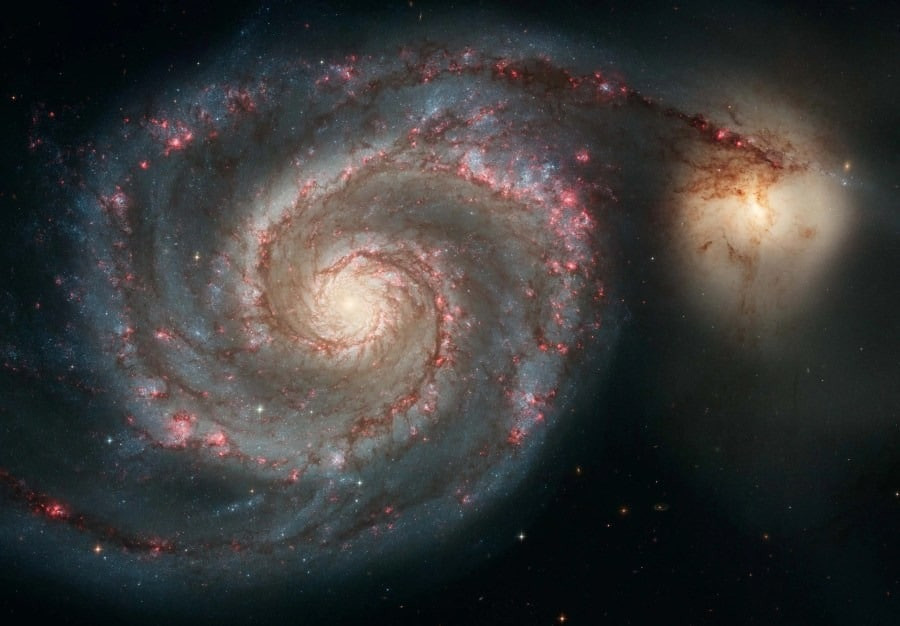
The photo also captures NGC 5195, the smaller companion galaxy situated near one of M51’s spiral arms. NASA points out that interactions with NGC 5195 may have influenced the Whirlpool galaxy’s distinct spiral pattern.
- Categories:
- Science









0 comments
Sign in to Comment