
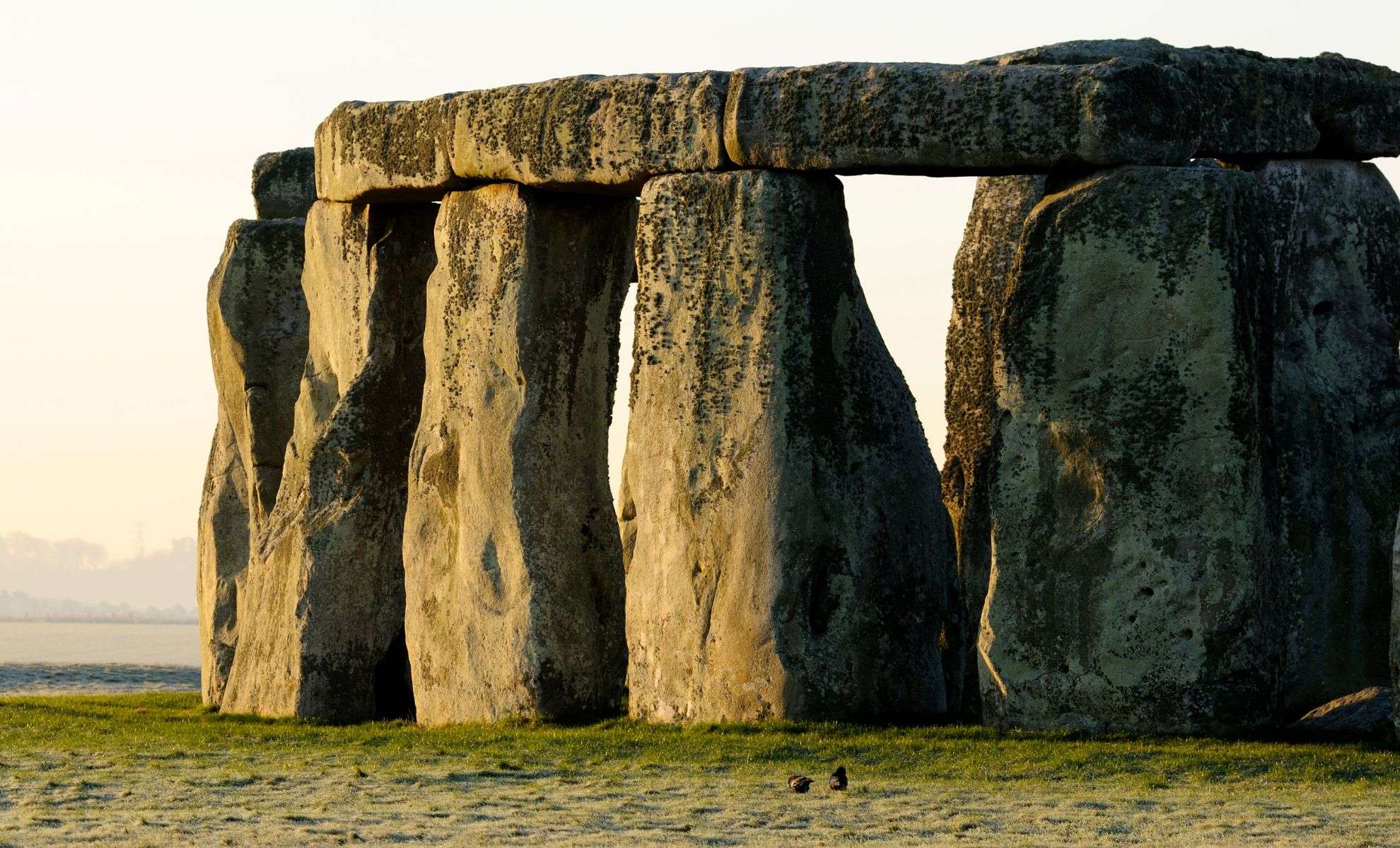
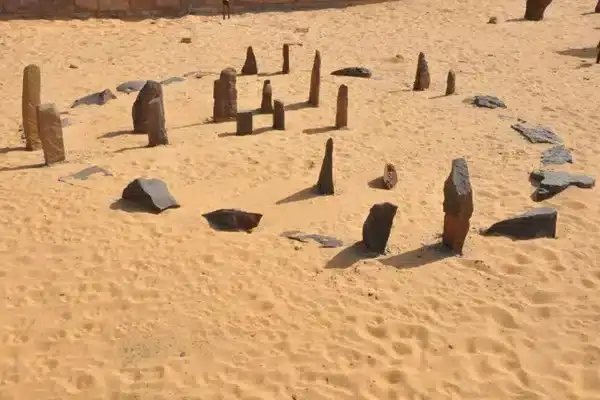
Hidden within Egypt’s Nubian Desert lies an ancient archaeological site that offers fresh insights into early astronomical study. Dubbed Nabta Playa, this stone circle dating back 7,000 years stands as a predecessor to Stonehenge by over a thousand years and may represent the oldest known astronomical observatory on Earth.
In a groundbreaking 1998 study, archaeoastronomer J. McKim Malville and archaeologist Fred Wendorf demonstrated that the site aligns with prominent stars like Sirius, Arcturus, and Alpha Centauri.
Ancient Stargazers of the Sahara
The creators of Nabta Playa were nomadic herders dwelling in a Sahara that was far more verdant than today’s desert. Between 10,000 and 5,000 years ago, seasonal rains supported lakes and greenery across this region.
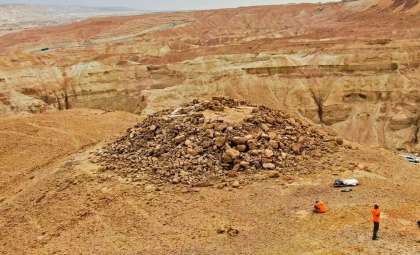
Central to the site is a stone circle surrounded by burial mounds and radial stone arrangements, built between 4800 and 3000 B.C. These constructions served practical purposes, particularly for marking the summer solstice.

Malville, experiencing a moment of insight during his studies, found that the stones radiate outward like spokes, precisely matching astronomical events. The presence of hearths and tamarisk wood roofing allowed scientists to radiocarbon date the site, validating its ancient origins.
Tracking Stars and Seasons From Desert Stones
Those who built Nabta Playa utilized their observatory to monitor bright, dominant stars of the summer sky. Calculations of stellar positions trace Arcturus as aligning with the stones around 4800 B.C.
Additional alignments correspond to Sirius—later symbolized in Egyptian culture as linked to rebirth and flooding—along with Alpha Centauri and the Orion constellation.
These celestial markers were far from ornamental; they played a navigational role across an expansive and often featureless terrain. Similar to Polynesian wayfinders who used stars to steer through the Pacific, these nomads likely tracked star movements to find vital water sources.
The People and Their Cosmos
Contrary to assumptions of primitiveness, the Nabta Playa community exhibited a semi-nomadic lifestyle with complex social structures. Excavations by Wendorf uncovered evidence of dwellings, wells, fire pits, and storage areas indicative of seasonal camps.
Notably, cattle remains and a distinctive cow-shaped megalith appeared at a central burial, hinting at a cattle-focused religious practice that could have preceded Egypt’s bull worship traditions. This suggests underlying cosmological beliefs connected to fertility and renewal cycles.
Archaeologists also discovered , among the oldest known samples. These crops would subsequently disseminate across Africa and into South Asia, influencing emerging civilizations.
From Arid Plains to Egypt’s Early Dynasties
As the Sahara dried up between 3000 and 2500 B.C., this environmental shift likely forced Nabta Playa residents to migrate northward to the Nile Valley and southward into Nubia.
This movement has prompted some experts, including Malville and Wendorf, to propose Nabta Playa as a potential “black genesis” for ancient Egyptian civilization. The cattle veneration, stellar alignments, and solar worship seen in Egypt’s culture might trace back to these ancient desert astronomers.
While debated, this hypothesis challenges the dominant view that Egypt's roots solely lie within the Fertile Crescent. Many regard the Egyptian cow goddess Hathor—a principal deity—as a cultural echo linking back to Nabta Playa’s early cattle cult.
Why Nabta Playa Remains Unfamiliar
Surprisingly, this site remains relatively obscure, even among scholars. In an interview with Astronomy, a prominent archaeologist admitted unfamiliarity with the location.
Since the late 1990s, issues with damage from visitors forced Egyptian officials to move the stones to a museum for preservation. “This was the dawn of observational astronomy. What in the world did they think about it? Did they imagine these stars were gods? And what kinds of connections did they have with the stars and the stones?,” the archaeologist pondered.
Further complicating public perception, the site has been misappropriated by pseudo-archaeological claims. Some fringe theories erroneously assert that the stone circle encodes galactic coordinates or represents maps of the Milky Way, overshadowing its true scientific significance.
- Categories:
- Science








0 comments
Sign in to Comment