
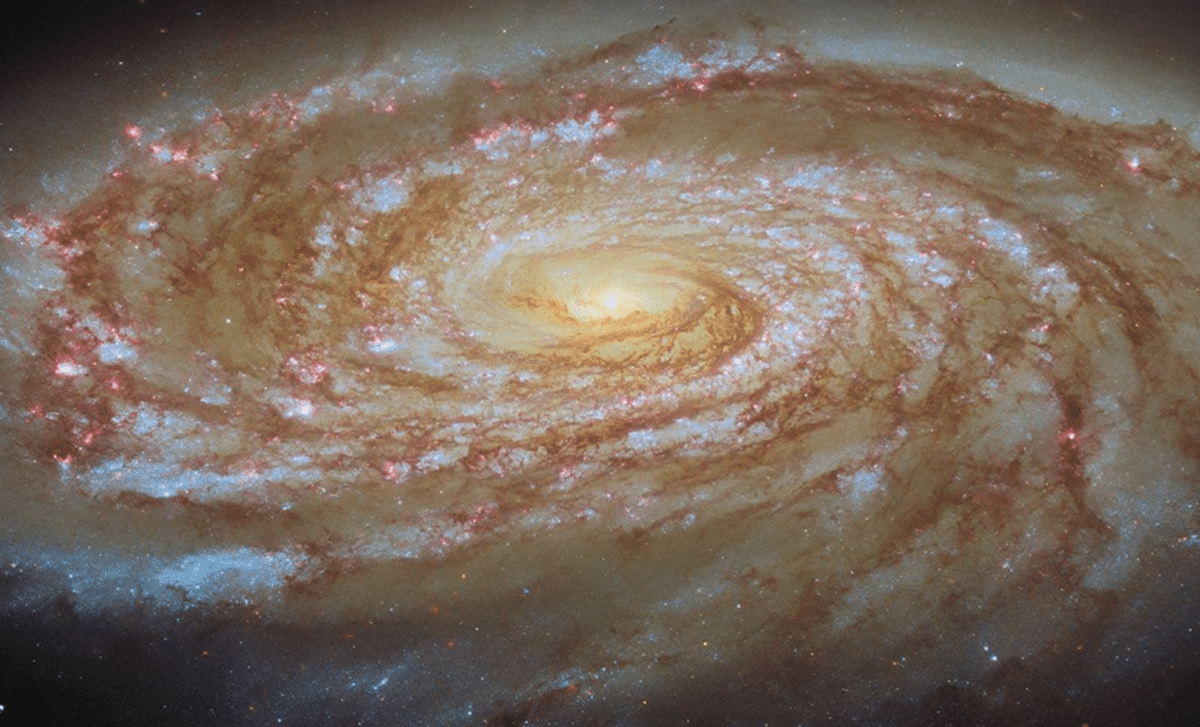
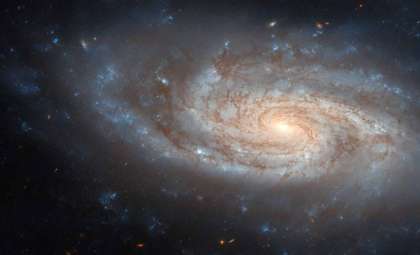
A stunning new image captured by NASA and the European Space Agency’s Hubble Space Telescope offers an extraordinary glimpse of Messier 88 (M88), an enormous spiral galaxy currently undergoing changes that will alter its fate over hundreds of millions of years. Situated approximately 63 million light-years away in the constellation Coma Berenices, M88 presents a calm and majestic appearance. Yet beneath its elegant spiral arms, intense forces are stripping away the essential materials needed for star formation. This image provides astronomers a unique chance to observe a galaxy in transition, potentially impacting its evolutionary path for billions of years.
A Supermassive Black Hole Drives Galactic Activity
At M88’s core lies a supermassive black hole weighing about 100 million times the mass of our Sun. Instead of remaining dormant, this black hole actively accretes surrounding gas and dust, classifying M88 as an active galaxy. As matter spirals inward, vast quantities of energy are unleashed, fueling powerful outflows that impact the central galactic region.
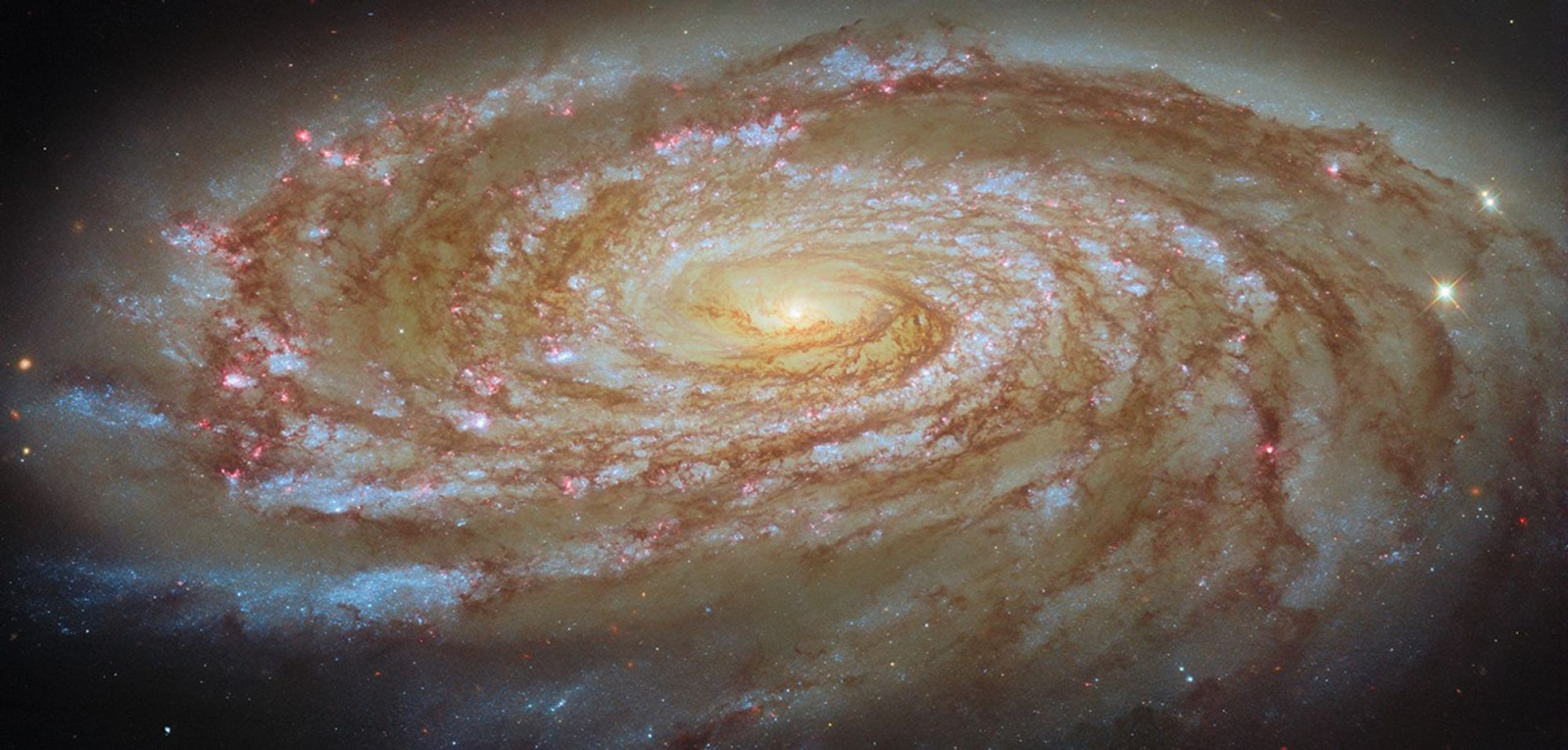
The latest Hubble image showcases a bright, warm core surrounded by numerous aged, reddish stars. Extending from this glowing center are tightly wrapped spiral arms containing clusters of young stars and dense dust clouds. These zones are birthplaces for new stars, painting the galaxy with vibrant blues and pinks. Displayed at an angle rather than head-on, M88’s elongated shape allows astronomers to analyze its disk structure and the spread of star-forming areas in great detail. The combination of an active galactic nucleus, well-defined spiral arms, and ongoing star formation renders M88 a vital subject for understanding the growth of massive spiral galaxies.

A Journey Into the Heart of the Virgo Cluster
M88 is journeying through space as part of the extensive Virgo Cluster, a gravitationally linked system with over a thousand galaxies. In this bustling environment, galaxies orbit the cluster’s gravitational center, constantly interacting with each other and the abundant hot gas permeating the space between them.
Scientists have tracked M88’s movement toward the cluster’s core, where it will eventually come closer to the dominant elliptical galaxy Messier 87 (M87). This close encounter is projected to take place in about 200 to 300 million years. Though immense by human measures, this period is relatively brief in galactic terms.
As M88 nears the dense center of the cluster, it will face increasingly harsh conditions. The intracluster gas acts like an invisible medium resisting the galaxy's motion, and the faster M88 moves, the more force it experiences on its own gas. This interaction is expected to mark a crucial phase in the galaxy’s evolution.
Hubble Detects Early Signs of Environmental Impact
A key discovery by astronomers is that M88 already displays clear indications of ram pressure stripping. This phenomenon occurs when gas is essentially pushed out of a galaxy as it travels through the hot gas filling a galaxy cluster, analogous to wind resistance faced by a moving object but on a cosmic scale involving enormous interstellar gas reserves.
Observations reveal that M88’s gas disk is smaller than anticipated, showing a truncated structure. The galaxy’s leading edge appears compressed, causing gas and dust to accumulate, similar to snow building up before a plow. These signs reveal that ram pressure stripping has begun even before M88 enters the cluster’s densest zones.
This process has significant consequences because cold gas fuels star formation. With declining gas reserves, a galaxy gradually loses its capacity to birth new stars. Researchers note that M88 has much less cold gas than expected for a spiral galaxy of its size, particularly in its outer areas. This deficiency demonstrates how environmental pressures are actively reshaping the galaxy and determining its future growth.
- Categories:
- News





0 comments
Sign in to Comment