
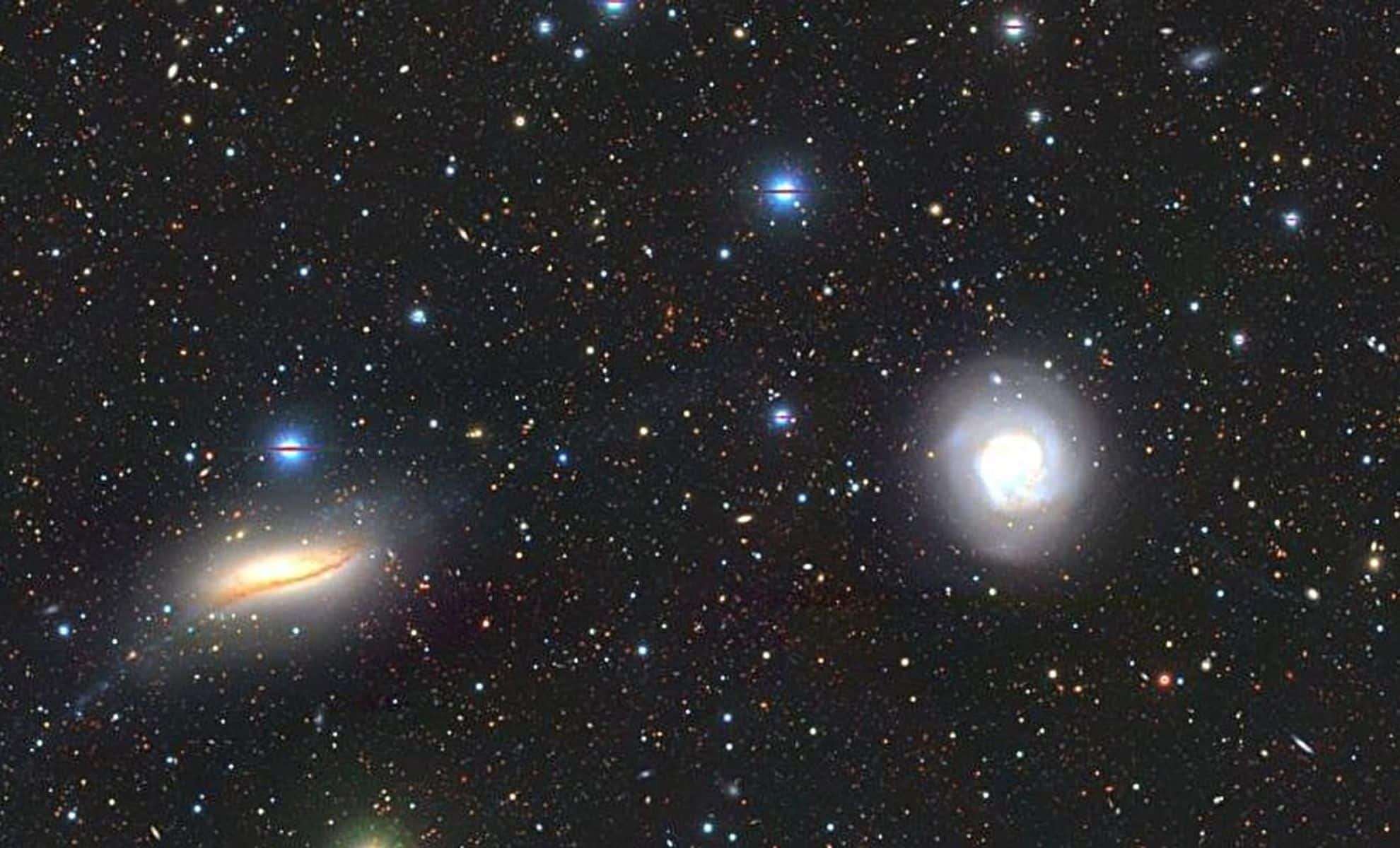
Recently published research in the Monthly Notices of the Royal Astronomical Society by University of Queensland astronomers unveils new details about the distant future of our home galaxy. Led by Dr. Sarah Sweet and integrated into the extensive Delegate survey, this study analyzes the forthcoming merger of the Milky Way with the Andromeda Galaxy, as well as their surrounding dwarf galaxies. By examining far older galactic systems like NGC5713 and NGC5719, astronomers gain a deeper understanding of galaxy growth, cosmic architecture, and the role of dark matter. A central finding reveals the intricate gravitational interplay between larger galaxies and their dwarf companions, offering a refined prediction of the Milky Way’s destiny.
A Galactic Convergence: The Milky Way Meets Andromeda
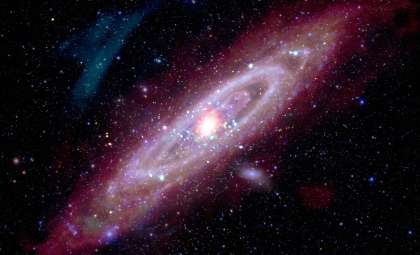
The future trajectory of the Milky Way is tightly intertwined with the Andromeda Galaxy, as both galaxies are anticipated to collide in roughly 2.5 billion years. Dr. Sweet highlights that this will not be a straightforward encounter—it will encompass interactions involving their associated dwarf satellite galaxies, which orbit both massive galaxies gravitationally. “The Milky Way will merge with Andromeda and their respective smaller dwarf galaxies in the next 2.5 billion years,” she explains. Despite decades of Local Group observations and simulations, it remains a question whether this cosmic event typifies galactic mergers elsewhere or if it stands as an exceptional case in the universe.
Grasping these future cosmic mergers is essential for astronomers striving to enhance galaxy evolution models. Traditional simulations have long underpinned predictions concerning how galaxies interact and combine over time. Yet, observed discrepancies between these predictions and real galactic formations suggest that refinements to these models are needed. Investigations into the NGC5713 and NGC5719 galaxies showcase how interactions between large galaxies and their smaller satellites may result in elegantly structured systems rather than disordered stellar arrangements.

The Celestial Waltz: Coordinated Motion of Galaxies and Satellites
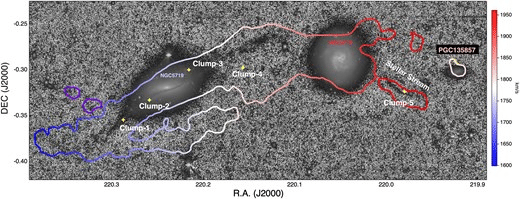
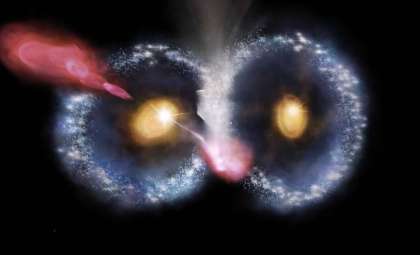
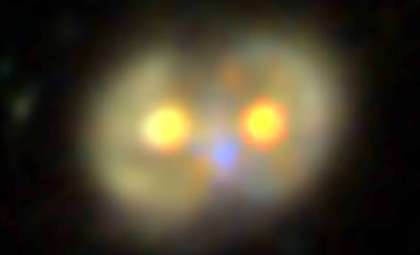
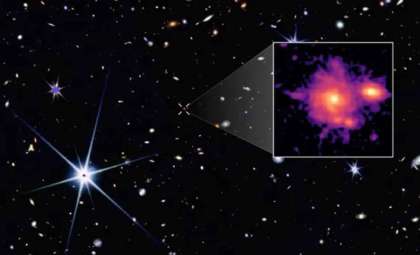
Observing NGC5713 and NGC5719 reveals a dynamic likely to resemble the future encounter between the Milky Way and Andromeda. These two galaxies appear to engage in a gravitational choreography, with both the main galaxies and their dwarf satellites orbiting each other in synchronized motion. Dr. Sweet remarks, “This paper shows these galaxies—NGC5713 and NGC5719—combine as if they were dancing with the closely located dwarf satellites rotating around them.” This coordinated movement is fundamental to the merging process, resulting in highly organized satellite structures rather than dispersed star fields.
The scientists point out that without such mergers, these galaxies could remain as randomly scattered collections of stars. Instead, their interaction leads to the emergence of well-defined satellite groups, comparable to those that surround the Milky Way and Andromeda today. These insights from distant galaxies enable astronomers to better anticipate how our own galaxy’s satellites might evolve through future collisions, shedding light on the ongoing cosmic transformations that govern galactic architecture.
Broadening Galaxy Evolution Models Through Observations
The analysis of interacting galaxies like NGC5713 and NGC5719 marks a significant advancement in evolving our conceptions of galactic development. Dr. Sweet and her collaborators emphasize that their findings extend beyond the Milky Way’s future to offer essential data on cosmic structure dynamics. “Understanding our galaxy’s likely future helps us refine models of galaxy evolution, dark matter, and cosmic structure and beyond that, it gives us perspective,” says Dr. Sweet. These discoveries provide vital context for both the history and the long-term trajectory of the universe.
By comparing the Milky Way’s anticipated evolution to that of galaxies billions of years more advanced, researchers gain a clearer understanding of galactic interactions over time. These processes heavily influence the formation of cosmic large-scale structures, inform theories on dark matter, and reveal the universe's continued transformation. This knowledge helps define humanity’s cosmic context, shaped over billions of years through similar celestial interactions and mergers.
Evaluating the Typicality of the Milky Way-Andromeda System
A major question emerging from this study is whether the Milky Way and Andromeda represent a standard example of galactic pairing or stand out as an anomaly among other galaxy groups. Co-author Professor Helmut Jerjen states, “We will test whether the Milky Way and Andromeda Local Group is a poster child or a cosmic outlier.” Resolving this will prove crucial in determining if the dynamics seen within our Local Group can be extended to other cosmic regions or if they are unique to our neighborhood.
Until this conundrum is addressed, fully generalizing Local Group observations to the wider universe remains challenging. Professor Jerjen highlights, “Until we know this, our ability to generalize findings from the Local Group of galaxies to understand galaxy evolution in a broader cosmological context is hampered.” Clarifying the Milky Way-Andromeda system’s nature is necessary to perfect galaxy formation and evolution models globally.
Challenging Simulations: Revisiting Our Galactic Models
This research identifies inconsistencies between real-world observations of local galactic groups and the predictions made by the most advanced cosmological simulations. One notable issue involves the spatial alignment of dwarf galaxies, which are disproportionately found to occupy coherent planes around host galaxies. Dr. Sweet comments, “For example, there is persisting tension between local galaxy group observations and the world’s most sophisticated cosmological computer simulations.” Such discrepancies question the completeness and accuracy of current models.
The team suggests that these observational conflicts stem from incomplete understanding regarding the spatial configuration of dwarf galaxies orbiting larger systems. Incorporating the organized, dynamic nature of these satellites into models could lead to significant improvements. Insights from galaxies like NGC5713 and NGC5719 offer promising new directions for enhancing our understanding of galactic behavior and interactions, potentially resulting in more precise and predictive cosmological simulations.
- Categories:
- News



0 comments
Sign in to Comment