
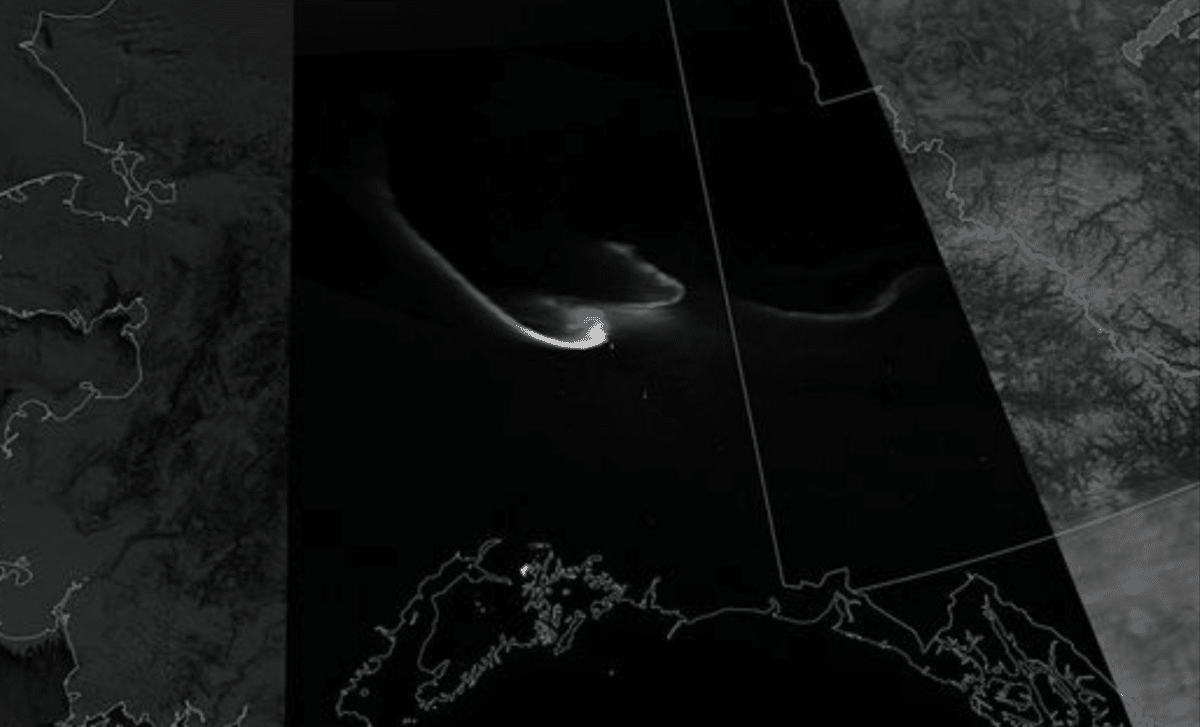
NASA’s investigation into the shifting colors and lighting of a total lunar eclipse offers valuable knowledge about how this celestial event influences Earth's atmosphere and landscape. During the total lunar eclipse on March 3, 2026, captured by NASA’s Earth Observatory, satellite imagery showed how the moon’s altered illumination impacted various areas on Earth, from urban lighting to the glow of auroras. This data allowed researchers to examine the subtle changes in moonlight throughout the eclipse and its environmental consequences.
Delving into Lunar Eclipse Phenomena: New Discoveries from NASA’s Observations
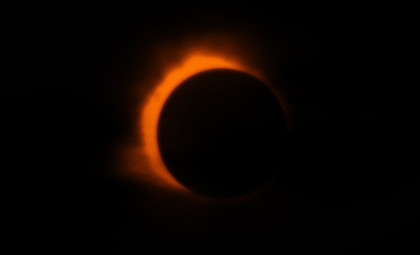
A lunar eclipse happens when Earth positions itself between the Sun and Moon, casting a shadow over the lunar surface. This event often causes the moon to glow with a red or orange tint, commonly referred to as a “Blood Moon.” The total eclipse in 2026, visible across parts of the Americas, East Asia, Australia, and the Pacific region, provided an exceptional chance to explore this natural occurrence. Beyond the stunning view for spectators, it enabled scientists to apply satellite technology to observe the eclipse’s impact on Earth's environment.
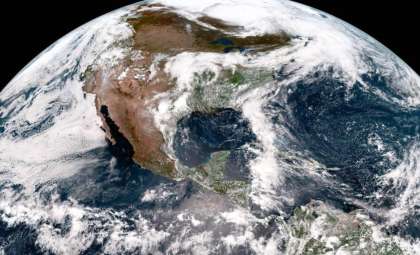
Using the VIIRS (Visible Infrared Imaging Radiometer Suite) instrument aboard the NOAA-21 satellite, NASA tracked the eclipse’s influence on Earth's surface. By monitoring the moonlight reflected down to the planet, researchers quantified brightness variations throughout the eclipse’s stages. This approach unveiled the eclipse’s progression in detail, showing how different phases influenced areas around the globe. While observers on the ground enjoyed the visual changes in the sky, NASA’s satellite images offered a comprehensive view of the event’s planetary effects.

Satellites: Essential Tools for Lunar Eclipse Research
Satellites have become critical for observing space events like lunar eclipses. While telescopes capture close-up images of the moon, satellites such as the NOAA-21 equipped with VIIRS provide a unique vantage point to study how eclipses affect Earth. By detecting moonlight reflected onto the planet, these instruments map the interaction between the eclipse and Earth’s atmosphere and surface.
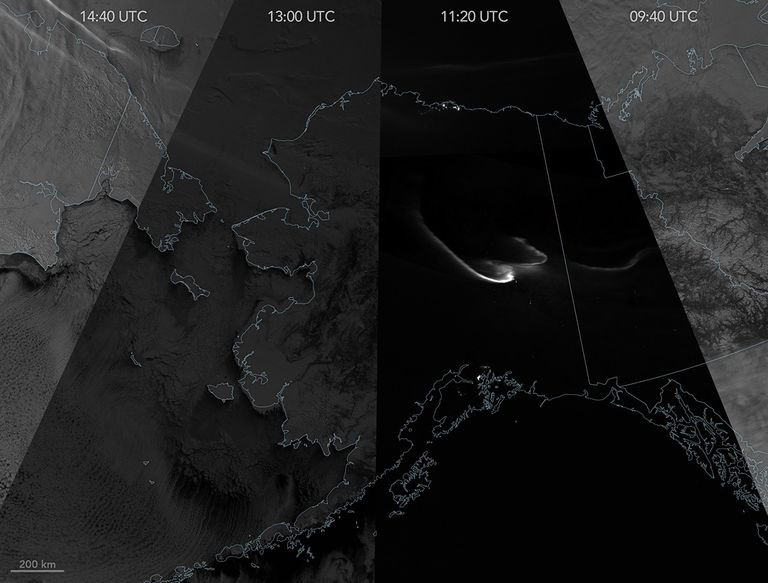
The VIIRS day-night band detects a broad light spectrum, enabling scientists to observe moonlight as well as other luminous phenomena like auroras and human-made lights. During the 2026 eclipse, this technology tracked how reflected moonlight intensity shifted from the partial eclipse phase through totality. Mapping these variations helps researchers understand the eclipse’s influence on Earth’s natural systems.
NASA’s Satellite Monitoring of the 2026 Total Lunar Eclipse
The total lunar eclipse on March 3, 2026, was witnessed worldwide, but NASA’s unique satellite observations shed new light on its effects on Earth's surface. The collected data highlighted fascinating dynamics, including regional differences in moonlight during totality. For instance, the Arctic’s northern areas showed minimal moonlight, while lights from auroras and settlements such as those in Alaska remained visible in satellite views.
As the eclipse progressed into its partial phase, light levels increased gradually, illuminating snow-covered regions of Alaska and the Bering Strait. The changing brightness across each phase documented how moonlight’s intensity waxed and waned, providing a detailed record of the full eclipse event.
Insights Into Earth's Environment from Blood Moon Observations
The characteristic red glow of the “Blood Moon” during total lunar eclipses results from sunlight scattering through Earth’s atmosphere before reaching the lunar surface. This captivating effect also serves as a useful indicator of atmospheric properties. NASA’s analysis of the 2026 eclipse focused on the fluctuation of moonlight intensity through the event’s phases, revealing how Earth’s atmosphere influences sunlight before it reaches the moon.
The colors observed during an eclipse depend on how densely the atmosphere filters sunlight, revealing changes in atmospheric composition over time. Tracking moonlight intensity during eclipses allows scientists to deepen their understanding of Earth's atmospheric behavior.
Why Total Lunar Eclipses Offer Unique Earth Observation Opportunities
Unlike solar eclipses limited to specific locations, lunar eclipses can be seen anywhere on the planet’s night side, making them ideal for research on how moonlight interacts with the environment. The March 2026 eclipse monitored by NASA via satellite demonstrated how such global events help scientists study local atmospheric and surface conditions through the changing patterns of moonlight.
These satellite images captured varying brightness levels across regions during the eclipse, highlighting how atmospheric traits and geographic differences shape our experience of this natural phenomenon.
Looking Ahead: The 2028 Total Lunar Eclipse
The upcoming total lunar eclipse on December 31, 2028, will offer audiences in Europe, Africa, Asia, and Australia a stunning spectacle just in time for New Year’s celebrations. For anyone who missed the 2026 event, this eclipse will provide another chance to observe the captivating effects of a Blood Moon.
As scientists prepare for the 2028 eclipse, they plan to gather satellite data that builds upon insights from the 2026 observations. Continuous study of lunar eclipses promises to reveal more about the intricate relationships between Earth’s atmosphere, the Moon, and the Sun.
- Categories:
- News








0 comments
Sign in to Comment