
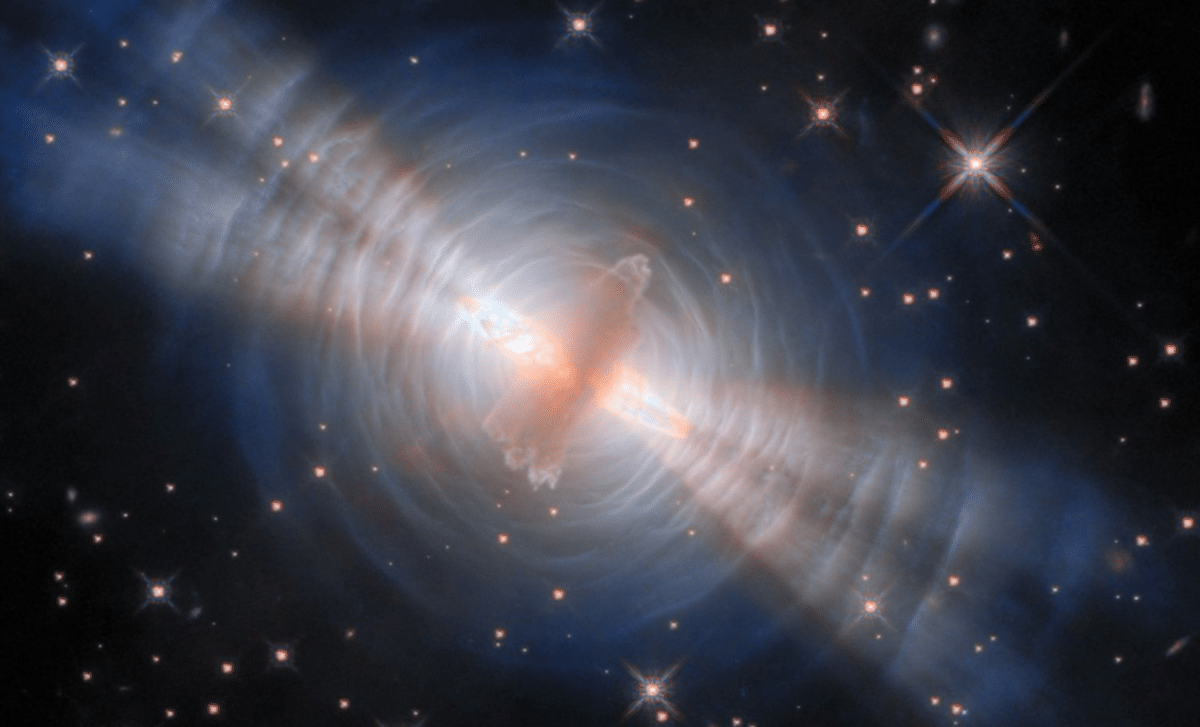
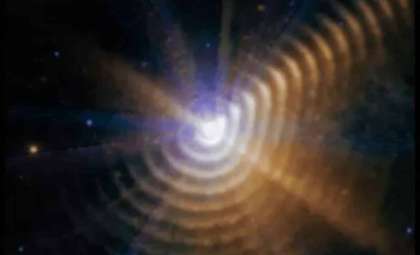
NASA's Hubble Space Telescope has delivered some of the sharpest images ever taken of the Egg Nebula, a breathtaking celestial formation approximately 1,000 light-years distant in the Cygnus constellation. Released on February 10, 2026, these observations reveal striking patterns of illumination and shadow formed by a star nearing the end of its life cycle, highlighting the intricate features of a nebula still in its pre-planetary state. These images promise to enrich our comprehension of how stars similar to our Sun transition through their dying phases and the processes involved in nebula development and stellar aging.
The Egg Nebula: Insights into a Star’s Twilight
Located near 1,000 light-years away in Cygnus, the Egg Nebula offers a rare window into the final evolutionary steps of stars. As a pre-planetary nebula—a stage preceding the formation of a planetary nebula—this cosmic cloud forms when a star akin to our Sun begins shedding its outer layers. NASA’s Hubble Space Telescope has captured this process, displaying a complex interplay of gas, dust, and light around the fading star.
At the end of its life, a star burns through its fuel, causing it to swell and eject its external layers, creating a luminous shell of gas and dust. The Egg Nebula is vital to astronomers because it offers a live view of this transitional phase. Recent observations by Hubble’s Wide Field Camera 3 have exposed exquisite details of the nebula’s gaseous and dusty layers, revealing a stunningly detailed structure.

Hubble’s Exceptional Resolution: A Close View of the Egg Nebula
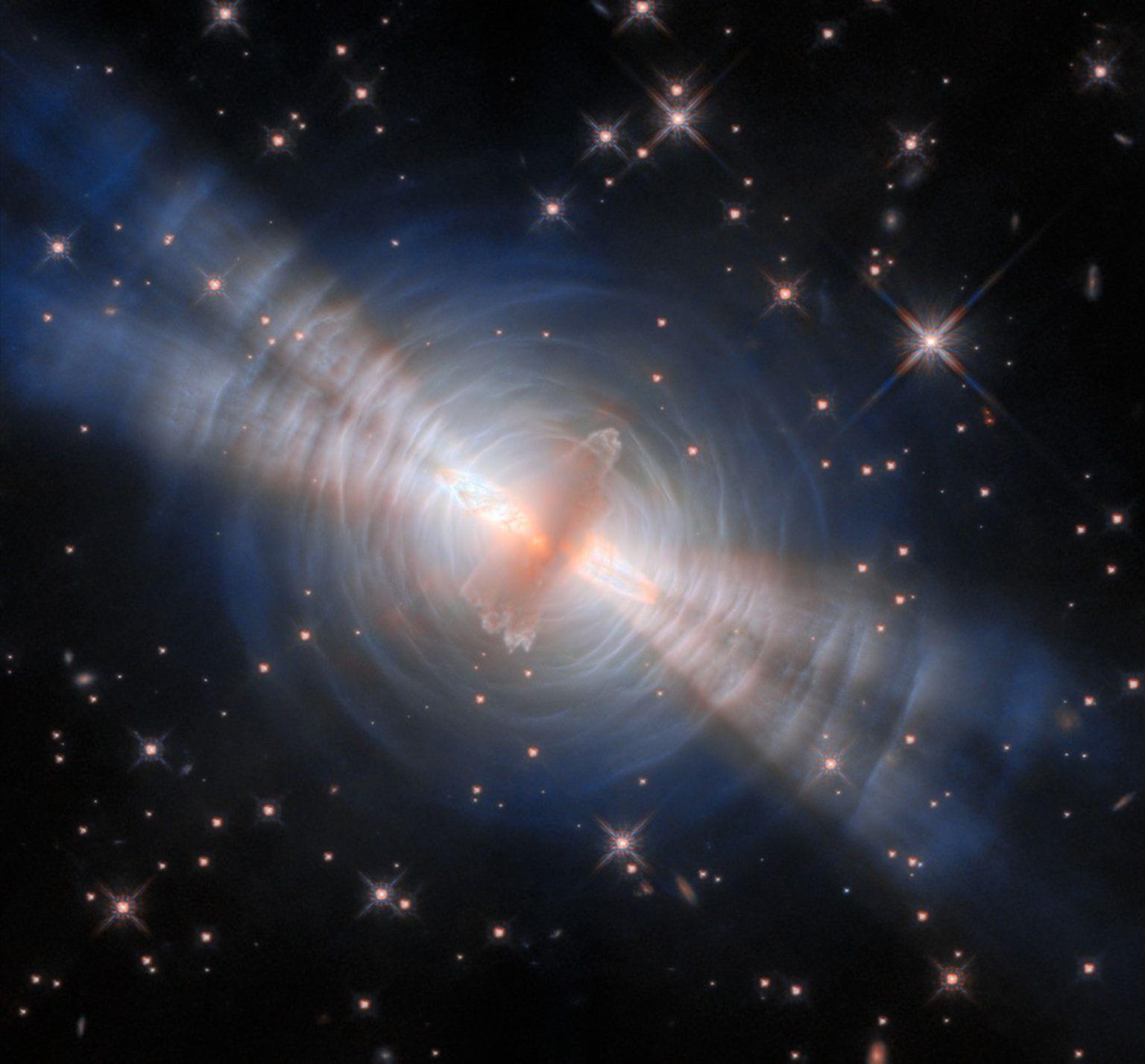
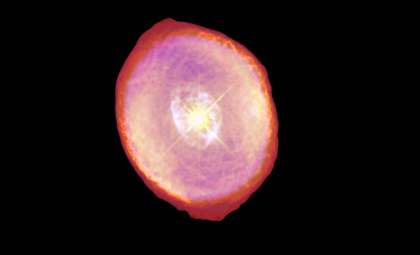
The Egg Nebula has been the subject of previous Hubble studies, yet these new images provide the clearest, most detailed glimpse of its complex form to date. Hubble’s unique ability to combine high resolution and depth yields breathtaking visuals. As reported by NASA Science, the central star’s light pierces through polar openings in the surrounding dust, producing illuminated gas and dust regions that glow with an otherworldly radiance. These polarized streams emphasize the nebula’s intricate symmetrical pattern, giving it an appearance reminiscent of a cosmic egg.
The nebula’s symmetry doesn’t arise from an explosive event like a supernova; instead, it reflects a coordinated ejection process involving the star’s core and its surrounding material. Observations suggest that the star’s carbon-rich core is intermittently expelling material in a structured pattern. This raises new questions about stellar death mechanisms, adding essential insights about how stars similar to the Sun conclude their life cycles.
Understanding Pre-Planetary Nebulae’s Role
Investigations of pre-planetary nebulae, such as the Egg Nebula, are critical for deciphering how planetary nebulae come into existence. This fleeting transitional phase, lasting several thousand years, involves the expulsion of a star’s outer envelope and the subsequent heating and ionization of the remaining gas by the exposed stellar core. The resulting glowing shells might ultimately contribute to future star formation as the expelled elements mix with interstellar material.
Unraveling this process helps explain the cosmic distribution of life-essential elements like carbon and oxygen. The dust and gases cast off by aging stars seed new star systems, including our own. Without this recycled material, planets like Earth—and life itself—would not have formed. Studying nebulae such as the Egg Nebula enables scientists to trace the cosmic origins of the building blocks crucial to planetary and biological evolution.
Revealing Companion Stars Influencing the Nebula
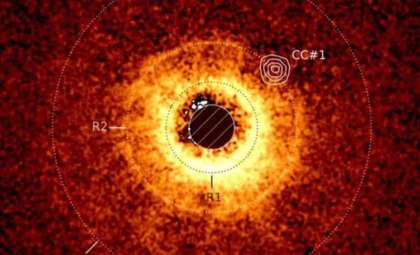
A fascinating element of the Egg Nebula is the indication that companion stars may exist alongside the dying star at its core. The latest Hubble data uncover twin beams lighting up the nebula’s polar regions, hinting at gravitational interactions between the central star and one or more hidden companions. These partners, likely obscured by dense dust, seem to affect the shapes and behaviors of the outgoing gas and dust shells.
Gravitational forces from these companions could be molding the nebula’s gas and dust into symmetrical arcs and lobes, challenging existing models of stellar evolution. Exploring these dynamics gives researchers a better grasp of the complex factors that dictate the final stages in a star’s lifetime.
- Categories:
- News



0 comments
Sign in to Comment