
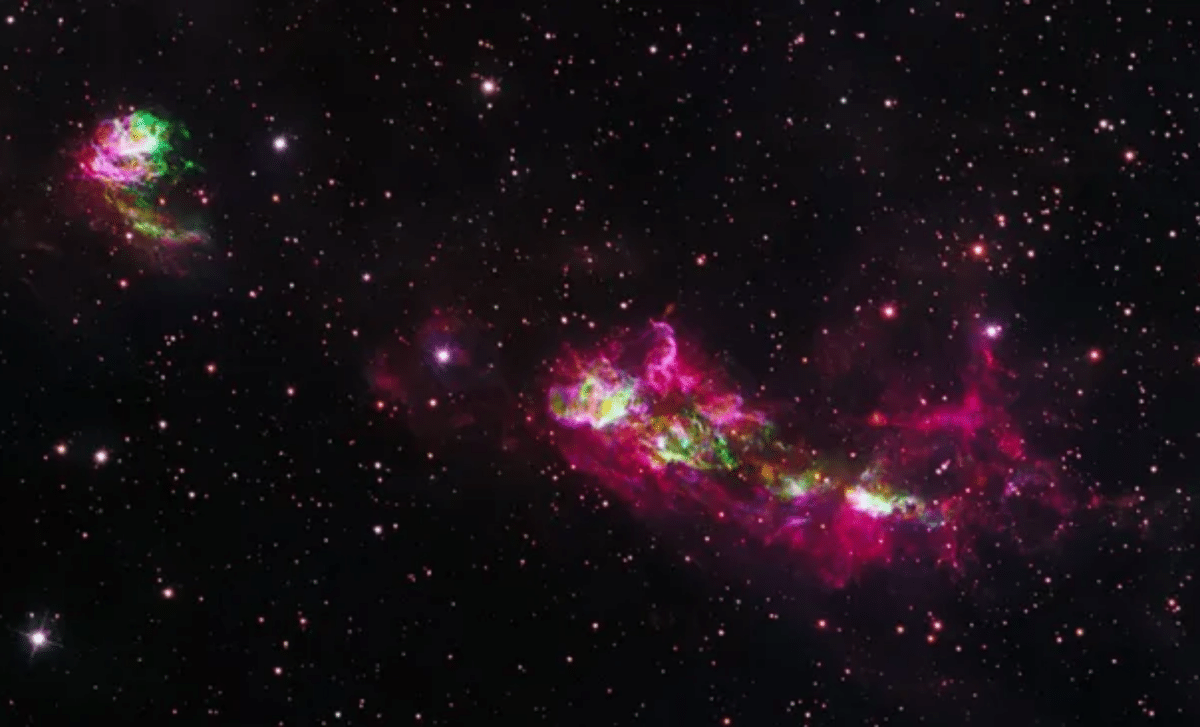
The Hubble Space Telescope has captured an extraordinary outburst from a newborn star, sending a jet of intensely heated gas spanning a staggering 32 light-years through the cosmos. This observation offers fresh insights into the chaotic infancy of massive stars and highlights Hubble’s unmatched precision as a premier astronomical instrument.
Brilliant Jets Lighting Up Deep Space
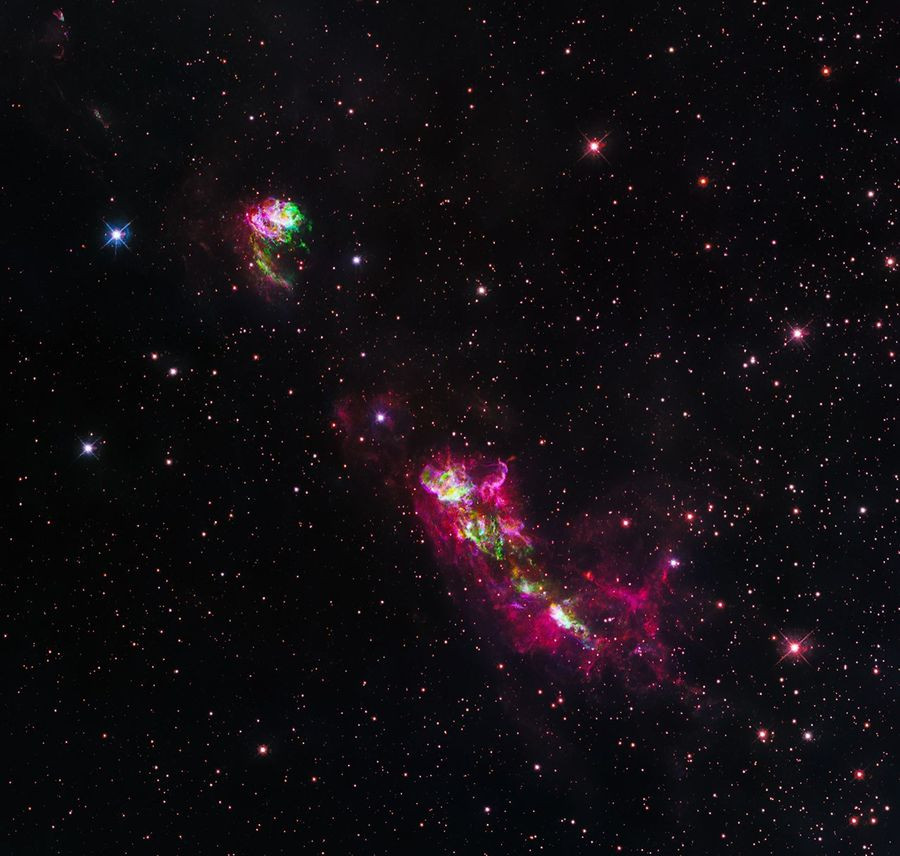
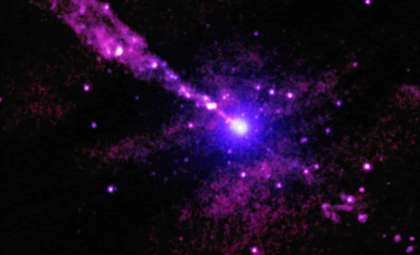
The Hubble Space Telescope, after more than 30 years in orbit, has revealed a spectacular phenomenon. Astronomers detected the young star IRAS 18162-2048, located roughly 5,500 light-years away, shooting a plasma jet moving at speeds exceeding 2.2 million miles per hour. This jet, measuring an unprecedented 32 light-years in length, is both the longest and one of the swiftest ever recorded from a star in formation.
The jet illuminates two vast gas clouds named HH 80 and HH 81, immense glowing regions energized by the impact of these explosive outflows. These clouds belong to a larger molecular structure called L291, where the protostar is still feeding on surrounding dust and gas. Rather than quietly accumulating material, this young star expels matter in dramatic blasts that light up the cosmos.

Insights from NASA on This Stellar Firework
As detailed in NASA’s official analysis, the star’s powerful activity stems from swirling accretion disks of dust and gas funneling matter inward. Magnetic forces generated in the disk funnel material toward the star’s poles, ejecting it as tightly focused plasma jets.
Thanks to the Wide Field Camera 3 on Hubble, astronomers tracked subtle changes in HH 80 and HH 81 over time, improving understanding of how massive stars influence their environments. Typically, Herbig-Haro (HH) objects are linked to smaller stars, making this case—powered by a massive protostar—particularly noteworthy in stellar evolution research.
NASA stressed that this discovery underscores Hubble’s continuing vital role in astronomy, complementing newer instruments like the James Webb Space Telescope.
The Dynamic Origins of Stars
Stars like IRAS 18162-2048 are born when huge clouds of gas collapse under gravity. These stellar nurseries are remarkably turbulent, however. As gas spirals inward, angular momentum prevents it from falling directly onto the star, forming an accretion disk. This disk’s magnetic fields propel some material outward at incredible speeds.
These stellar jets act as cosmic exhaust systems, releasing excess energy and influencing star development. When the jets collide with earlier ejected gas, they create shockwaves that heat and ionize the surrounding regions, causing the radiant light seen by Hubble. In HH 80 and HH 81, this glow captures the violent youth of a massive star stretching over enormous cosmic distances.
- Categories:
- Nasa







0 comments
Sign in to Comment