

India has made significant progress toward launching its inaugural crewed space mission following a successful parachute test essential to the Gaganyaan project. Led by the Indian Space Research Organisation (ISRO), this test validated the parachute system designed to safely decelerate the crew module, an indispensable safety feature for manned space travel. In line with ISRO’s official statement, the exercise marks a critical advancement toward India's first human spaceflight mission, slated for 2027.
Parachute Testing Confirms Essential Safety Mechanisms
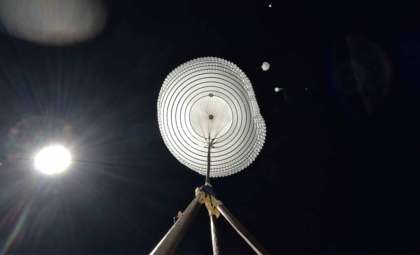
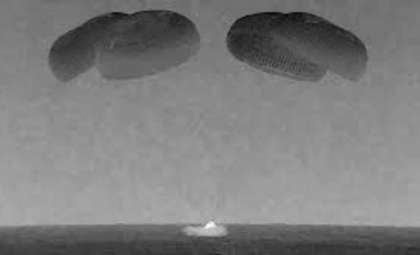
ISRO meticulously executed a comprehensive integrated air-drop test to assess the complete functionality of the crew module’s parachute deployment system. The organization reported, “This test successfully demonstrated the objective of end-to-end performance validation of the critical parachute-based deceleration system of the Crew Module for Gaganyaan mission in one of the typical mission scenarios.” The operation involved releasing the crew module, equipped with parachutes, from a high altitude under controlled parameters to simulate actual re-entry conditions, ensuring a stable and safe landing within target coordinates.
The parachute assembly is engineered to withstand intense re-entry forces, maintaining descent stability and reducing impact during touchdown. Every element—from pilot parachutes to the main canopy—underwent rigorous reliability assessments, underscoring ISRO’s dedication to crew safety. These stringent trials are key given the added complexities human spaceflight presents, demanding precision and fallback systems beyond those in unmanned missions.


Innovative Solutions and Challenges in Gaganyaan’s Crew Module Design
Developing a resilient crew module for human space missions entails addressing numerous engineering challenges. The module must tolerate rapid atmospheric re-entry, endure extreme heat, and guarantee continuous life-support functionality throughout descent. The parachute system plays a pivotal role as the final safeguard, ensuring a gentle landing.
ISRO’s engineering team integrated state-of-the-art sensors and telemetry units within the parachute setup to gather detailed data on every deployment stage. This real-time information enabled thorough analysis of deployment dynamics, drag effects, and stability. The air-drop experiments also serve to verify computational simulations used in mission design. Aligning physical testing with theoretical models fortifies confidence in delivering maximum astronaut safety during the actual mission.
Astronaut Preparation and Insights on Spaceflight Challenges
Gearing up for the landmark Gaganyaan mission demands rigorous mental and physical training for astronauts. Following the legacy of Rakesh Sharma, India’s first cosmonaut, contemporary trainees undergo intensive preparation. Astronaut Rakesh Nair shared with ThePrint, “No amount of training feels enough when it comes to representing your country in space, but what I realized is that there is always more than one way of doing something, and the more knowledge you gain, the better you become.” This outlook emphasizes the continual learning and adaptability necessary to navigate the complexities of spaceflight.
The current training curriculum incorporates zero-gravity environments, spacecraft system drills, and emergency response scenarios. Pilots and mission team members also participate in simulations of re-entry conditions, often informed by the parachute test data, to familiarize themselves with the physical stresses they will encounter. These comprehensive exercises cultivate resilience, ensuring astronauts are well-prepared across all mission stages—from launch to recovery.
Broader Impact of India’s Entry into Human Spaceflight
The Gaganyaan mission signifies more than a technological accomplishment; it positions India as an emerging leader in crewed space exploration. Success in this arena expands national expertise in aerospace technology, robotics, and life-support engineering, while fostering opportunities for global collaboration.
Beyond technical gains, the mission holds strong symbolic value by establishing India among nations capable of human spaceflight, inspiring future innovators and scientists. ISRO’s systematic testing approach and unwavering focus on safety reflect its long-term vision for sustainable space exploration, paving the way toward ambitious projects such as space stations and interplanetary voyages.
- Categories:
- News







0 comments
Sign in to Comment