
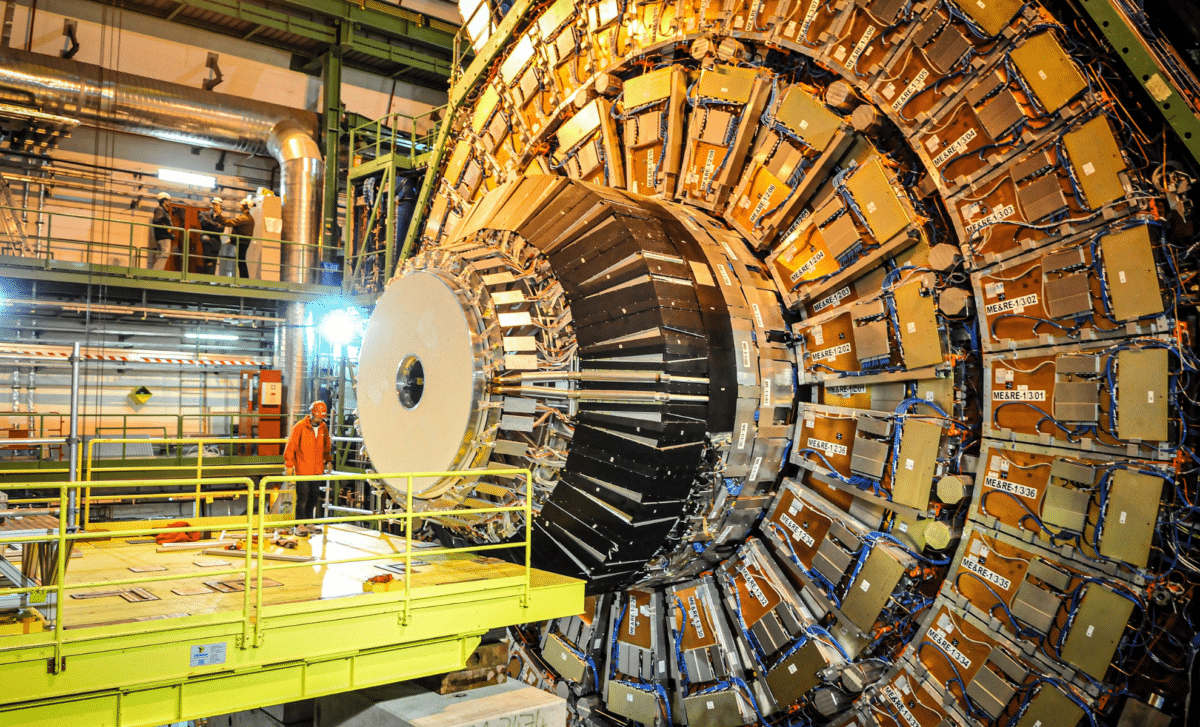
SpaceX is advancing the robustness and reliability of its spacecraft and satellites by constructing a particle accelerator at its Florida facility. This initiative, confirmed by SpaceX Starlink VP Michael Nicolls via Twitter, involves a proton cyclotron designed to evaluate how cosmic radiation impacts the electronics within SpaceX’s fleet, including Starship and Starlink satellites.
SpaceX Develops Particle Accelerator to Simulate Space Radiation Effects
SpaceX has long been at the forefront of space innovation, and now it’s investing in new technology to shield its spacecraft from one of the primary dangers in space: radiation. The new particle accelerator in Florida will replicate radiation emitted by the sun and other cosmic sources to assess its impact on spacecraft electronics. This cutting-edge testing site is expected to revolutionize how SpaceX validates and strengthens its space hardware.
The accelerator under development is a cyclotron that accelerates protons to speeds approaching the speed of light. Through this, SpaceX can recreate space radiation effects on materials and electronics here on Earth. This setup will aid in examining and qualifying the onboard components used in vehicles such as Dragon capsules, Falcon rockets, and Starship. A recent job advertisement for an Electronics Test Engineer highlights that the proton accelerator will facilitate detailed testing of chip and PCB performance, crucial for scaling AI satellite constellations and deep space vehicles.

Beyond protecting existing missions, SpaceX’s aim is to engineer future technologies that resist harsh radiation exposure in deep space. This accelerator represents a proactive step in understanding radiation-related challenges, positioning the company for success in upcoming exploratory endeavors beyond Earth.
Addressing Space Radiation: A Major Threat to Spacecraft Systems
Despite incredible progress in space travel, radiation exposure remains a significant hazard for spacecraft and astronauts alike. Solar flares, energetic particles, and cosmic radiation constantly jeopardize the operation and longevity of satellites and spacecraft electronics. SpaceX’s Starlink satellites have already demonstrated vulnerabilities during intense solar activity, which can cause hardware degradation and operational failures. The newly built proton cyclotron allows for precise, controlled radiation tests designed to evaluate and fortify electronic resilience.
Besides safeguarding current spacecraft, this facility will guide the creation of electronics capable of performing under extreme radiation conditions faced in prolonged deep space missions. With the cyclotron, SpaceX can rigorously design and certify equipment essential for both manned and robotic exploration beyond Earth’s magnetic shield.
Revolutionizing Spacecraft Electronics Evaluation
Spacecraft electronics endure some of the most severe operating environments, facing not only radiation but also extremes of temperature, vacuum, and mechanical strain. As SpaceX pursues ambitious goals like human missions to the Moon and Mars, developing electronics with enhanced durability and reliability becomes critical. The cyclotron enables accelerated testing cycles, allowing SpaceX to quickly adapt and optimize components for the rigors of spaceflight.
Embedding these rigorous tests within the development timeline accelerates the identification and resolution of hardware vulnerabilities, helping to improve the safety and performance of SpaceX’s fleet before launch.
Strategic Benefits of SpaceX’s Proton Accelerator for Future Missions
Constructing an in-house particle accelerator marks a strategic advancement for SpaceX to ensure its spacecraft can endure the most challenging space conditions. By rigorously evaluating electronics against radiation damage, SpaceX can create spacecraft that not only survive but thrive on long-duration missions in deep space. This initiative aligns perfectly with the company’s objectives to reduce mission costs, extend hardware life, and increase mission success rates.
This accelerator may also serve as a critical asset for the space industry at large. As governmental and commercial entities accelerate plans to explore the Moon, Mars, and beyond, the demand for radiation-hardened technology will escalate. SpaceX’s pioneering efforts in this domain will likely shape the future capabilities of space missions globally.
- Categories:
- Science












0 comments
Sign in to Comment