
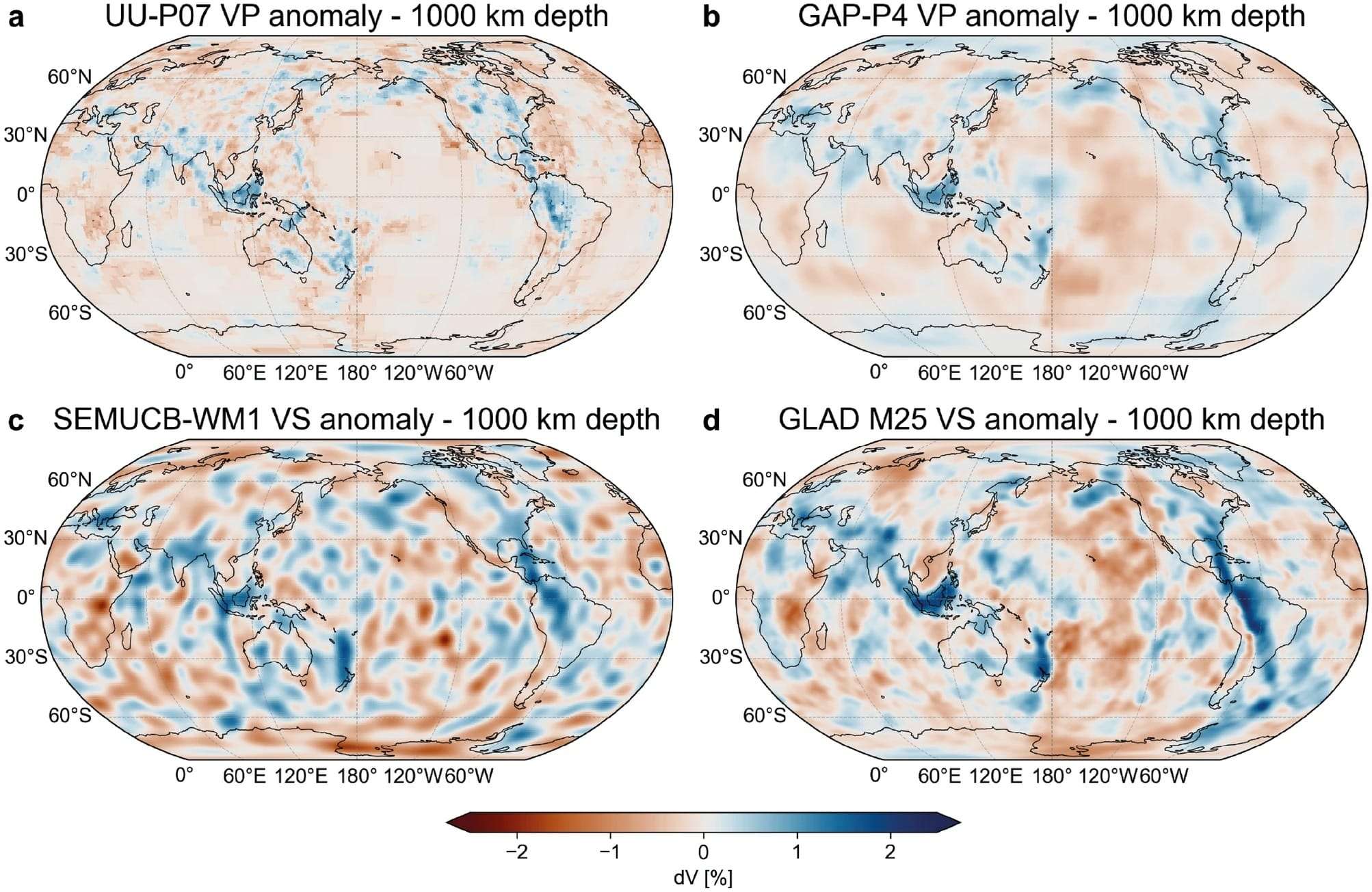
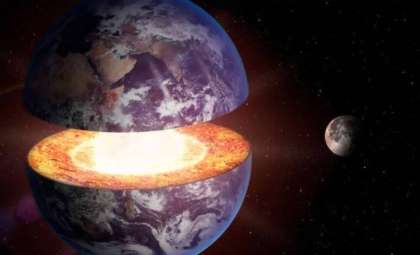
Deep beneath the sprawling Pacific Ocean, at depths between 900 and 1200 kilometers, scientists have detected seismic irregularities that challenge existing knowledge about Earth's inner composition. Leading this research, Thomas Schouten, a PhD candidate at the Swiss Federal Institute of Technology (ETH Zurich), discovered surprising formations within the planet’s lower mantle — a zone once thought to be well-characterized but now revealed to be far more intricate.
Detailed in a recent Scientific Reports publication, these insights stem from seismic wave studies analyzing how earthquake-generated waves fluctuate in velocity through Earth’s interior. Unexpected slowdowns in certain seismic waves beneath the Pacific indicate cooler or compositionally unique materials hiding in these depths. "Our previous assumptions about the mantle’s simplicity are being upended by these new findings," Schouten commented.
Reevaluating the Mantle Beneath One of Earth’s Largest Plates
The mantle, an immense rocky layer sandwiched between the Earth’s crust and core, is vital for tectonic movements and volcanic activity. For decades, scientists have used seismic waves to map this region, detecting cold subducted oceanic slabs—sections of crust sinking into the mantle at plate boundaries.

However, beneath the central Pacific Ocean, a region sitting atop a colossal tectonic plate, such interpretations fall short. This area lacks recent subduction zones, yet exhibits wave speed anomalies inconsistent with conventional models, posing intriguing questions about the underlying geological processes.
Schouten’s team hypothesizes that these structures might be relics from Earth’s earliest formation over four billion years ago or accumulations of iron-enriched material accumulating over prolonged periods.
Cutting-Edge Seismic Imaging Techniques Illuminate Deep Earth Features
The breakthrough relies heavily on full-waveform inversion (FWI), an advanced approach that utilizes comprehensive seismic waveform data instead of just select wave arrival times. This method enhances resolution and volumetric accuracy, particularly beneath oceans where seismic sensors are sparse.
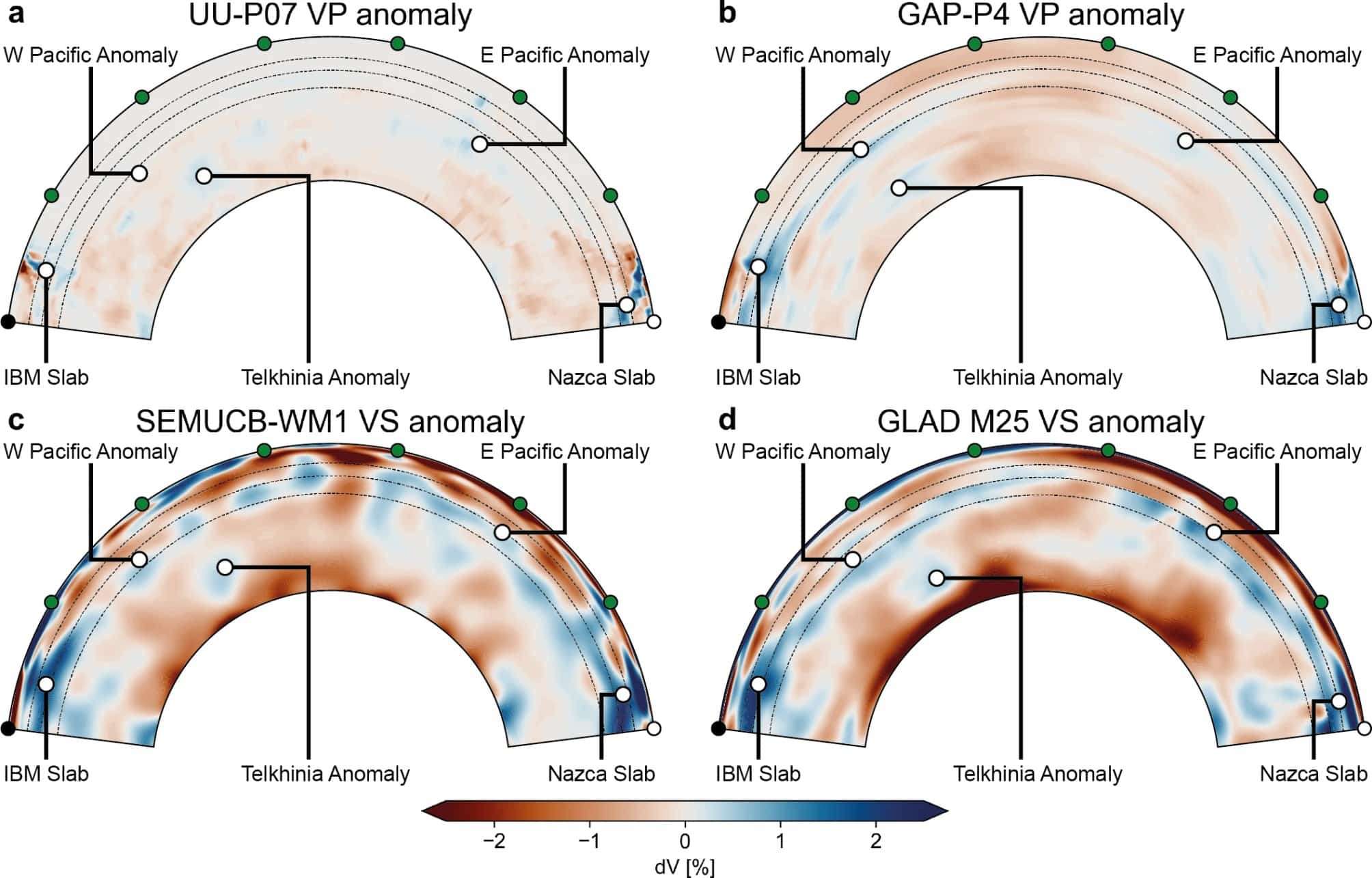
Applying the REVEAL FWI model, researchers simulated seismic wave behavior from global earthquakes, confirming these hidden anomalies beneath the western Pacific. They observed unique wave phases, such as SS and SSS waves, that are highly sensitive to deep mantle structures but often overlooked in traditional seismic studies.
Questioning Established Views on Subducted Plates
Conventional wisdom has linked positive seismic wave speed variations primarily to cold oceanic slabs descending into the mantle, a foundation for many tectonic reconstructions. Yet, Schouten’s data reveals little statistical alignment between these anomalies and known subduction locations spanning the past 200 million years.
This finding urges scientists to reconsider mantle anomaly interpretations, noting that previous correlations may have reflected the uneven distribution of seismic stations clustered near tectonic boundaries, rather than true geological processes.
“Not all positive wave speed anomalies in the lower mantle stem from thermal variations related to subduction,” the researchers emphasized, advocating for fresh perspectives on Earth's mantle dynamics.
Deciphering the Mantle’s Complex Composition Beneath the Pacific
Alternative explanations for the enigmatic structures include the possibility of lithospheric delamination—where parts of the rigid Pacific plate’s base peel away and sink due to gravitational or convective forces. Chemical diversity within the mantle might also explain these seismic peculiarities, as denser basaltic regions partition from surrounding materials, creating compositional contrasts.
Other investigations have detected peculiar features supporting this complexity, such as seismic discontinuities around 1,000 kilometers depth and unusually thin lithospheric areas beneath the oldest Pacific plate regions. These hints point toward a blend of thermal and compositional factors shaping the detected anomalies, rather than simple cold slab remnants.
By leveraging full-waveform inversion alongside sophisticated seismic models, the ETH Zurich team has unveiled a far more dynamic and heterogeneous lower mantle under the Pacific, challenging and expanding our understanding of Earth’s internal architecture.
- Categories:
- Science





0 comments
Sign in to Comment