
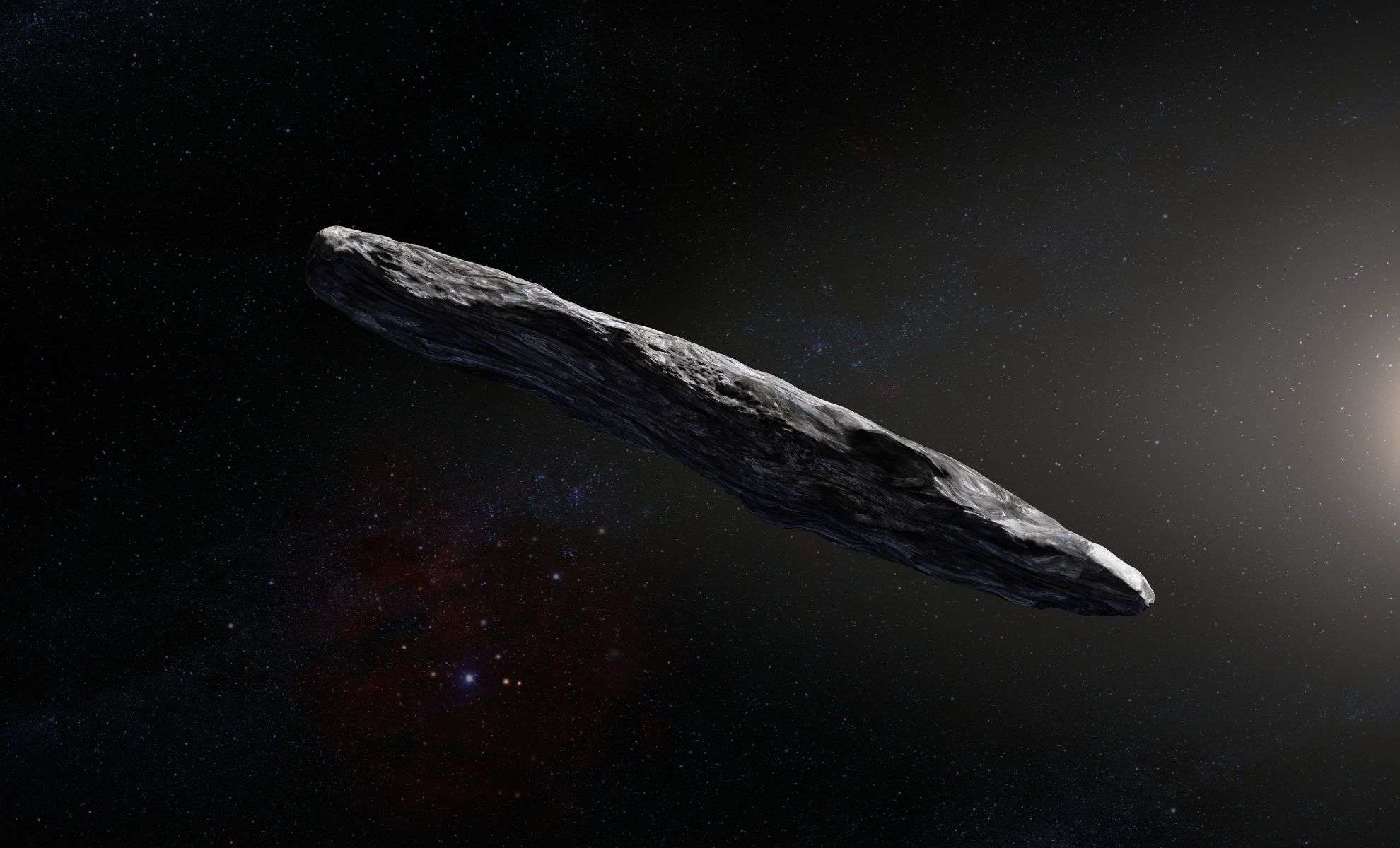
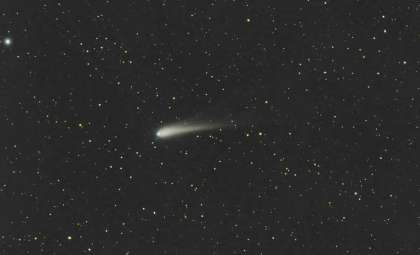
An enigmatic visitor from beyond our solar neighborhood, known as 3I/ATLAS, has caught astronomers' attention by exhibiting an unexpected and rare feature: a streamer of material extending directly toward the Sun. Detected by the powerful Keck II telescope in Hawaii, this “anti-tail” challenges typical comet behavior.
Although 3I/ATLAS is generally categorized as a comet, it continues to surprise researchers with its uncommon traits. Scientists are currently investigating its peculiar emissions and an atypical structure that contradicts most cometary models.
Originally spotted traveling through deep space at a distance over twice that between Earth and the Sun, 3I/ATLAS is part of a rare group of interstellar objects. Its path and composition have been intensively studied because of its unexpected properties. As noted by Futurism, visible light observations revealed an anti-tail pointing sunward, an unusual phenomenon that demands further explanation.

Atypical Comet Features: An Uncommon Shape and Distinct Emissions
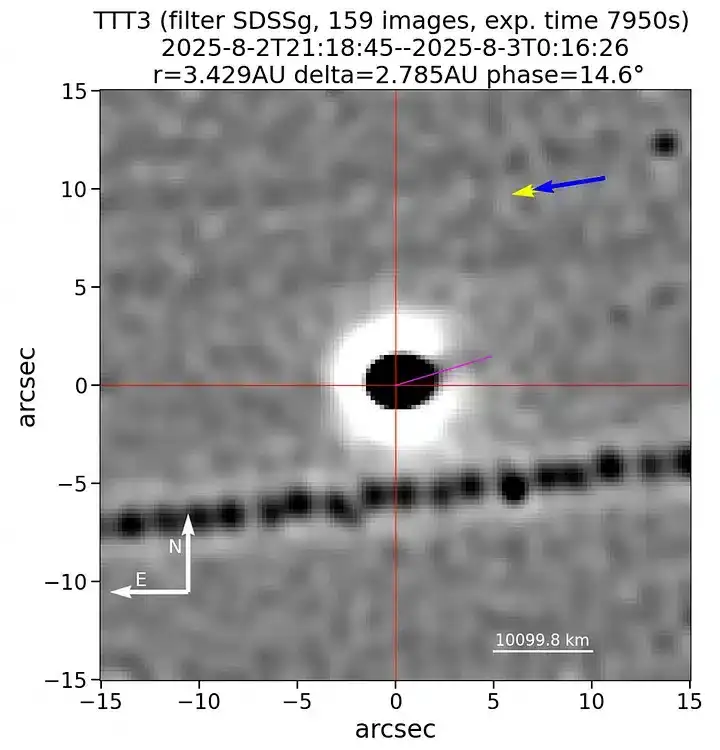
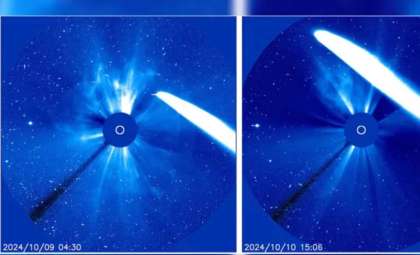
The tail of 3I/ATLAS—more accurately described as an anti-tail—runs counter to what is normally observed in solar system comets. Instead of solar radiation pressure pushing dust away from the Sun, images show a glowing structure reaching sunward. Astronomer Avi Loeb, discusses on his blog how this contradicts the expected motion of dust, which typically flows outward from solar heating.
Adding to the mystery, data from Keck II detected emissions of cyanide and nickel gases. These chemicals are usually associated with cometary activity but are detected both toward and away from the Sun in this case, indicating a more complex internal environment than typical cometary bodies.
Could This Be an Illusion or Unique Dust Behavior?
Some scientists suggest the observed anti-tail may result from a visual effect. Because of Earth’s viewing angle relative to 3I/ATLAS, the dust cloud might appear as if it projects forward, even though it does not. As explained by IFLScience, such projection illusions have been documented before in comet observations, often misleading astronomers.
Alternatively, the explanation might lie in how larger dust grains behave. While smaller particles are blown away by the solar wind, heavier dust fragments tend to stay close to the comet’s trajectory. Planetary scientist Michael Busch from UCLA explains that depending on ejection timing and direction from a rotating nucleus, larger particles can accumulate either ahead of or behind the object.
Unusual but Worth Investigating
Despite being widely regarded as a comet, Avi Loeb remains doubtful about this classification. He assigns a 4 out of 10 rating on his personal “Loeb scale”, which assesses the probability that an object is extraterrestrial technology, according to Futurism. Loeb criticizes the scientific community for hastily dismissing anomalies, stating that some comet experts overlook significant oddities.
3I/ATLAS remains visible and is about to approach Jupiter, offering a brief observational window for spacecraft like NASA’s Juno and ESA’s Juice missions to gather additional data. Whether this interstellar visitor is simply an outlier or something more extraordinary, its distinctive sunward tail guarantees its place in astronomical records.
- Categories:
- Space







0 comments
Sign in to Comment