
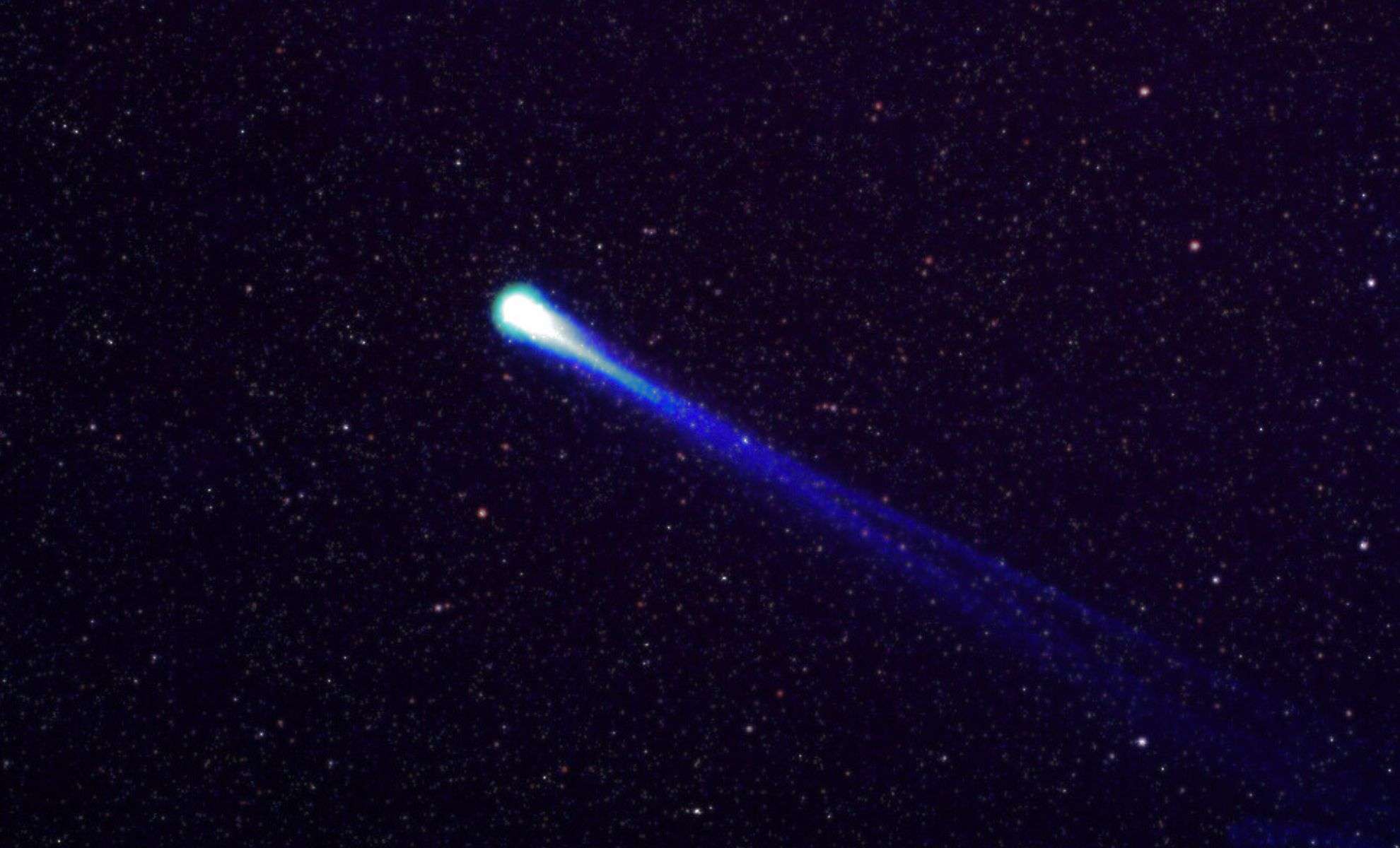
When the interstellar object designated 3I/ATLAS was first observed speeding through our Solar System earlier this year, astronomers initially identified it as a typical comet, made up of dust and ice, originating from beyond our planetary neighborhood. However, recent findings have challenged this view, suggesting a far more unusual nature.
Initially, 3I/ATLAS exhibited characteristics similar to previous interstellar travelers such as ʻOumuamua in 2017 and 2I/Borisov in 2019. It moved rapidly, arrived from outside the Solar System, and showed signs of a gaseous atmosphere often linked with icy bodies sublimating under solar heat. Yet, the real surprise emerged from analyzing the object’s emitted substances.
Employing high-resolution spectroscopic techniques via the Keck II telescope in Hawaii, researchers identified an unexpected molecule: nickel tetracarbonyl (Ni(CO)₄). This organometallic compound is known for its toxic and volatile nature and is commonly employed in advanced industrial metal processing. However, this molecule has never before been detected in natural cosmic conditions.

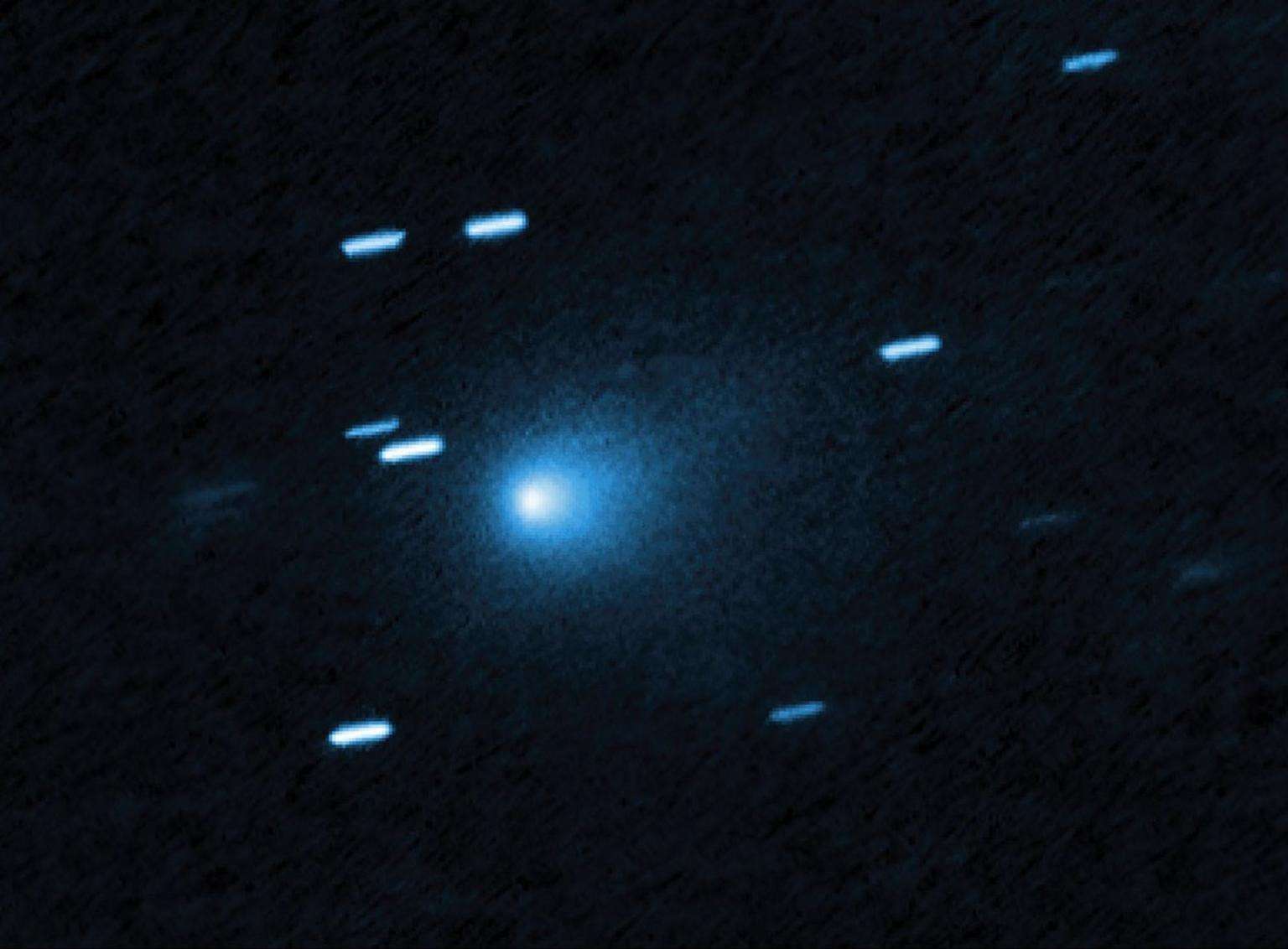
The discovery, outlined in a recent peer-reviewed preprint by W.B. Hoogendam et al., presents a mystery. The object is releasing about four grams of nickel each second, notably without any detectable iron—a chemical trait unprecedented in known cometary bodies.
An Unusual Elemental Ratio
In virtually all studied comets, nickel and iron exist in tandem. This relationship is well documented, including a 2021 investigation published in Nature examining ultraviolet and optical spectra from numerous comets, confirming consistent iron-to-nickel ratios regardless of comet type or orbit.
Nickel tetracarbonyl’s volatility enables it to vaporize under moderate heat, which might explain why it becomes detectable as 3I/ATLAS approaches the Sun. Still, its formation is perplexing. On Earth, Ni(CO)₄ is synthesized under very controlled industrial conditions involving purified nickel, carbon monoxide gas, and precise temperatures and pressures. No known natural cosmic process replicates these conditions.
Although the Keck research team proposed natural explanations might eventually account for the presence of this compound, no definitive mechanism has been formulated. The team acknowledges that the unexpected chemistry observed might point to previously unknown planetary processes.
A Sunward Feature
Adding to the enigma is 3I/ATLAS’s unusual physical display. Contrary to typical comets, which develop bright tails streaming away from the Sun, this object ejects material in the direction of the Sun. This emission stream contains carbon dioxide, water vapor, minute quantities of cyanide, and nickel, yet, notably, no iron.
This remarkable behavior was initially reported by The New York Post, featuring comments from Harvard astrophysicist Avi Loeb, who remarked that such data resemble artificially engineered phenomena more than natural ones. “Why does the jet point directly at the Sun?” he questioned. “This has never been observed in any other object.”
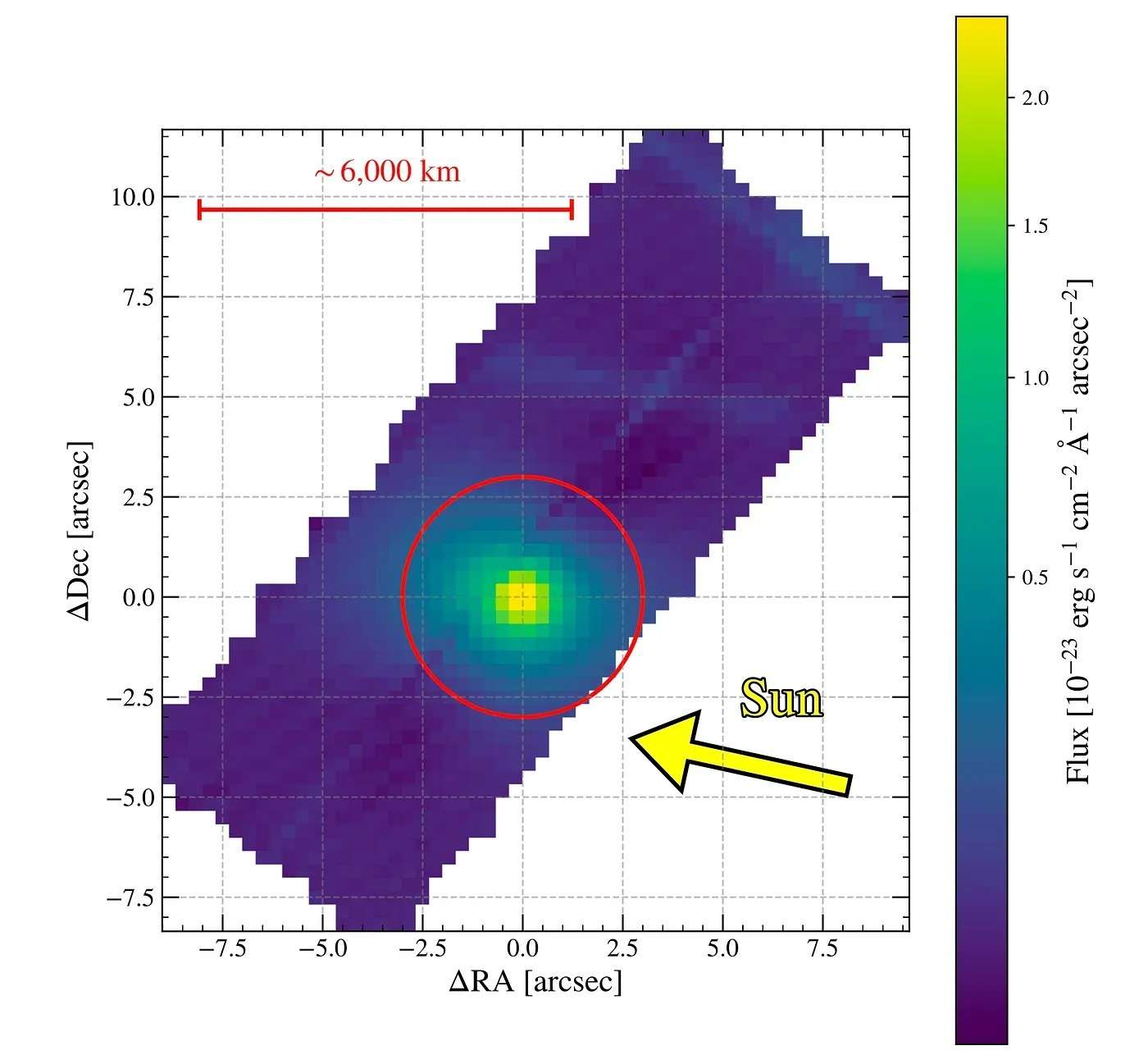
The peculiar tail direction and distinctive chemical signature have prompted parallels to ʻOumuamua, another interstellar enigma that Loeb controversially proposed might be an artificial construct. While a majority of experts dismiss such interpretations, 3I/ATLAS is igniting new debates and revealing significant mysteries about the nature of interstellar objects.
Close Encounter with Mars and Data Delays
Between October 4 and 7, 3I/ATLAS passed within 12 million miles of Mars, offering a prime chance for detailed examination. NASA’s Mars Reconnaissance Orbiter captured images using its HiRISE camera with exceptional detail.
However, due to a U.S. government shutdown, these images remain unreleased, frustrating many in the scientific and enthusiast communities. During a New York Post interview, Loeb expressed his frustration: “We don’t want filtered announcements. We need the raw data.”
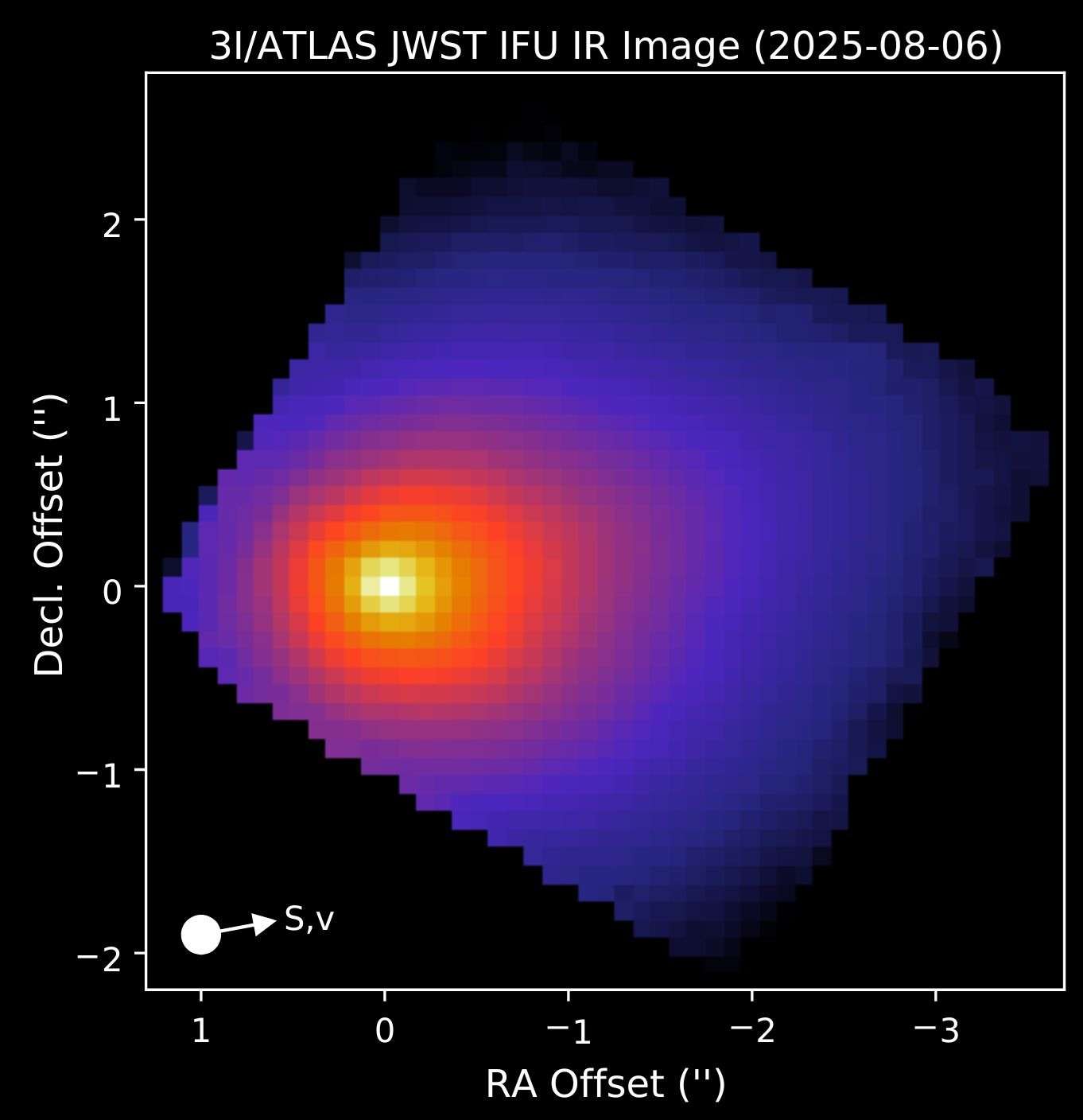
Additional observations have come from various facilities. The arXiv study notes extensive use of data from the Keck Cosmic Web Imager (KCWI). Their spectral results found clear traces of CN (cyanogen) and nickel tetracarbonyl, but crucially, no iron spectral lines—defying typical comet signatures. Observations from the James Webb Space Telescope and Hubble’s Wide Field Camera 3 further contribute, though complete datasets are still under evaluation.
Emerging Mysteries and Scientific Impact
If confirmed, the presence of this unique compound could mark 3I/ATLAS as the first known cosmic source of a metal-organic molecule previously only synthesized industrially. The consequences extend beyond cometary research, influencing areas including astrochemistry, the theories of planetary formation, and even considerations in the search for extraterrestrial artifacts.
Importantly, no claims have been made about artificial origins. Most researchers remain committed to natural explanations, albeit ones that challenge current scientific understanding. As the authors emphasize, the lack of iron coupled with the release of a volatile industrial compound remains an open question.
References
- New York Post article on 3I/ATLAS
- Nature 2021: Fe/Ni balance in comet atmospheres
- arXiv preprint: KCWI spectroscopic study of 3I/ATLAS
- Earlier Post report on 3I/ATLAS emitting light
- Categories:
- Space












0 comments
Sign in to Comment