
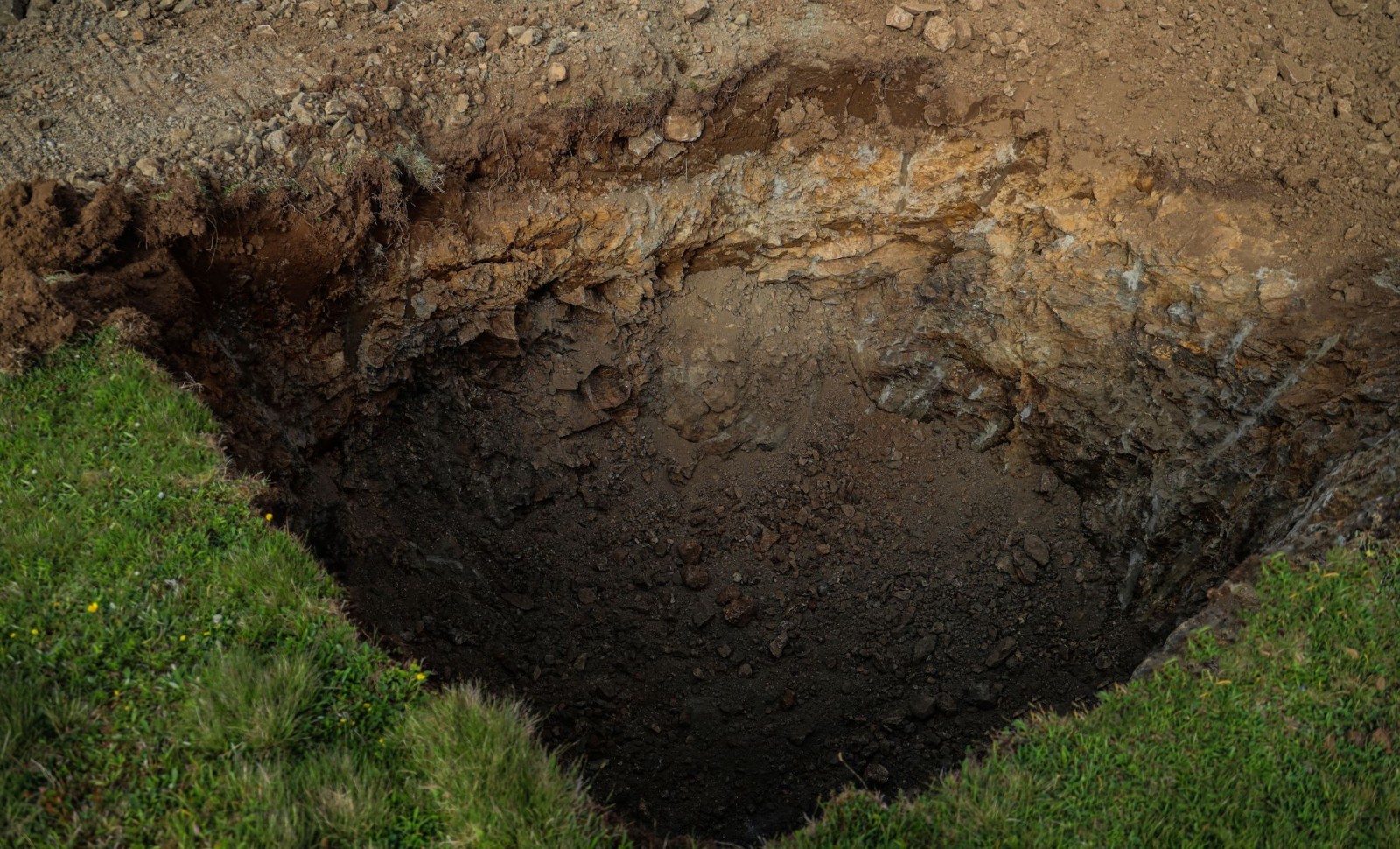
The concept of boring a tunnel through the entire Earth, from one side to the other, has fascinated humanity for ages. Yet, modern scientific attempts reveal that undertaking such a feat is far beyond our current capabilities. IFLScience highlights how the extreme environmental conditions, including soaring temperatures and crushing pressure, make this goal virtually unattainable with today's technology.
Despite reaching notable depths in various drilling initiatives, breaching the Earth’s crust remains elusive. Although the vision of a planet-spanning passage is intriguing, it remains a remote aspiration.
Exploring the Earth's Inner Structures
To grasp the difficulty of drilling through Earth, one must examine its layered composition. The crust averages roughly 30 kilometers thick on continents, but beneath mountain ranges it can reach depths of up to 100 kilometers.

Directly under the crust lies the mantle, extending down to about 2,900 kilometers, followed by the outer and inner cores. Temperatures near the core peak at about 5,200 °C, and pressure intensifies dramatically with depth. According to IFLScience, pressure escalates by one atmosphere for every 3 meters descended, resulting in core pressures exceeding a trillion times those found at sea level.
Advances in Deep Drilling
Although a complete tunnel through Earth hasn’t been achieved, there have been remarkable depths reached by drilling projects. The Kola Superdeep Borehole in Russia is the deepest man-made hole, extending 12,263 meters, yet this still only penetrates the upper crust.
China has recently embarked on a drilling initiative targeting the Cretaceous rock formation, though this endeavor remains far from penetrating the Earth’s deeper layers. These drills have uncovered valuable geological findings like unexpected water reservoirs and confirmations of plate tectonic theory, but they still fall short of reaching the mantle or core.
The Barriers of Heat and Pressure
The critical challenges in drilling deeper arise from the soaring temperatures and pressure levels. As you delve further beneath the surface, temperatures soar to an astonishing 5,200 °C at the core of the Earth. Such extreme heat would obliterate drilling apparatus long before they could reach the mantle.
Doug Wilson, a geophysicist at UC Santa Barbara, points out that under these conditions the air within a drill bit would behave akin to a superfluid due to immense pressure, adding another complication. Though cooling methods involving water have been proposed, they have yet to successfully combat the harsh subterranean environment.
Experiencing Weightlessness at Earth’s Center?
An intriguing theoretical concept related to drilling through Earth is the prospect of weightlessness. If such a tunnel existed, an object passing through the core would become weightless, as gravitational forces from all directions would balance out, effectively nullifying gravity.
Although drilling through Earth is an exciting notion, it remains impractical. As highlighted by André Gase, Assistant Professor at Boise State University, in his The Conversation article:
“The depth of a hole all the way through the planet would be equivalent to Earth’s diameter, which is just a name for a line that passes straight through the center of a circle.”
Gase explains that to maintain stability, the tunnel would have to be roughly three times the Earth's diameter in width, which is practically impossible and would drastically distort the planet’s shape. Hence, this venture remains a theoretical idea with formidable physical barriers.
- Categories:
- Science









0 comments
Sign in to Comment