
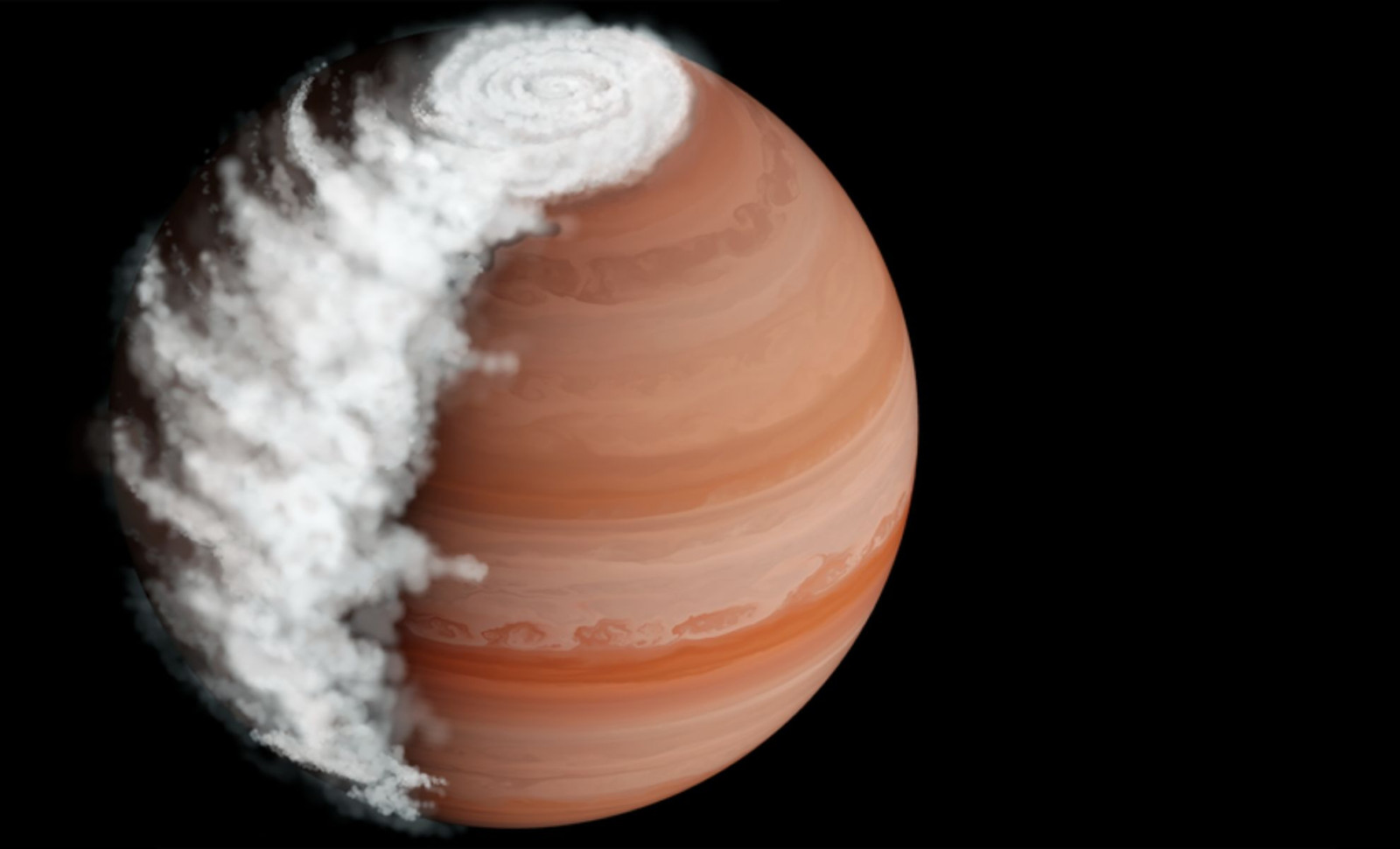
Astronomers have, for the first time, detected a full daily weather cycle on an exoplanet, witnessing dense morning clouds that clear by evening. The James Webb Space Telescope (JWST) enabled detailed scrutiny of the WASP-94Ab atmosphere, offering refined insights into its molecular elements.
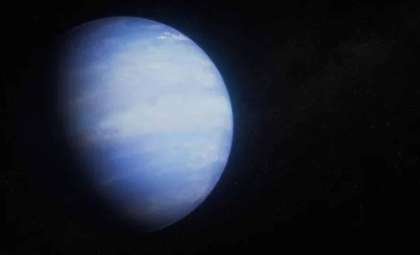
WASP-94Ab orbits one star in a widely separated binary system about 690 light-years away. This gas giant, sized at 1.7 times Jupiter's radius, completes a tight four-day orbit at a distance of 5.1 million miles (8.2 million kilometers) from its star. Surface temperatures soar beyond 2,200°F (1,200°C), typical of hot Jupiters where intense heat regulates atmospheric phenomena.
Observing hot Jupiters' atmospheres is challenging due to the presence of vaporized mineral clouds that obscure clear atmospheric readings.

Transit Spectroscopy Reveals Contrast in Cloud Coverage
David Sing from Johns Hopkins University refers to these cloud layers as a persistent obstacle in understanding exoplanet atmospheres. His team utilized transit spectroscopy during WASP-94Ab's passage across its star, capturing light filtered through its atmospheric layers via JWST.
“We’ve known for quite a while that clouds are pervasive on hot Jupiter planets, which is annoying because it’s like trying to look at the planet through a foggy window,” he explained in a peer-reviewed publication.
This approach allowed researchers to identify chemical signatures and cloud distributions. Published in Science, their work found significant magnesium silicate clouds dominate the planet’s leading edge, described as the “morning” hemisphere, transitioning from night to day. In contrast, the “evening” side, facing the end of the day, remained largely cloud-free.
“It was really surprising how different the two halves of the same planet are,” Sagnick Mukherjee, who led the research as a postdoctoral scholar at Arizona State University, stated. “What this tells us is: if we don’t know about the weather cycles on these distant planets, we won’t be able to measure their composition well.”
Separating the planet's hemispheres corrected earlier errors from Hubble data, which combined both edges and overestimated oxygen and carbon levels by hundreds of times Jupiter’s values. JWST’s refined readings show these elements are only about five times more abundant than in Jupiter’s atmosphere.
Mechanisms Behind Atmospheric Water and Clouds
The daily cloud dynamics on WASP-94Ab may be driven by its tidal locking, which locks one side in perpetual daylight while the other remains dark. Powerful winds along the day-night boundary lift magnesium silicate clouds from the nightside into the atmosphere. As these clouds drift toward the dayside, heat causes them to dissipate or settle, before cycling back to the nightside in ongoing circulation.
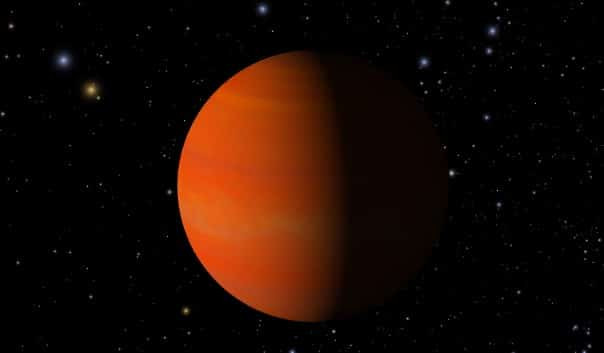
Another hypothesis suggests that extreme daytime temperatures gradually break down clouds much like the way morning fog evaporates on Earth. Both scenarios align with observed data, revealing a rapidly shifting pattern of condensation and evaporation synchronized with the planet's day.
These findings emphasize that hot Jupiter atmospheres are highly variable, with cloud formations that evolve quickly. Sing commented:
“Not only have we been able to clear the view, but we can finally pin down what the clouds are made out of and how they’re condensing and evaporating as they move around the planet.”
Extending This Approach to More Exoplanets
After investigating WASP-94Ab, the team studied eight additional hot Jupiter exoplanets utilizing JWST. Among them, WASP-17b and WASP-39b showed comparable daily variations in cloud activity. WASP-17b features a low-density bloated atmosphere and travels in a retrograde orbit, whereas WASP-39b is known for its water-rich atmosphere enriched with carbon and sulfur dioxide.
The results imply that daily cloud cycles could be widespread among hot Jupiters, though their distinct chemical and physical properties create unique weather patterns on each world.
The researchers aim to expand their surveys to planets with highly elliptical orbits, where drastic temperature swings might drive extreme weather phenomena visible through JWST. This study, published on May 21, marks a pivotal advancement in exoplanet meteorology, showcasing how instruments like JWST unveil atmospheric changes over time.
- Categories:
- Astronomy






0 comments
Sign in to Comment