
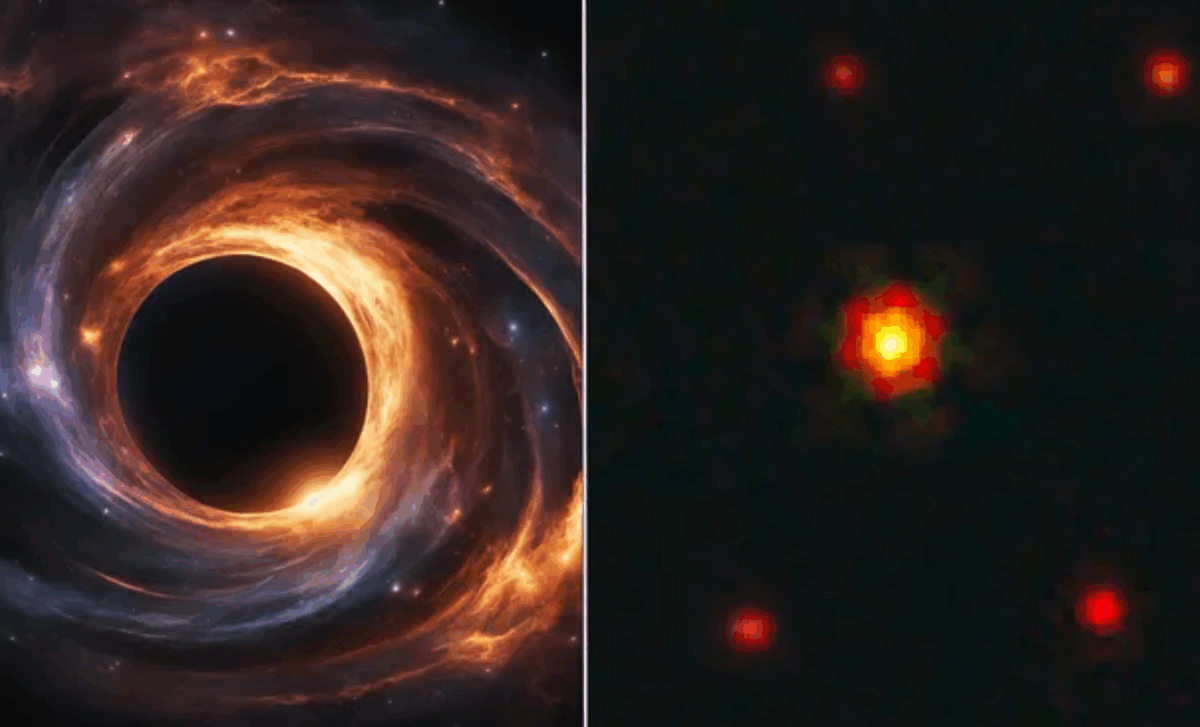
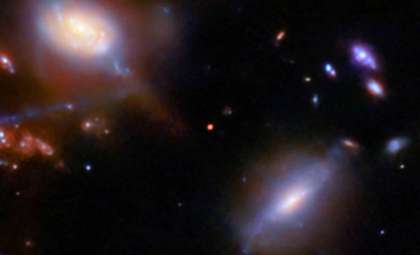
A team of astronomers utilizing the James Webb Space Telescope (JWST) has identified a peculiar red object shining from the distant cosmos. Dubbed BiRD for “Big Red Dot,” this source is actually a supermassive black hole actively consuming matter during the era known as cosmic noon, approximately 4 billion years post-Big Bang. This finding offers fresh insights into the secretive behavior of young galaxies and their central black holes.
An Immense Cosmic Entity Revealed
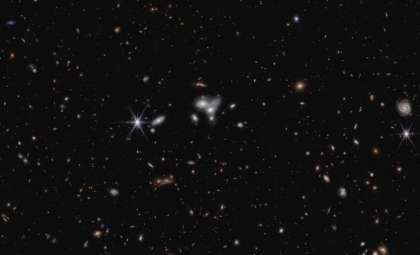
Scientists at Italy’s National Institute for Astrophysics (INAF) discovered BiRD while observing a sky region near the quasar J1030+0524, located some 12.5 billion light-years distant. Their detailed study, featured in Astronomy & Astrophysics, describes how BiRD was detected using JWST’s Near-Infrared Camera (NIRCam), the same instrument behind numerous seminal JWST images.
“From the processed images, we compiled a catalog of detected sources. That’s where BiRD stood out: a luminous, star-like object that was neither a star nor listed in existing X-ray or radio source catalogs,” detailed Federica Loiacono, project lead and INAF research fellow. “By analyzing its spectrum, we gained clues about its chemical makeup and physical characteristics.”

Spectral analysis revealed signature emissions of hydrogen and helium, confirming that BiRD’s brightness stems from gas enveloping a hungry black hole. “We observed distinct hydrogen signals—especially the Paschen gamma line, an indicator of ionized hydrogen—and helium absorption features,” said Loiacono. “These spectral traits helped us determine BiRD’s distance, which is relatively nearby compared to other known red sources. We also estimated the black hole’s mass to be around 100 million solar masses.”
Little Red Dots and Hidden Black Hole Enigmas
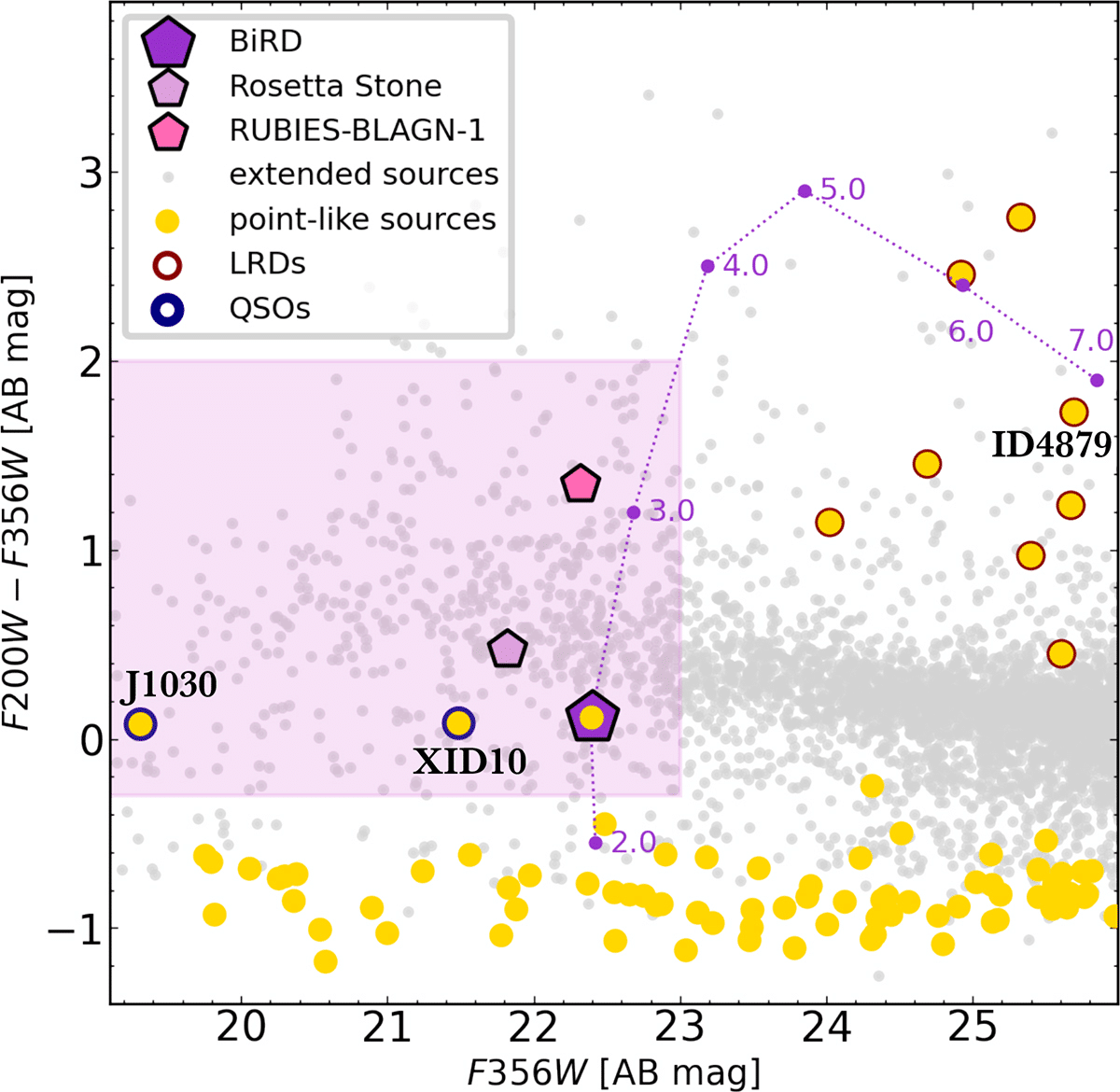
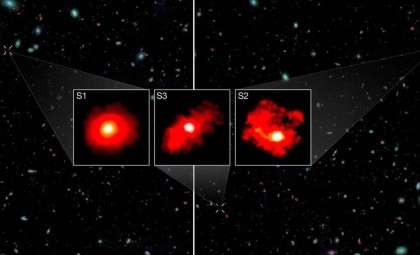
BiRD’s detection contributes a vital clue to an expanding cosmic mystery: the “little red dots” (LRDs) — compact, infrared-bright structures spread throughout early cosmic times. These sources evade easy classification. Some researchers suggest they could be black hole stars, while others view them as nascent black holes cloaked in thick gas and dust layers.
“Before BiRD’s identification, only two LRDs exhibiting similar spectral traits—such as helium lines and Paschen gamma features—were known at comparable distances,” said Loiacono. “Analyzing BiRD’s spectrum alongside those, we found strong parallels in line widths, absorptions, black hole masses, and gas densities, confirming BiRD’s membership within the LRD family.”
BiRD is unique due to its intense luminosity, significantly brighter than other LRDs, indicating it may represent a transitional stage between small shrouded black holes and grand quasars dominant in later epochs. This discovery challenges prior beliefs asserting these objects disappeared by cosmic noon and instead points to a vibrant population of actively feeding black holes during this time.
Exploring New Horizons in Astrophysics
This breakthrough demonstrates JWST’s exceptional ability to penetrate cosmic dust and expose phenomena previously inaccessible. Loiacono highlighted the telescope’s role in revolutionizing knowledge surrounding black hole genesis and galaxy development.
“Our next goal is to examine more nearby LRDs in fine detail to assemble a comprehensive understanding,” she remarked. “JWST has ushered in a new era in extragalactic research, uncovering objects that were once beyond imagination, and this is just the start of our exploration.”
Though BiRD is but a tiny point in the vast universe, it exemplifies how, even in the cold dark reaches of space, unexpected marvels glow softly, sharing whispers from the dawn of the cosmos.
- Categories:
- Space


0 comments
Sign in to Comment