
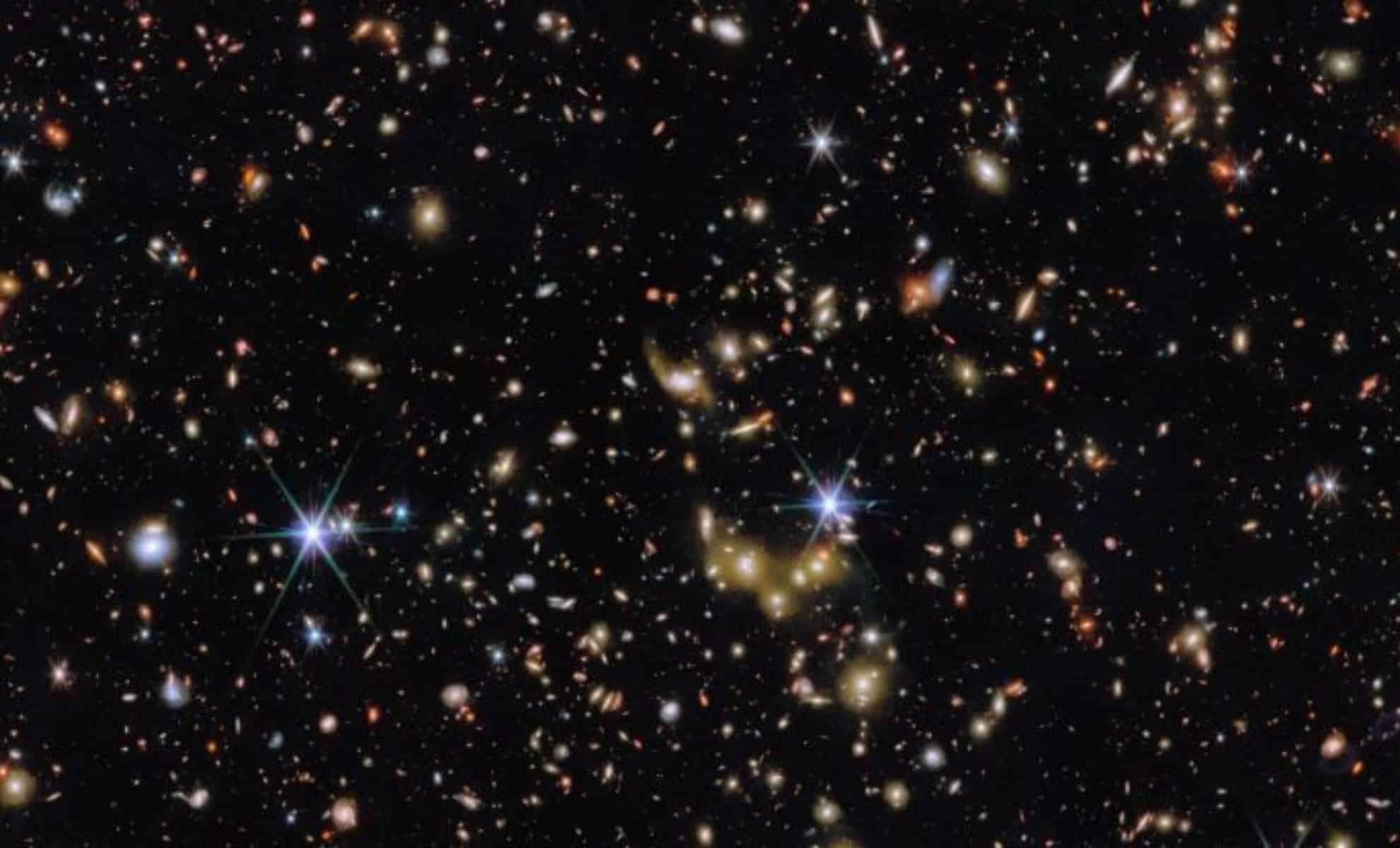
The James Webb Space Telescope (JWST) operated by NASA has produced an astonishing deep-field photograph of a minuscule segment of the cosmos, unveiling that almost every tiny point of light is actually a galaxy.
Featured in a recent publication in Astronomy & Astrophysics, this remarkable image displays galaxies whose light has traveled nearly 12 billion years. It is part of the expansive COSMOS-Web survey.
A Universe Overflowing with Galaxies
The picture provided by the JWST is unlike standard night sky views. While typical observations usually highlight numerous stars, this photo predominantly features galaxies, including many formed near the dawn of the universe itself.
These are not simply points of brightness; each galaxy is a vast system comprising stars, dust, and dark matter that has existed for billions of years.

What makes this capture so extraordinary is the incredible detail seen within an area so small it might often be overlooked. Occupying less than one-fifth the Moon’s apparent size, this tiny region contains thousands of galaxies.
JWST’s Distinctive Features and the Image’s Significance
A notable aspect of the photo is JWST’s ability to differentiate foreground stars from distant galaxies through a property called the diffraction spike pattern.
This effect emerges when starlight bends around the telescope’s structural elements, producing pronounced light spikes. Distant galaxies lack this pattern because their light appears far more blended. This distinction allows scientists to accurately separate stars from galaxies, improving the precision of cosmic data.
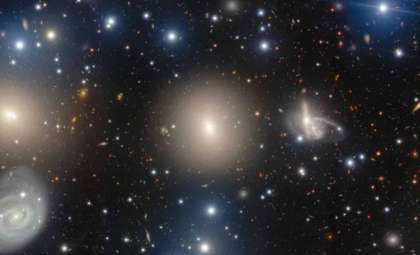
At the heart of the image, a cluster of galaxies shines with a golden glow. The light from these galaxies began its journey 6.5 billion years ago, providing insight into how enormously old the universe is.
This distinctive JWST-Hubble combined image offers a glimpse much closer to the universe’s origins.
The Importance of the COSMOS-Web Exploration
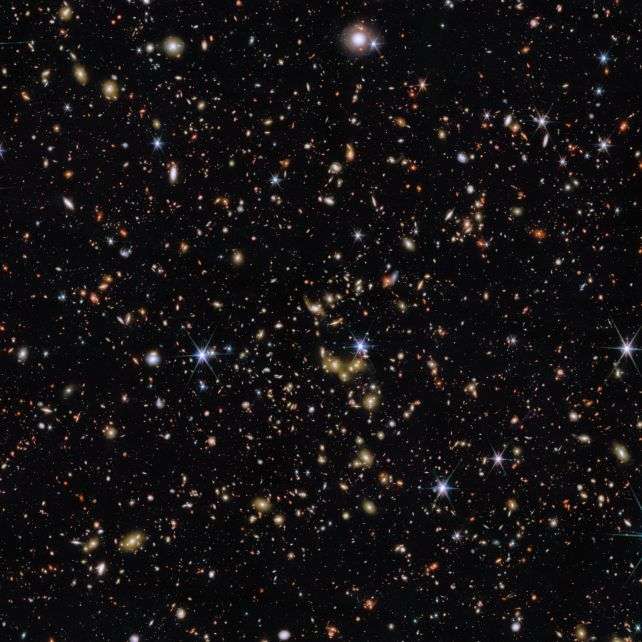
The driving force behind this profound observation is the COSMOS-Web survey. Its goal is to catalog galaxy systems, helping researchers grasp galaxy evolution and the underlying cosmic web interlinking them. This image is part of a larger mission to chart the connections among galaxies as well as the elusive dark matter and hydrogen structures binding them.
Galaxies aren’t scattered randomly but cluster into dense areas, assembling grand formations tied together by widespread networks of dark matter and hydrogen.
Revealing Massive Galaxy Assemblies with JWST
The JWST has also uncovered immense galaxy clusters. Pairing JWST findings with X-ray data from the Chandra X-ray Observatory has led to the detection of some of the largest and densest galaxy groupings ever observed.
These clusters contain not just many galaxies but also vast quantities of hot gas that emit X-rays, observable by Chandra.
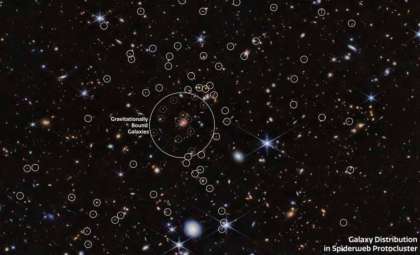
An international collaboration, headed by Greta Toni at the University of Bologna, has cataloged 1,678 galaxy groups based on the most recent JWST observations.
This catalog represents only a minuscule portion of the cosmos, yet opens an inspiring window into the universe’s large-scale architecture.
The Immense Scale of the Universe and Our Place Within It
One of the most remarkable insights from this image is the staggering enormity of the universe. The photographed segment is just 6.44 by 6.44 arcminutes yet contains over a thousand galaxy groups.
For comparison, the full Moon spans approximately 30 arcminutes across the sky. This means the captured patch is incredibly tiny, yet densely packed with galaxies.
Scientists anticipate that any other similarly small segment of sky will reveal comparable numbers of galaxies, reaffirming how richly populated space is, even in seemingly minute areas.
- Categories:
- Space



0 comments
Sign in to Comment