
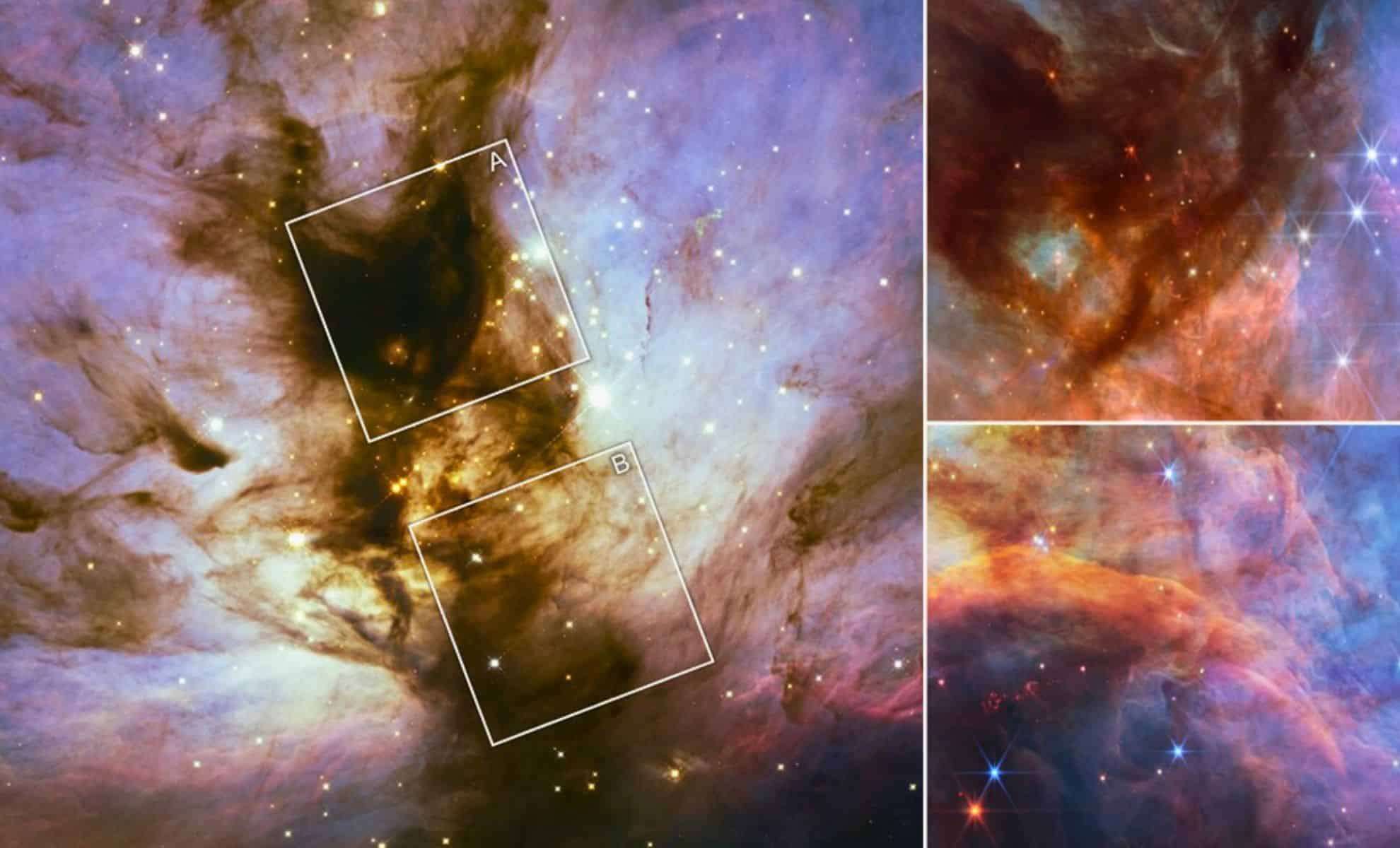
NASA’s James Webb Space Telescope (JWST) has achieved a remarkable breakthrough by uncovering new details within the Flame Nebula, a stellar nursery situated roughly 1,400 light-years from our planet.
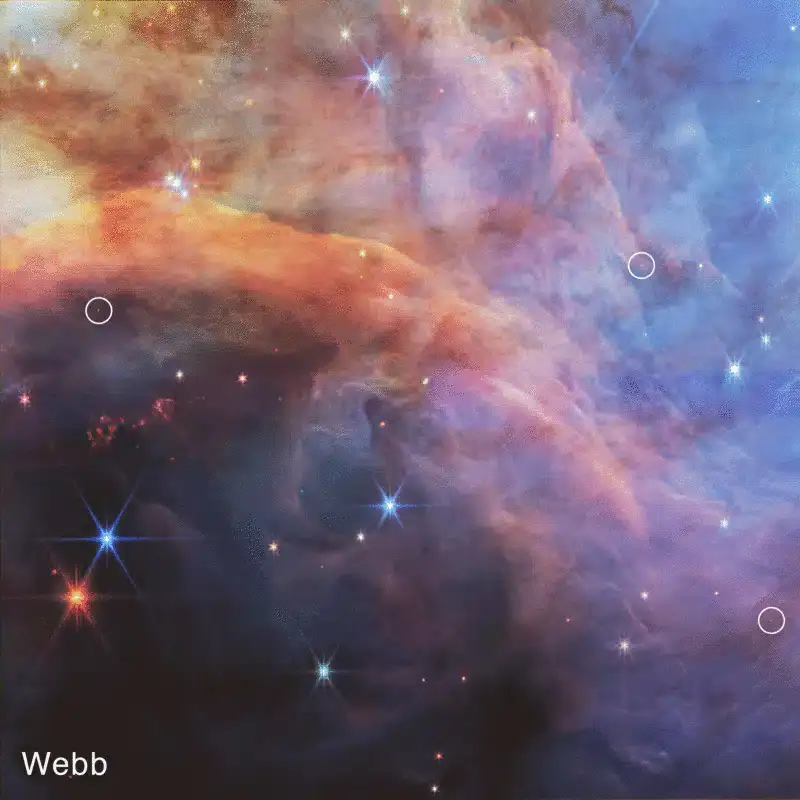
Leveraging its state-of-the-art infrared instruments, JWST has detected a group of free-floating brown dwarfs, some weighing as little as two to three times the mass of Jupiter.
This finding revises earlier ideas about the minimum mass thresholds necessary for star formation and expands our knowledge of substellar bodies.

Exploring the Origins of Brown Dwarfs
The Flame Nebula is a thick, dusty molecular cloud rich with forming stars. Within this bustling region are brown dwarfs, often called “failed stars” because they don’t have enough mass to sustain hydrogen fusion like conventional stars.
As these objects age, they cool and grow fainter, making detection challenging using ordinary telescopes. JWST’s advanced infrared technology allows scientists to penetrate the dense dust and detect the faint emissions from youthful brown dwarfs.
Led by Matthew De Furio from the University of Texas at Austin, the research focused on pinpointing the fundamental low-mass cutoffs in the formation of stars and brown dwarfs. Results showed some free-floating bodies in the Flame Nebula weigh only two or three times Jupiter’s mass.
Furthermore, JWST’s remarkable sensitivity allowed the identification of even tinier objects, some as low as half the mass of Jupiter.
“The goal of this project was to explore the fundamental low-mass limit of the star and brown dwarf formation process,” said De Furio. “With Webb, we’re able to probe the faintest and lowest mass objects.”
Advancing Beyond Hubble’s Legacy
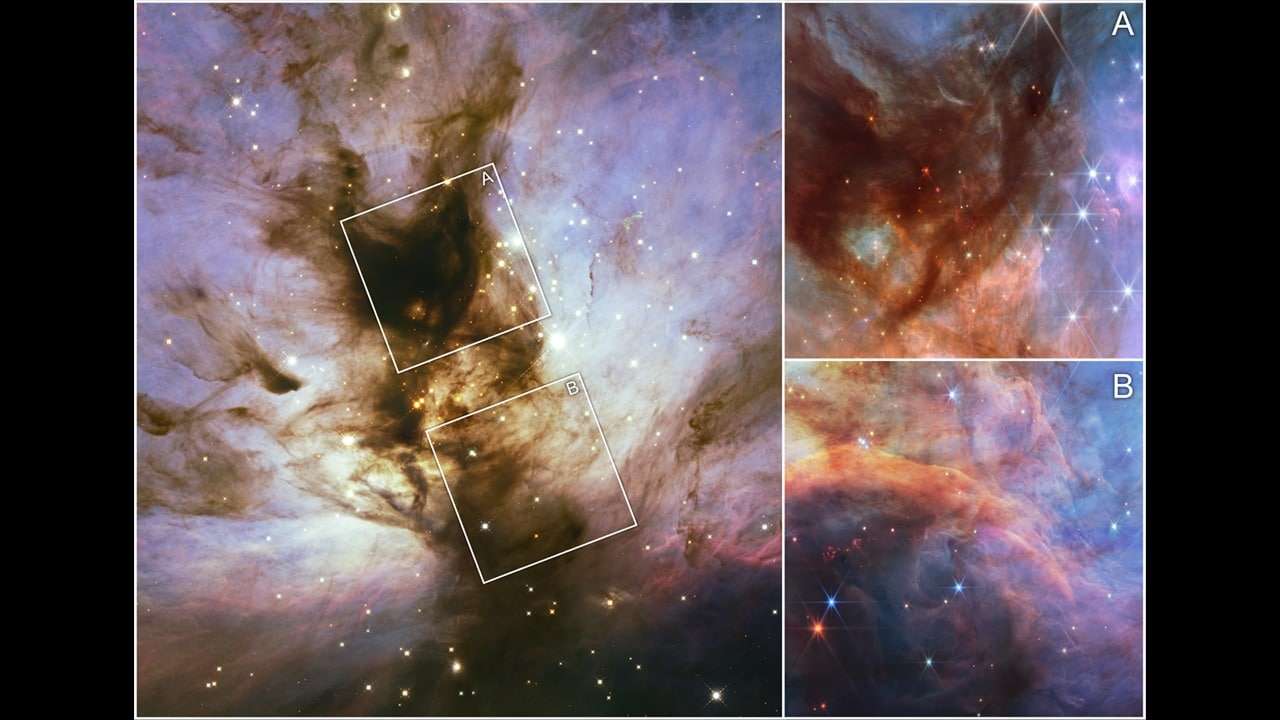
While JWST’s data mark a new era, they build upon a foundation laid by years of Hubble Space Telescope observations.
Hubble had previously spotted potential brown dwarfs within the Orion Molecular Cloud Complex, including the Flame Nebula, but lacked the precision to scrutinize objects at such low masses.
“It’s really difficult to do this work, looking at brown dwarfs down to even ten Jupiter masses, from the ground, especially in regions like this,” De Furio explained. “Having existing Hubble data over the last 30 years or so allowed us to know that this is a really useful star-forming region to target. We needed to have Webb to be able to study this particular science topic.”
Massimo Robberto from the Space Telescope Science Institute called JWST’s contribution a “quantum leap” in the study of substellar bodies. JWST doesn’t just hint at these faint worlds— it provides clear proof and accurate mass calculations.
Planets or Ultra-Light Brown Dwarfs?
This discovery raises the intriguing question of how to distinguish between tiny brown dwarfs and massive planets, given their overlapping masses.
Michael Meyer, an astronomer involved in the study, noted, “There’s a big overlap between the things that could be planets and the things that are very, very low mass brown dwarfs. And that’s our job in the next five years: to figure out which is which and why.”
To resolve this, the team plans to use JWST’s spectroscopic tools to examine these objects’ chemical make-up and formation history.
By investigating the dimmest and smallest brown dwarfs ever recorded, researchers are closing in on understanding how stars, planets, and brown dwarfs emerge within turbulent star-forming zones.




0 comments
Sign in to Comment