
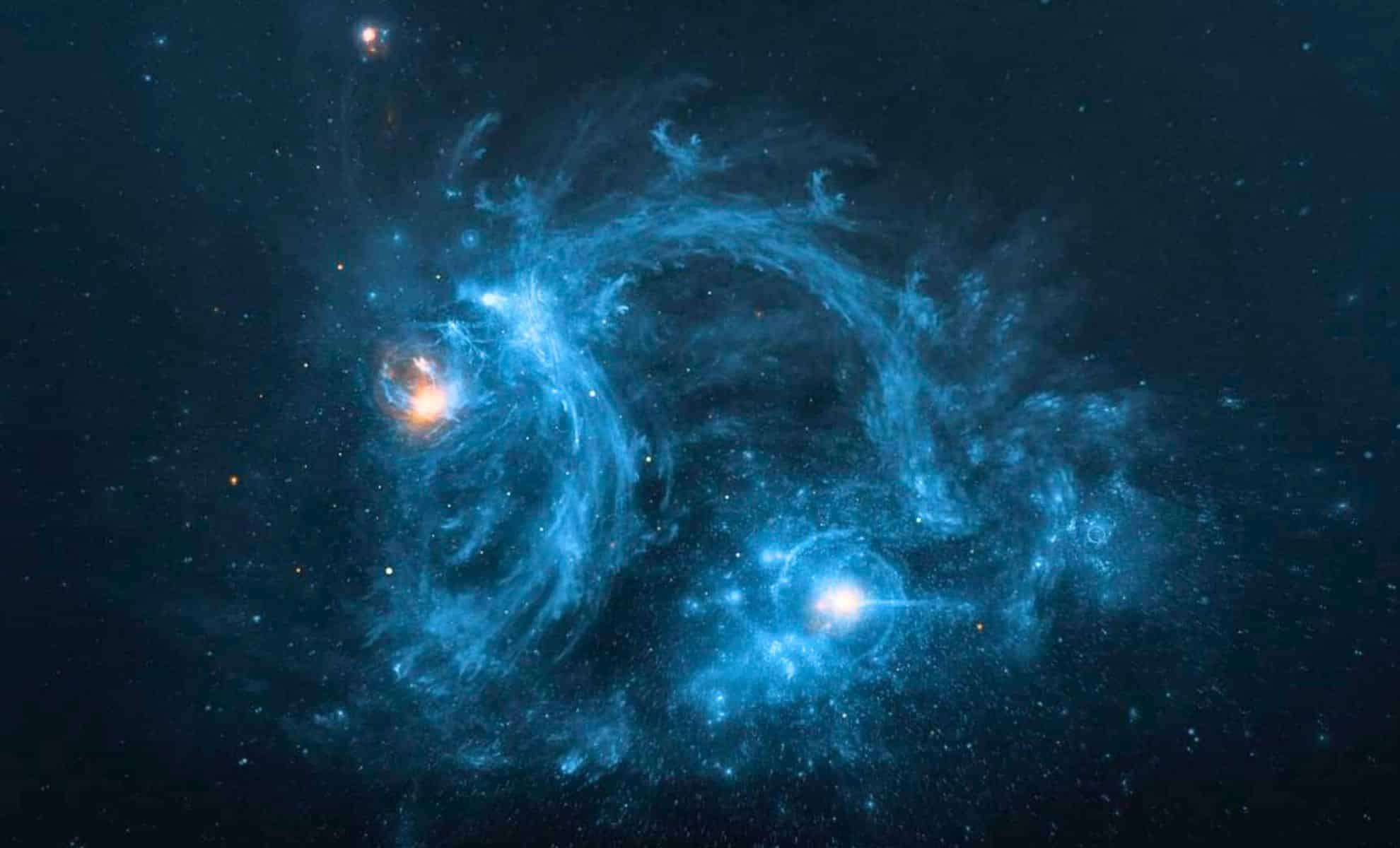
The James Webb Space Telescope (JWST) has made a landmark observation by identifying the first recorded example of an “Einstein zig-zag“. This phenomenon, once purely theoretical, happens when light bends and twists through two distinct warped space-time regions, producing a spectacular multi-image effect. Beyond its visual appeal, this discovery could hold the key to resolving major questions in contemporary cosmology.
Origin of the Einstein Zig-Zag Phenomenon
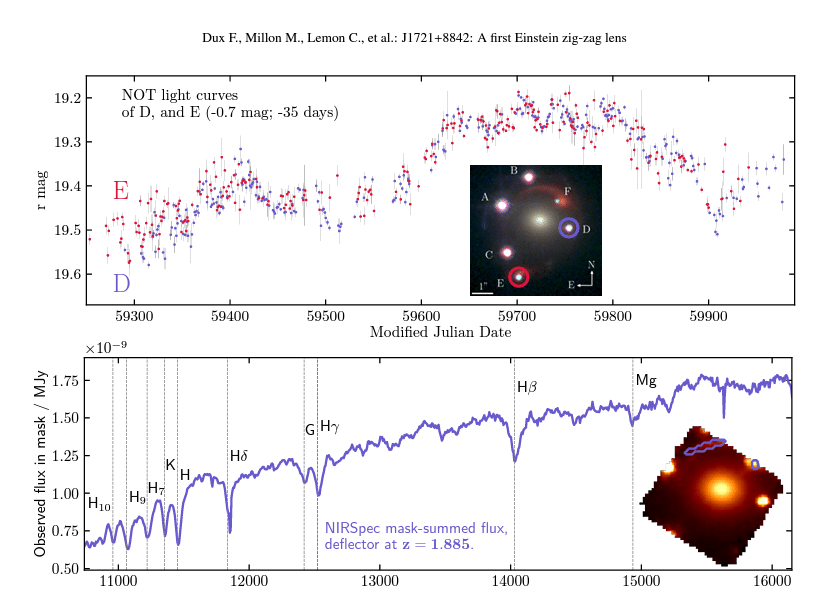
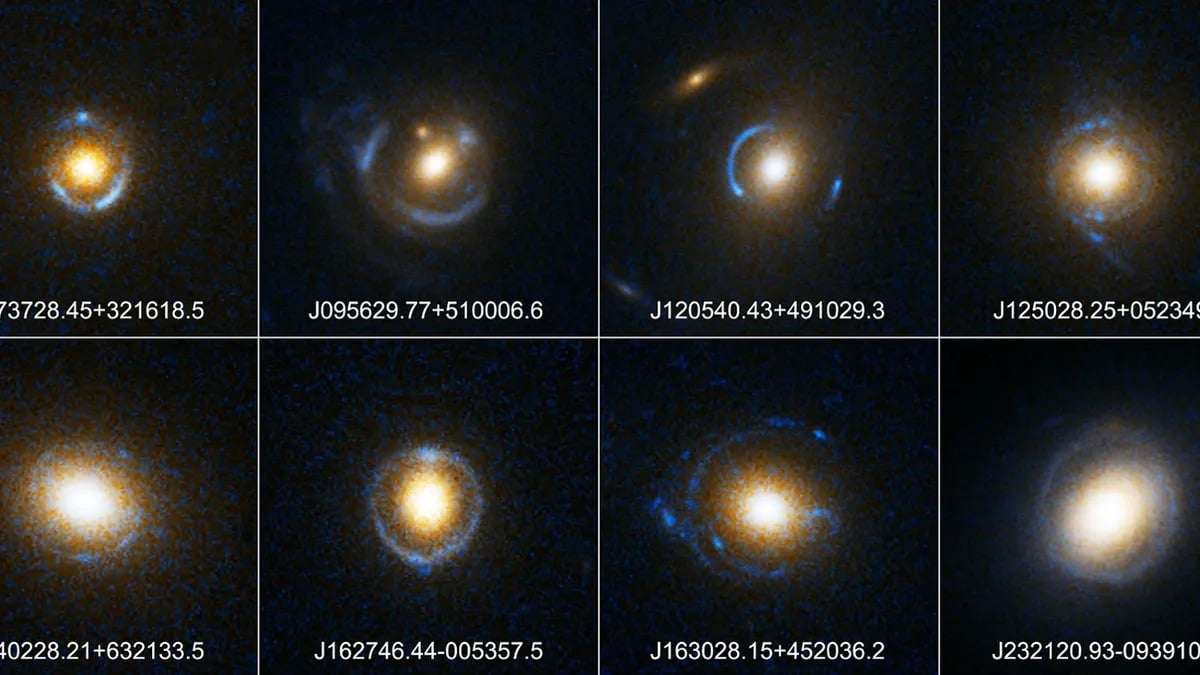
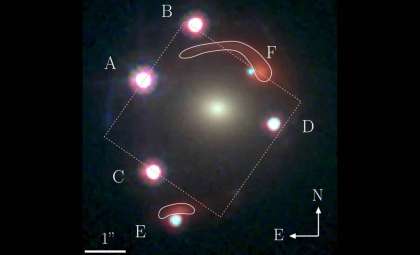
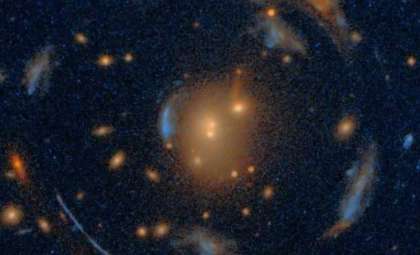
Back in 2018, astronomers spotted a remarkable sight: four bright, identical points of light in a remote corner of the universe. Known as J1721+8842, this was initially interpreted as four images of a single quasar generated by gravitational lensing—where massive objects bend light, creating multiple reflections or rings, such as Einstein rings.
Recent research uncovered two more light points alongside a faint red Einstein ring. Armed with advanced data from the JWST, scientists confirmed all six sources trace back to a single quasar, with its light traveling through two separate gravitational lenses. This journey generates an unprecedented zig-zag pattern that alters our comprehension of space-time distortions.

- Gravitational lensing sequence: Initially, light is deflected by a nearby galaxy cluster producing four images, then it passes through a more distant lens creating additional duplicates and the subtle Einstein ring.
- Observational tools: The Near Infrared Camera (NIRCam) aboard JWST produced high-resolution images key to detecting the faint extra duplicates and the dim red ring.
Could the Einstein Zig-Zag Help Solve the Hubble Tension?
Gravitational lensing does more than create captivating images—it functions as a vital cosmological tool. Studying the bending of light allows researchers to estimate galaxy masses, investigate the elusive dark matter, and determine the Hubble constant, which describes the universe’s rate of expansion. However, JWST’s refined capabilities have highlighted a perplexing issue: certain cosmic regions seem to expand inconsistently, a puzzle known as the Hubble tension.
The newly discovered Einstein zig-zag could provide a fresh perspective. Its complex lensing geometry permits more accurate measurements of both dark energy—the power behind cosmic acceleration—and the Hubble constant, offering hope for resolving this key cosmological challenge.
The Importance of Patience in Unlocking This Discovery
Although the detection of the Einstein zig-zag marks a significant achievement, its full scientific value depends on detailed study. Careful analysis of the complex light paths may take years. Astrophysicist Dr. Thomas Collett explains that refining these measurements could confirm or revolutionize existing cosmological theories, altering how we perceive the universe.
For now, the Einstein zig-zag remains a symbol of exciting potential—an extraordinary cosmic occurrence that bridges current knowledge and future discovery. This rare lensing pattern might not only shed light on the universe’s mysteries but could fundamentally transform our cosmic perspective.
- Categories:
- News






0 comments
Sign in to Comment