
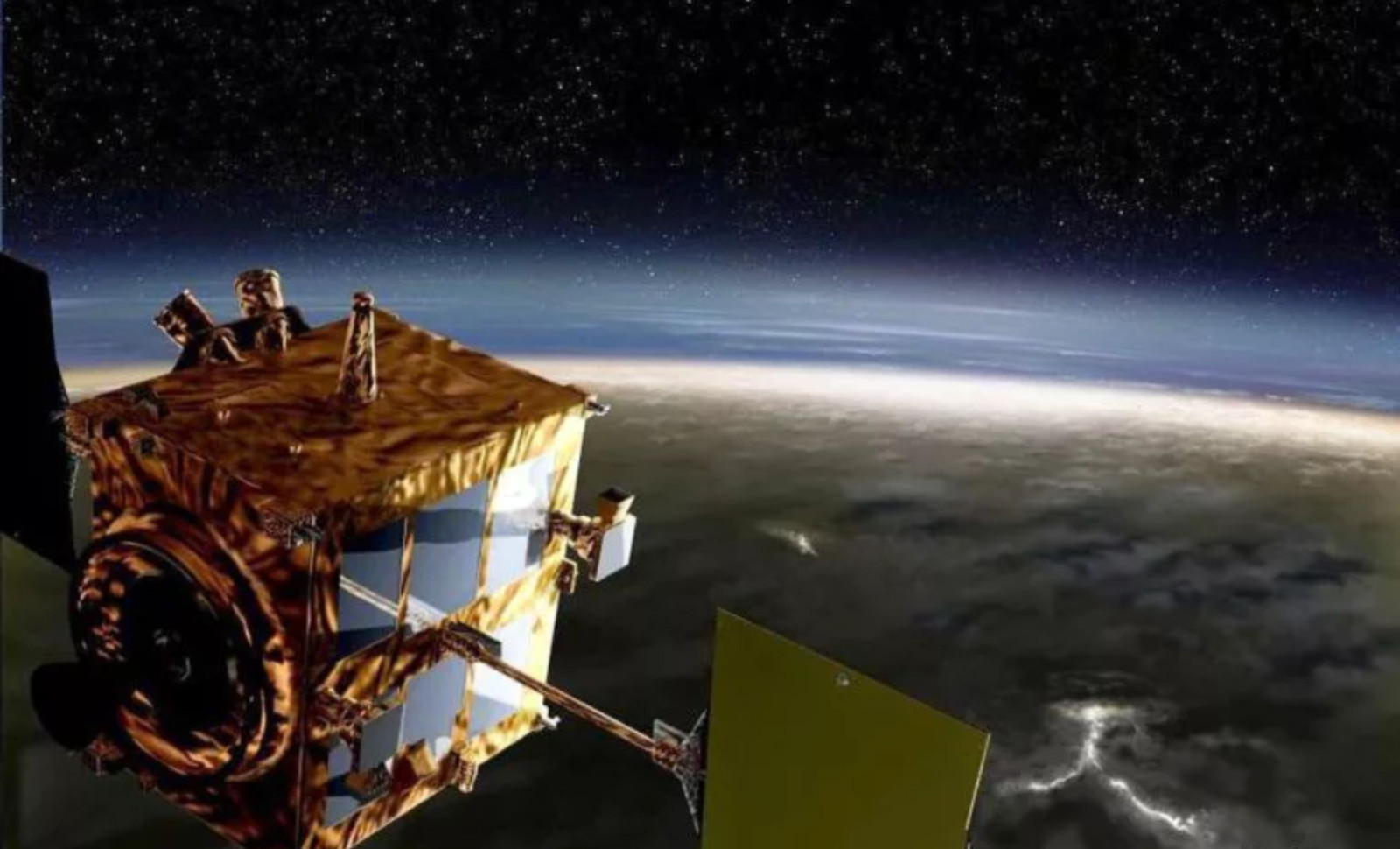
Japan’s Akatsuki spacecraft concluded its mission in September 2025 after more than ten years of pioneering exploration and a final year without communication. Launched in 2010 by JAXA and managed by ISAS, Akatsuki was tasked with studying Venus’s atmosphere, focusing on cloud dynamics and extreme weather phenomena. Notably, it stands as Japan’s first fully triumphant planetary orbiter.
Following an initial failure to enter orbit around Venus, Akatsuki amazingly regained its position in December 2015, after drifting in solar orbit for five years. Operating from a highly elliptical path, the probe supplied invaluable observations and imagery, advancing our knowledge of Venus’s atmospheric behavior, including phenomena such as super-rotation and gravity waves.
A Surprising Revival
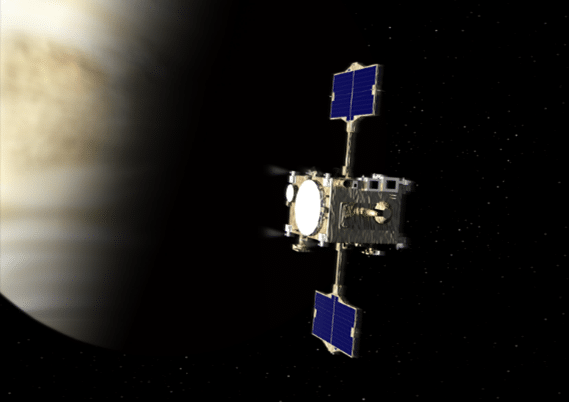
As detailed by Earth.com, the spacecraft originally failed to enter Venus orbit due to a malfunction in its main engine shortly after reaching space. This forced Akatsuki into orbit around the Sun for five years until engineers at JAXA succeeded in executing a secondary orbit insertion using smaller thrusters. This success made Akatsuki the sole active spacecraft orbiting Venus at that time.

Weighing just over 1,150 pounds, Akatsuki carried five cameras and an additional radio payload designed to probe the planet’s atmospheric composition and movement. Its orbit ranged from a closest approach near 620 miles to a farthest point of 223,700 miles, enabling both broad views and close-up studies of Venus’s thick cloud layers.
Masato Nakamura, the project’s lead at ISAS, guided the mission as Japan’s inaugural venture beyond Earth’s orbit. The focus on remote sensing through detailed imagery allowed scientists to track atmospheric currents across multiple layers.
Mapping a Turbulent Atmosphere
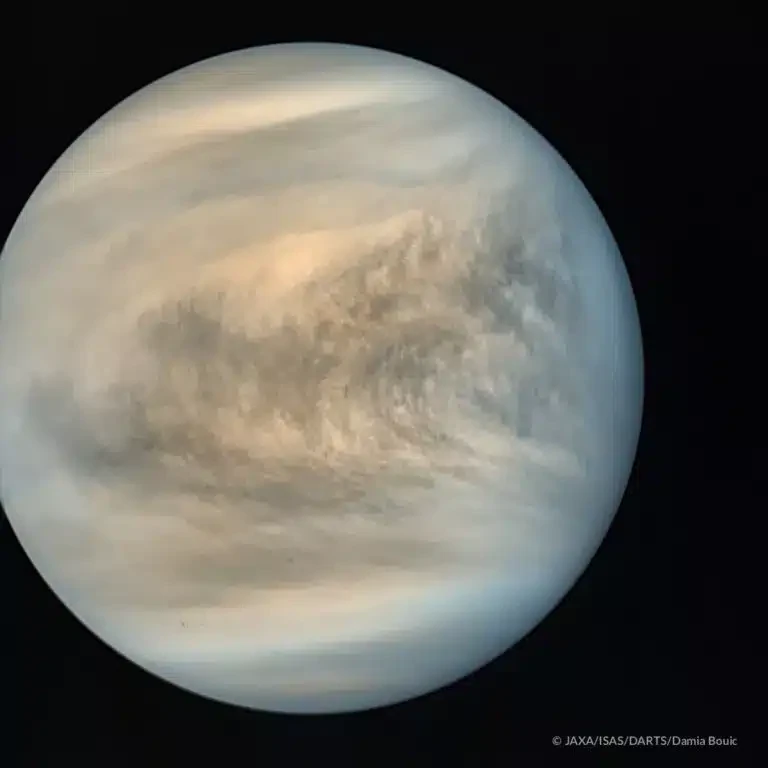
Venus’s atmosphere, dominated by powerful winds and extensive toxic clouds, presents a challenging target for climate studies. Akatsuki’s cameras captured data in ultraviolet and infrared wavelengths, each corresponding to different atmospheric levels. This enabled researchers to develop three-dimensional atmospheric models, revealing how gases circulate.
A key discovery was a 6,200-mile-long standing gravity wave, the largest documented in the Solar System. This wave appeared as alternating bright and dark stripes caused by air uplift driven by surface mountains, indicating that surface topography affects upper atmospheric layers despite extreme pressure conditions.
The mission also shed light on Venus’s super-rotation, whereby its upper atmosphere rotates considerably faster than the planetary surface. Akatsuki’s data linked this acceleration to momentum exchange through waves and turbulence, resolving a longstanding scientific puzzle.
The End of Communication
In late April 2024, contact with Akatsuki was lost when its attitude control system faltered, causing misalignment of the spacecraft’s antenna. Although its transmitter likely remained functional, the signal could no longer be detected on Earth. Earth.com reports that mission engineers struggled for months to regain contact but eventually accepted the orbiter as lost.
The mission officially concluded on September 18, 2025, more than 15 years post-launch. JAXA representatives confirmed that due to the aging hardware and absence of communication, operations had to cease, preventing uncontrolled transmissions from the disabled spacecraft.
Though the mission ended quietly, it bequeaths an extensive database of images, wind measurements, and innovative methodologies. Among its achievements was the application of data assimilation techniques that integrate observational data with predictive modeling to reconstruct comprehensive atmospheric behavior — a pioneering effort for a Venus mission.
- Categories:
- Space








0 comments
Sign in to Comment