
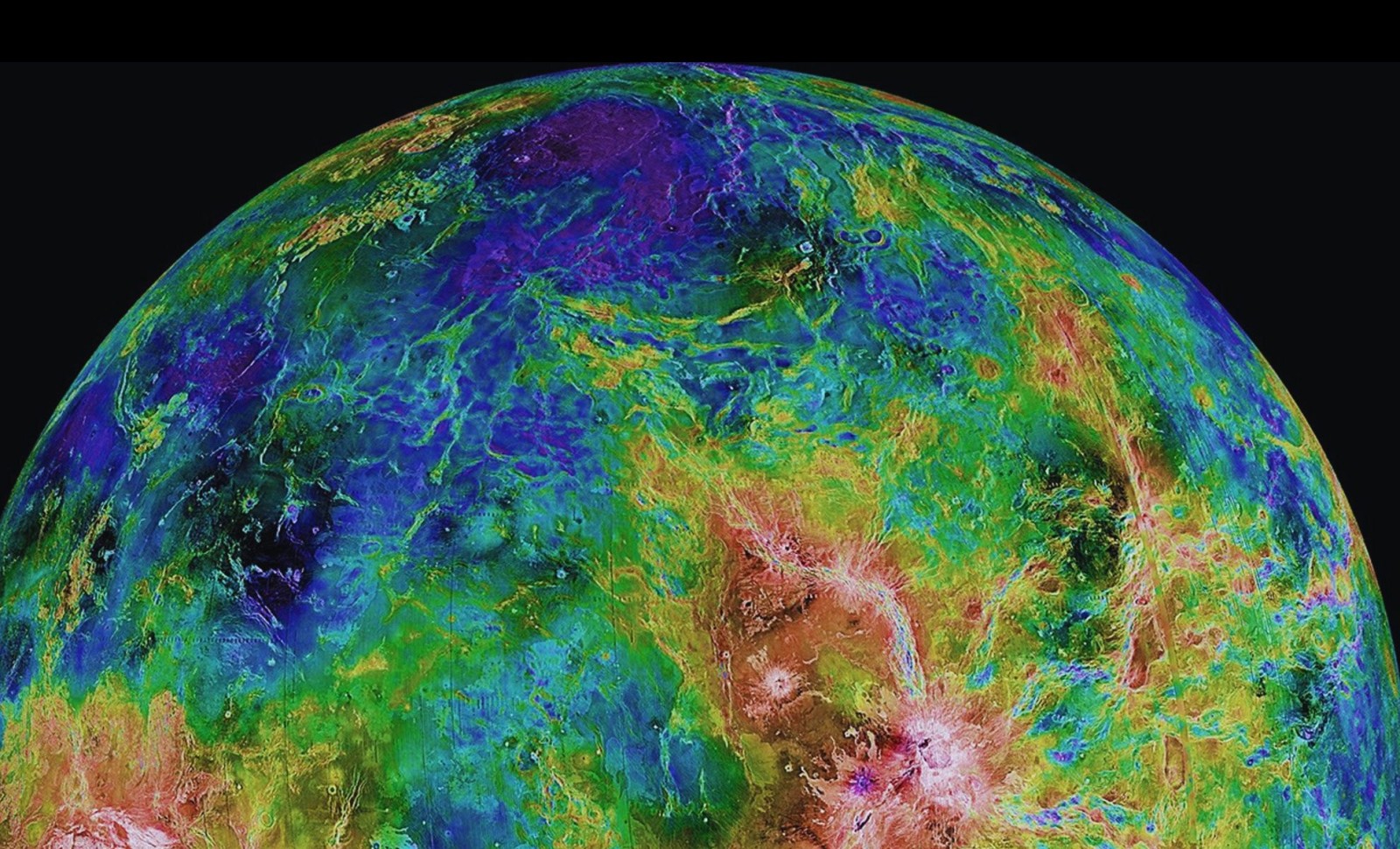
In late July 2024, a striking image of Venus quickly made rounds online, igniting widespread conversation about its authenticity. Touted by a Twitter user as the "most detailed photo ever captured of Venus," this picture drew thousands of engagements, with many applauding its artistic detail. The image spread rapidly across platforms such as Reddit, Instagram, and X. However, questions emerged about whether this depiction was a genuine photograph or an AI-generated creation.
Unveiling the Truth Behind the Venus Image
The viral Venus photo triggered enthusiastic reactions, with some social media users hailing it as the clearest depiction of the planet to date. Comments like "Wish it were real" and "Venus actually appears orange," added to the speculation that the image might be digitally fabricated.
Nonetheless, as detailed by Snopes, this image was genuinely captured by the Akatsuki probe’s IR2 infrared camera, part of Japan’s Akatsuki mission, which has orbited Venus since 2015. The mission’s primary objective is to study Venus’s atmospheric dynamics, particularly its dense and cloudy environment. The IR2 instrument specifically captures infrared wavelengths emitted by the planet’s lower cloud layers.

The photo presents Venus’s lower cloud cover, where darker areas indicate thicker cloud regions due to infrared radiation radiating from below. The bright glow near the planet’s crescent on the lower left results from sunlight reflecting off the daylit side, saturating the camera sensor. Such infrared imagery is representative of the typical captures Akatsuki has produced since arriving at Venus.
Akatsuki’s Role in Unlocking Venus’s Secrets
Known as the Venus Climate Orbiter, Akatsuki has outlasted its initial mission timeline while overcoming some early setbacks, including a complex trajectory through the inner Solar System. Despite challenges, it has delivered valuable findings on Venus’s atmospheric behavior. According to NASA, Akatsuki’s instruments have revealed critical details about the planet’s extreme wind speeds, active volcanism, and lightning storms. Infrared imaging, like the one that sparked interest online, is instrumental in deciphering Venus’s dense, hot clouds and enigmatic meteorological activity.
This data has deepened our understanding of Earth’s planetary counterpart often called Earth’s “sister planet,” despite its vastly different conditions. Akatsuki continues to function and gather information that could shed light on both Venus’s climate and broader planetary atmospheric dynamics.
A Familiar Image Finds a New Audience
Although many assumed the photo was a recent capture due to its sudden online popularity, it originally debuted in NASA’s Astronomy Picture of the Day in January 2018. As highlighted by The Planetary Society, this photo was part of an extensive campaign to showcase Venus’s atmospheric properties.
“Analyses of Akatsuki images and data has shown that Venus has an equatorial jet similar to Earth’s jet stream”, as we can read beneath the image in the statement provided.
The caption explained the image portrays Venus by night, using infrared data from the IR2 camera. This was one of many images used by NASA and other agencies to enhance knowledge about the planet’s atmospheric conditions and weather phenomena.
- Categories:
- Space










0 comments
Sign in to Comment