
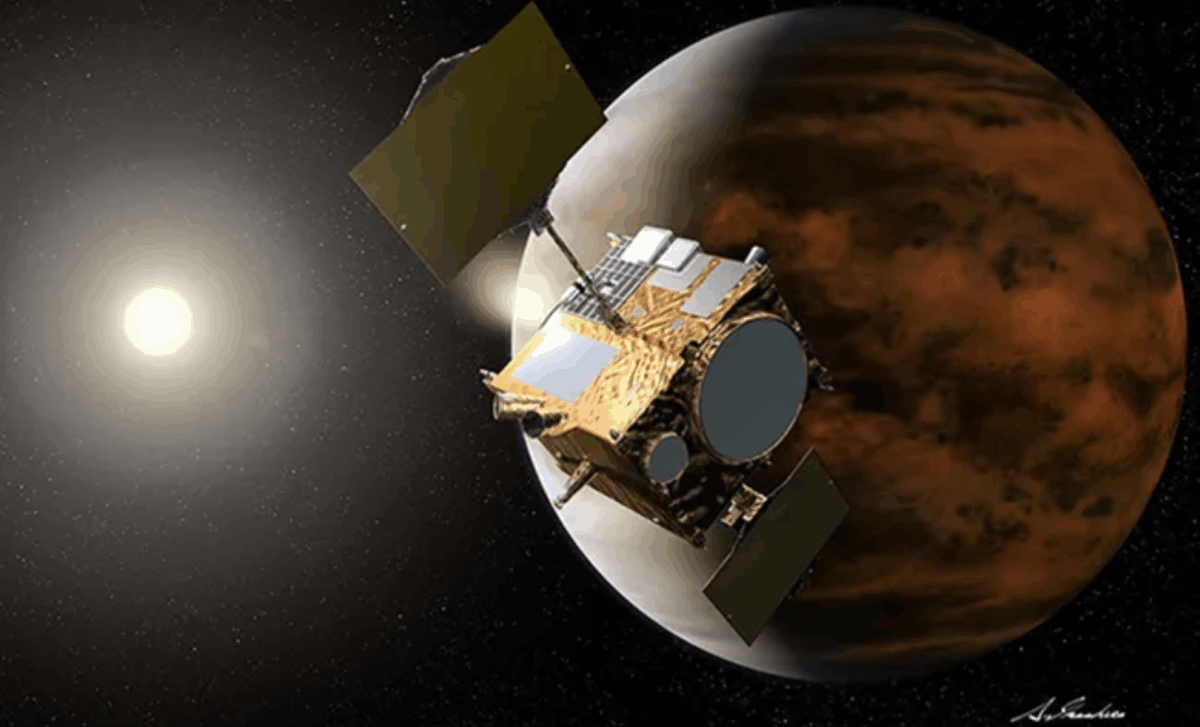
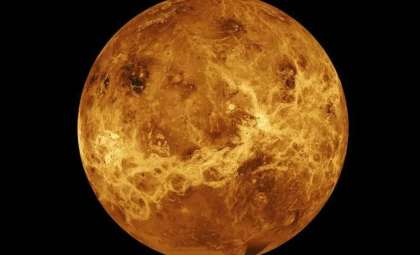
For almost ten years, Japan’s Akatsuki spacecraft revolved around Venus, providing researchers with invaluable insights into the planet’s harsh atmospheric conditions. Recently, the Japan Aerospace Exploration Agency (JAXA) announced the conclusion of the spacecraft’s mission, marking the first period in years where Venus has no operational orbiter. This closure ends a chapter marked by setbacks, perseverance, and significant scientific achievements.
An Unlikely Triumph From a Difficult Start
Launched in 2010, JAXA’s Akatsuki aimed to investigate the thick, scorching atmosphere of Venus and explore the mechanisms behind its intense greenhouse environment. However, the spacecraft experienced complications upon arrival.
“With the main rocket engine damaged, the team were forced to get creative,” JAXA wrote in the statement. “The spacecraft would have to attempt capture using the less powerful thrusters that were designed for the tasks of attitude control and fine adjustments. Orbit insertion had never previously been achieved with such a method, but exploration has always been about redefining the impossible.”
Add Cosmo Herald as a Preferred Source

After drifting in space for five years, mission controllers managed to maneuver Akatsuki into orbit around Venus in December 2015—an achievement hailed as one of space exploration’s most remarkable comebacks. From then on, the probe offered valuable data on a planet where surface temperatures can melt lead and atmospheric pressures far exceed Earthly levels.
“This was a mission that changed our view of our Earth-sized neighbor, and laid the path for new discoveries about what it takes to become heaven or hell,” JAXA officials stated of the mission.
Unveiling the Dynamics of Venus’ Turbulent Atmosphere
One of Akatsuki’s greatest achievements was its study of the planet’s extreme upper atmosphere, characterized by strong winds and enigmatic clouds.
“In this region, winds whip at speeds that approach the Shinkansen bullet trains, 60 times faster than the planet rotation — a phenomenon that is known as ‘super rotation,'” JAXA wrote.
Although Venus’ clouds encircle the planet roughly every four Earth days, a single day on Venus spans about 243 Earth days due to its slow rotation.
Long-term observations by Akatsuki tracked these clouds’ movements, uncovering patterns that revised scientific understanding of the planet’s atmospheric forces.
"As Akatsuki gazed steadily at the Venusian surface, researchers mapped the clouds between hundreds of images, measuring their speed as they slid around the globe," JAXA stated. "This analysis revealed that the acceleration of the clouds depended on the local solar time, suggesting that the incredible rotation speeds were being maintained by solar heating."
These insights established a novel connection between sunlight and atmospheric dynamics, offering clues about the evolution of other scorching, Earth-sized exoplanets.

Closing a Mission, While Inspiring Future Exploration
Although contact with Akatsuki has ceased, its scientific contributions continue to shape our understanding of how Venus transitioned from a potentially life-sustaining planet to its current hellish state. This mission’s story of overcoming adversity exemplifies the spirit of exploration and paves the way for upcoming projects like NASA’s VERITAS, DAVINCI, and ESA’s EnVision missions.
As Akatsuki falls silent, Venus resumes its orbit, awaiting future missions. The knowledge gained from this mission stands as a testament to JAXA’s ingenuity and the enduring pursuit of discovery, proving that even setbacks can lead to extraordinary breakthroughs.
- Categories:
- News





0 comments
Sign in to Comment