
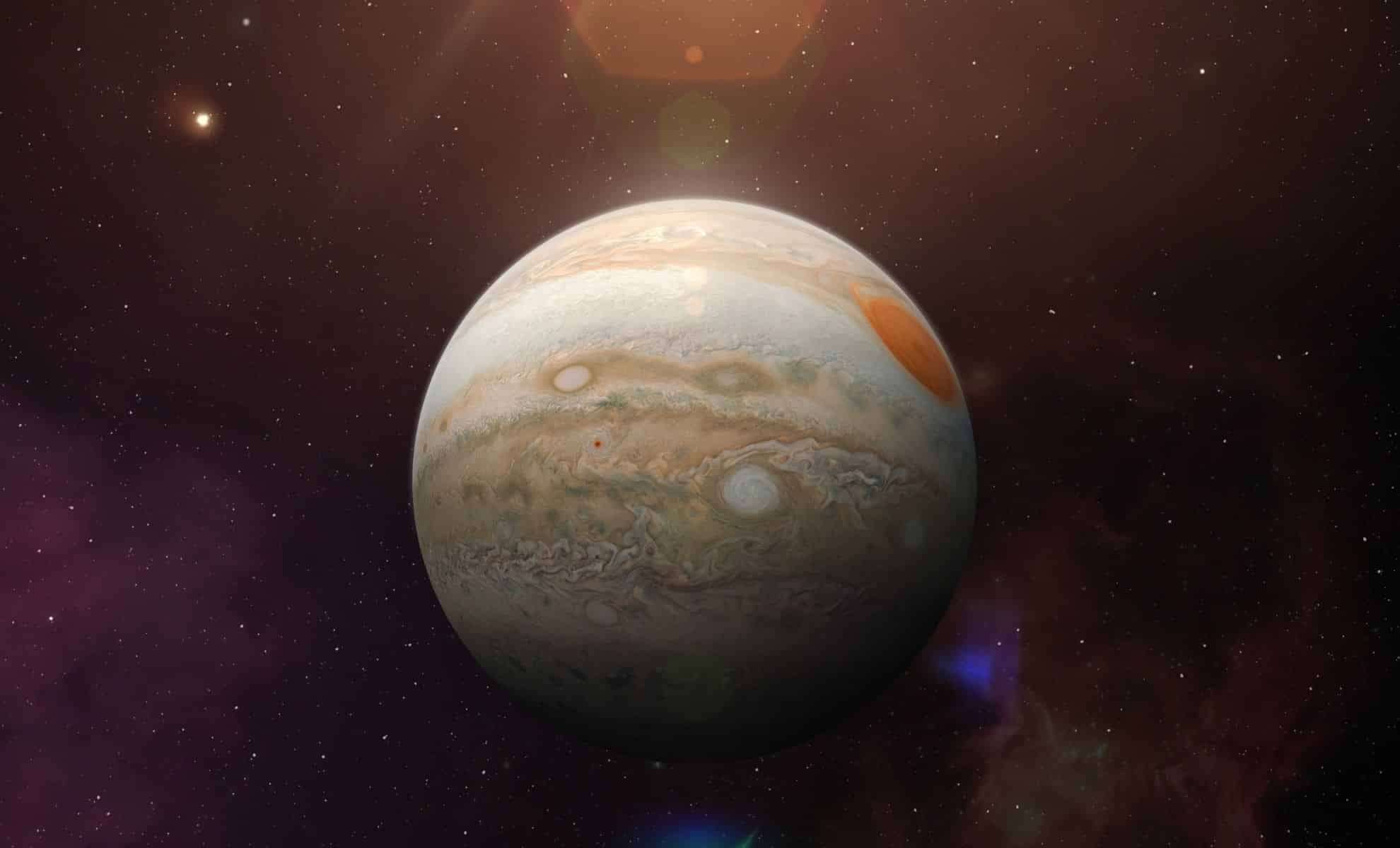
Scientists have long pondered the enigma lurking inside Jupiter, the solar system's giant. Previously, it was thought that a massive collision with another early planetary body caused the planet’s interior to become mixed and messy, resulting in the diffuse, “blurry” core detected by NASA’s Juno probe. However, recent research published in Monthly Notices of the Royal Astronomical Society challenges this assumption, proposing a different origin for Jupiter’s core.
Reevaluating the Impact Theory
The longstanding view held that Jupiter’s diluted core—an area without a clear distinction between dense elements and the surrounding light gases—was the outcome of a massive collision. It was imagined that a proto-planet carrying a substantial fraction of Jupiter’s core mass crashed into the young giant, disturbing its inner structure enough to produce the fuzzy interior observed today.
To investigate this, experts from Durham University collaborated with teams from NASA, the SETI Institute, and the University of Oslo, using cutting-edge supercomputers. Running simulations on the DiRAC COSMA platform with the open-source SWIFT code, they recreated planetary collisions with exceptional precision. Their findings were striking: no matter how intense the simulated impacts, they couldn’t reproduce Jupiter’s stable, diluted core seen in observations.

Dr. Thomas Sandnes, the lead researcher, remarked, “Exploring Jupiter's response to violent impacts reveals that while such events shake the planet profoundly, they don’t explain the unique internal structure we observe.”
A Gradual Sculpting Over Time
The study supports a different scenario, where Jupiter’s distinctive core formed slowly through accumulation and mixing as the planet grew. Rather than a sharp divide between heavy elements and gases, the core exhibits a gradual gradient due to the ongoing blend of materials over millions of years.
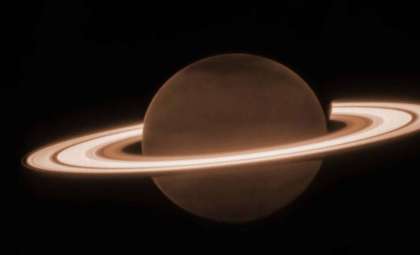
This idea aligns with new data on Saturn, which also seems to harbor a comparable diluted core. University of Oslo’s Dr. Luis Teodoro explains, “Since Saturn possesses a similar core, it’s likely these fuzzy cores emerge from steady evolutionary processes, rather than from rare, enormous collisions.”
Implications Beyond Our Solar System
This breakthrough alters our understanding of both Jupiter and Saturn and extends to exoplanet research. Hundreds of gas giants orbiting other stars have been discovered, many exhibiting puzzling internal compositions. If diffuse cores aren't remnants of rare collisions, it suggests layered, complex interiors are common in giant planets throughout the cosmos.
Co-author Dr. Jacob Kegerreis highlighted the significance of the work, stating, “While giant impacts shape many planets’ histories, they don’t account for everything. Our improved simulations bring clarity to these cosmic processes, guiding us to better understand the incredible diversity of planetary worlds inside and beyond our solar system.”
Ultimately, the research points to giant planet formation as a gradual, intricate process evolving over millions of years—a pattern potentially universal across countless planetary systems.
- Categories:
- News







0 comments
Sign in to Comment