
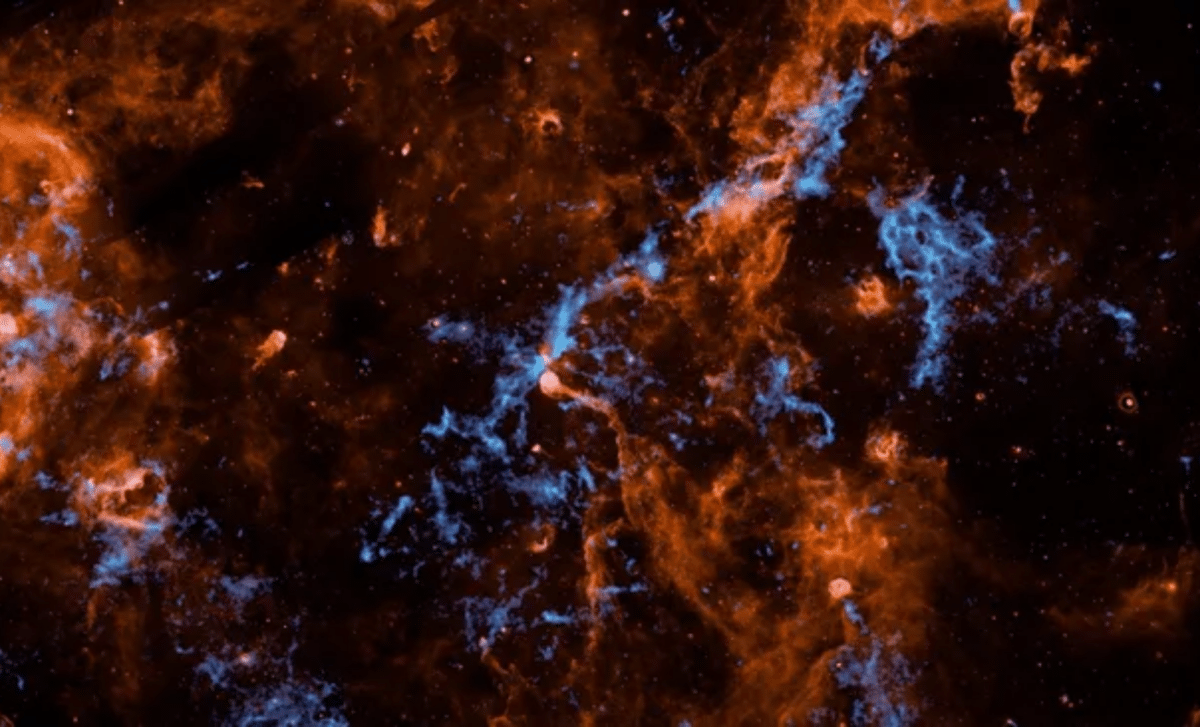
Recent research published in The Astrophysical Journal highlights that molecular ices, including frozen water, extend widely across the Milky Way. By leveraging NASA’s SPHEREx telescope, scientists have produced the inaugural extensive chart of these concealed ice reservoirs, indicating that interstellar space is teeming with essential elements for planet and potentially life development.
Comprehensive Mapping of Galactic Ice Clouds
The investigation centers on expansive molecular clouds—cold, dense regions spanning hundreds of light-years known as stellar nurseries. Within these clouds, the SPHEREx instrument identified thin coatings of frozen water, carbon dioxide, and carbon monoxide on tiny dust particles. Despite their minuscule size, these dust grains are vital for cosmic chemical processes, serving as sites where molecules accumulate that eventually become part of planets, comets, and planetary atmospheres. Utilizing infrared wavelengths, the telescope captures distinct molecular signatures, enabling the mapping of ice distribution on an unprecedented scale.
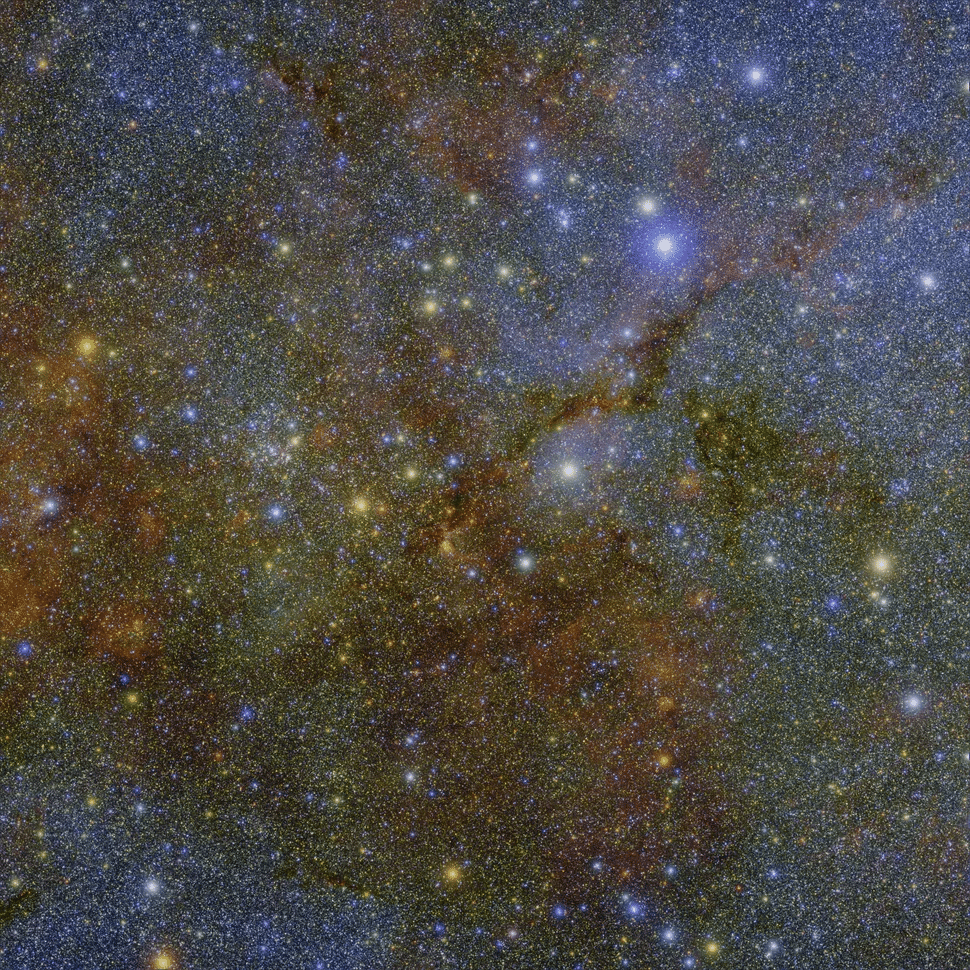
The study, featured in The Astrophysical Journal, affirms that such dense clouds function as protective zones facilitating ice formation and preservation. Ultraviolet radiation from adjacent young stars usually destroys molecular ices, but dense dust shields this delicate matter. Areas like Cygnus X and the North American Nebula, often opaque in visible light, reveal rich structures and dynamic ice reservoirs under infrared observation. This insight shifts our perception of these regions from dark emptiness to hubs of chemical synthesis and storage, where the foundations of planetary systems begin forming well before the planets themselves emerge.

Interstellar Ice Sheets and the Galactic Water Cycle
The identified icy formations have important implications for how water—and potentially life—spreads throughout our galaxy. As stars emerge within molecular clouds, surrounding material compacts into disks that birth planets. Ice incorporated into dust grains becomes a vehicle delivering water and vital compounds in early planetary stages. This suggests that water production may be an inherent aspect of star formation instead of a rare cosmic event.
“These vast frozen complexes are like ‘interstellar glaciers’ that could deliver a massive water supply to new solar systems that will be born in the region,” said study co-author Phil Korngut, instrument scientist for SPHEREx at Caltech. “It’s a profound idea that we are looking at a map of material that could rain on nascent planets and potentially support future life.”
This perspective reframes the origin story of water on Earth and similar planets, illustrating a cosmic delivery system active well before planetary assembly. The concept that newborn solar systems inherit water-rich environments from their natal clouds adds a crucial angle to the quest for habitable exoplanets within the Milky Way.
Innovative Techniques for Viewing Our Galaxy
What sets SPHEREx apart is its capacity to survey the entire galaxy instead of focusing narrowly on select objects. While previous instruments, such as James Webb and Spitzer, conducted detailed inspections of specific cosmic locales, SPHEREx scans the entire sky and constructs a comprehensive three-dimensional representation of galactic materials. This approach unveils global patterns and relationships previously hidden.
“We expected to detect these ices in front of individual bright stars: The light from a star acts like a spotlight, revealing any ice in the space between us and that star. But this is something different,” said Joseph Hora of the Center for Astrophysics | Harvard & Smithsonian. “When looking along the galactic plane, where most of the stars, gas, and dust of our galaxy are concentrated, there’s a lot of diffuse background light shining through entire dust clouds, and SPHEREx can see the spatial distribution of the ices they contain in incredible detail.”
This mapping capability enables a holistic understanding of ice distribution across large swaths of space, bridging the gap between localized chemistry and overarching galactic structures. It sheds light on the cycling of cosmic matter through various phases over time.
Distinct Ice Types Exhibit Unique Behaviors
The research also highlights that water ice, carbon dioxide ice, and carbon monoxide ice each respond differently to their surroundings. Variables like temperature, radiation exposure, and density impact how these ices accumulate or decompose, influencing the chemical makeup of star-forming areas.
“We can investigate the environmental factors that contribute to different ice formation rates across large areas of interstellar space,” said study co-author Gary Melnick, also of the Center for Astrophysics. “The SPHEREx mission’s ‘big picture’ view provides valuable new information you can’t get when zooming in on a small region.”
Recognizing these distinctions is essential for decoding the development of complex chemistry in space, determining which molecules endure long enough to become part of emerging planets and which are lost, ultimately shaping chances for habitable worlds.
An Ever-Changing Ice Reservoir Fueling New Solar Systems
The Milky Way emerges as a vibrant arena filled with continuously changing, colossal icy reservoirs. They evolve under the influence of stellar radiation, gravity, and turbulence, experiencing cycles of breakdown and rejuvenation. These processes cause fragmentation and collapse of clouds, leading to star and planet formation while dispersing water and other key molecules across the galaxy.
As SPHEREx progresses in its mission, upcoming datasets will enhance this ice map and reveal temporal changes in these reservoirs. Each new observation brings us closer to comprehending matter’s lifecycle from diffuse gas clouds to fully developed planetary systems. This evolving understanding points to life’s fundamental elements as natural byproducts of cosmic evolution, embedded in the universe’s formative processes.
- Categories:
- Astronomy










0 comments
Sign in to Comment