
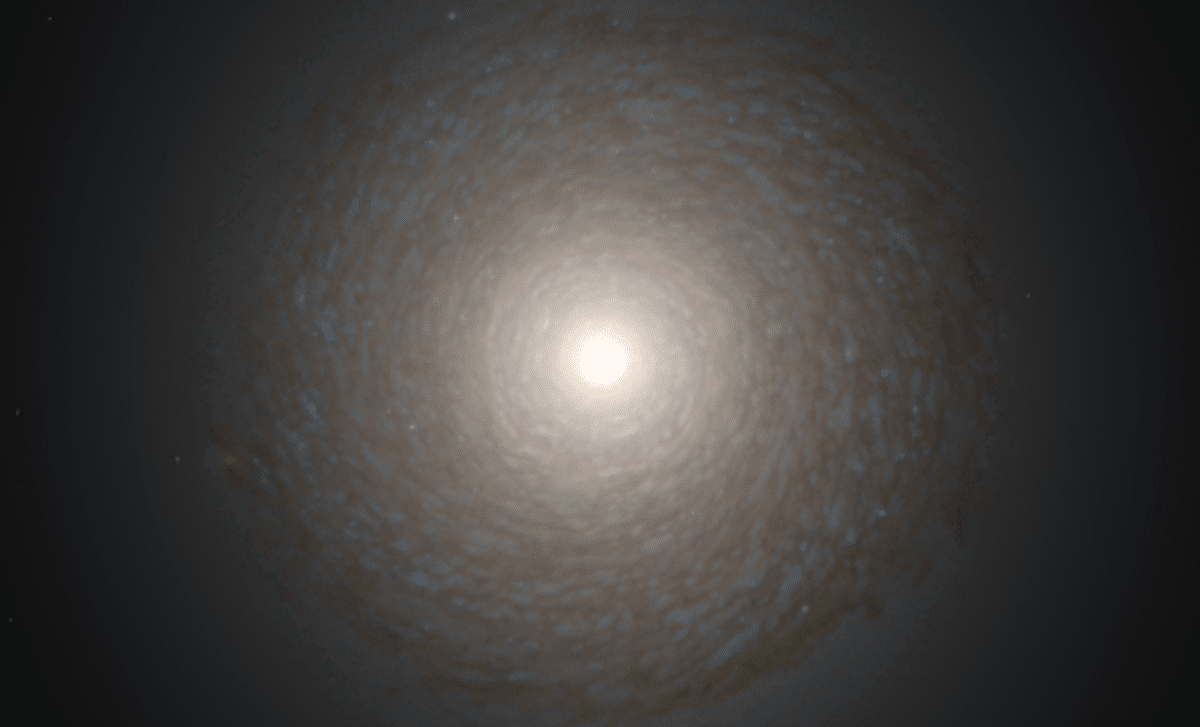
The presence of molecular gas plays a crucial role in shaping galaxies, impacting both their star formation activity and overall structure. Giant molecular clouds (GMCs), mainly made up of molecular hydrogen, serve as the birthplaces of new stars. In a comprehensive investigation of NGC 1387, an early-type lenticular galaxy located within the Fornax Cluster, ALMA was employed to delve into the characteristics of its molecular cloud population. This study, featured in the Monthly Notices of the Royal Astronomical Society, sheds fresh light on the galaxy’s molecular gas composition and enhances our comprehension of how these clouds influence the galaxy’s dynamics and star formation.
Examining the Unique Features of NGC 1387
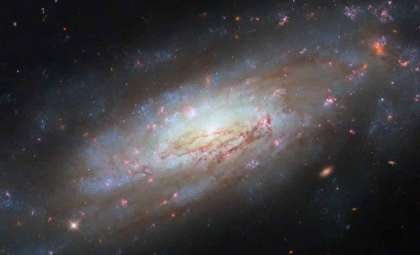
NGC 1387 is categorized as an early-type lenticular galaxy, stretching roughly 60,000 light-years across and weighing about 50 billion times the mass of the Sun. These galaxies differ from spirals by exhibiting a smoother, more uniform shape, making them particularly interesting for detailed study. Earlier observations estimated that NGC 1387 holds around 320 million solar masses of molecular gas. Furthermore, its molecular gas disk shows an orderly rotation pattern, providing crucial insights into the galaxy’s overall motion.
A remarkable observation from the recent analysis is the co-rotation of molecular gas and stars within NGC 1387, indicating a close coupling of gas movement with the galaxy’s rotation. This finding is vital for understanding the rate at which the galaxy forms stars, which is estimated to be between 0.008 and 0.082 solar masses annually. Although modest compared to highly active galaxies, this rate offers important clues about star formation processes in galaxies with relatively low activity.

ALMA's Detailed Imaging Unveils New Findings
Utilizing the ALMA telescope, the research team conducted high-resolution imaging of NGC 1387’s molecular gas as part of the mm-Wave Interferometric Survey of Dark Object Masses (WISDOM) project. ALMA’s precision enabled the identification and study of 1,285 individual giant molecular clouds in the galaxy, each averaging about 65 light-years in radius and around 316,000 solar masses in mass.
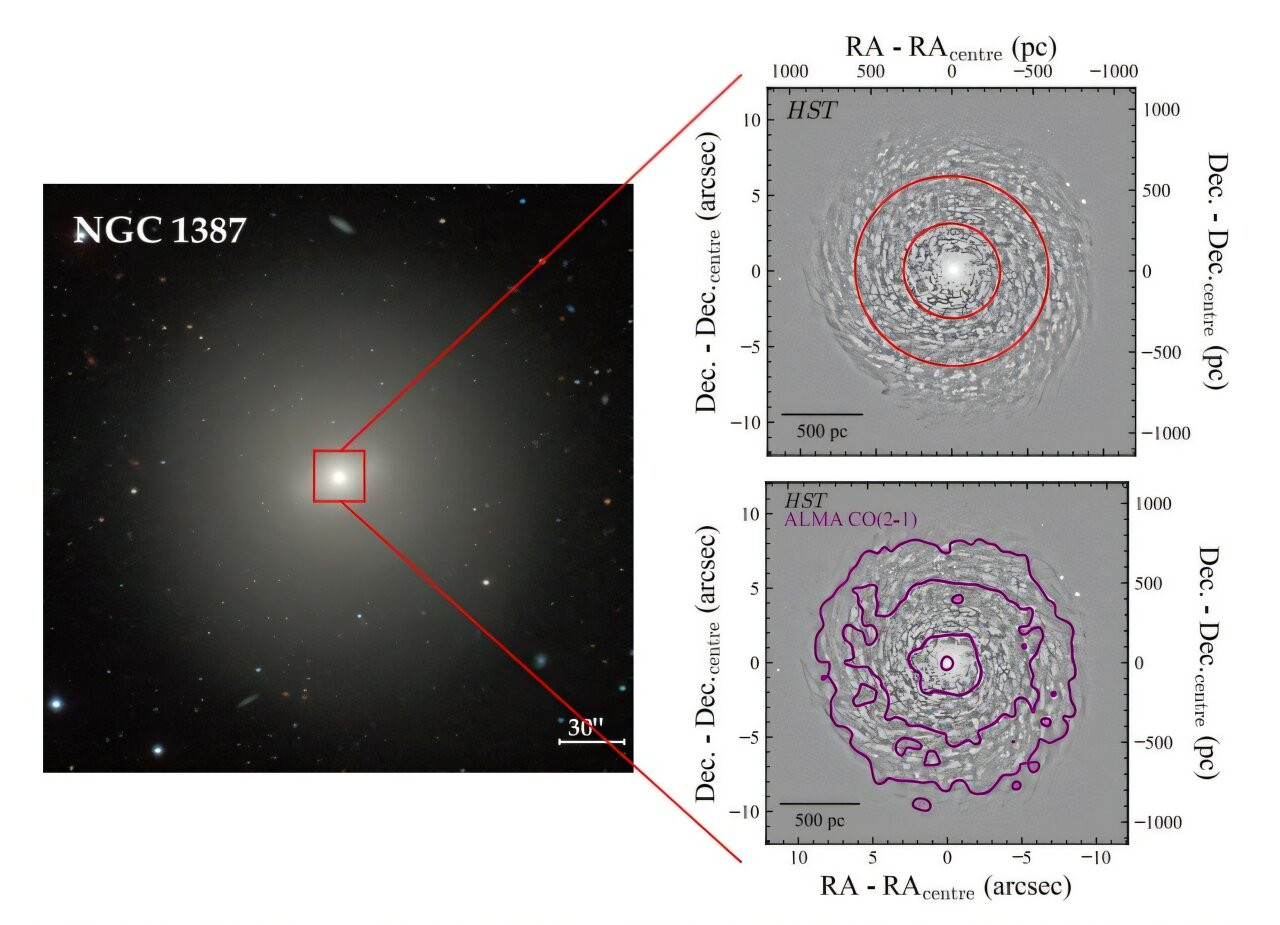
The significance of these results lies in ALMA’s ability to provide exquisite detail, enabling a refined understanding of the molecular clouds’ formation and dynamics. Mapping the distribution of molecular gas allowed researchers to analyze the spatial layout of GMCs and their interaction with the galaxy’s rotation, vital for deciphering how these clouds shape star-forming activities within their galactic surroundings.
GMCs’ Mass Distribution in NGC 1387
The study also investigated the mass distribution of GMCs within NGC 1387. Findings indicate that the clouds' mass spectrum follows a slope of roughly −1.8, akin to that found in our Milky Way’s disk. This suggests that, despite existing in a distinct galactic environment, the mass distribution of GMCs in NGC 1387 aligns with that seen in spiral galaxies.
Additionally, as reported in the Monthly Notices of the Royal Astronomical Society, a noticeable upper mass limit near 1.5 million solar masses was identified, implying an absence of extremely massive GMCs in this galaxy. This feature resembles the GMC mass cutoff observed in the outer parts of the Milky Way and offers insight into the environmental factors influencing cloud formation and growth. The lack of very large molecular clouds may reflect different mechanisms governing GMC creation in early-type galaxies compared to more prolific star-forming systems.
GMC Internal Motion and Its Link to Galaxy Dynamics
One particularly intriguing result from the analysis concerns the internal rotation of GMCs in NGC 1387. The data reveal that the internal spin of these clouds does not appear to be dominated by the galaxy's overall rotation, instead exhibiting independent dynamics. However, larger and more massive clouds near the central region seem to feel stronger effects from the galaxy’s rotation, highlighting complex interactions between GMCs and their galactic potential well.
The study emphasizes the need to further explore how large-scale galactic motion influences molecular cloud behavior, which is essential for a deeper understanding of star formation regulation. Future efforts aim to extend this research through multi-molecule and multi-transition observations, potentially unveiling even more intricate details about cold molecular gas in early-type galaxies.
- Categories:
- Astronomy




0 comments
Sign in to Comment