

Astronomers have uncovered an exceptionally lightweight exoplanet orbiting the star TOI-1453, approximately 250 light-years away. The system includes two planets—a super-Earth and a sub-Neptune—with the latter, TOI-1453 c, puzzling scientists the most.
Mysterious Planetary Pair Around TOI-1453
The TOI-1453 planetary system, found in the Draco constellation, hosts two planets that defy conventional models of planet formation. The innermost, TOI-1453 b, is a super-Earth, a rocky planet slightly bigger than Earth, orbiting its star every 4.3 days.
However, the spotlight is on TOI-1453 c. At 2.2 times Earth’s radius but weighing only 2.9 times Earth’s mass, this sub-Neptune ranks among the lowest-density planets of its type ever observed.

Detecting TOI-1453 c’s Unique Traits
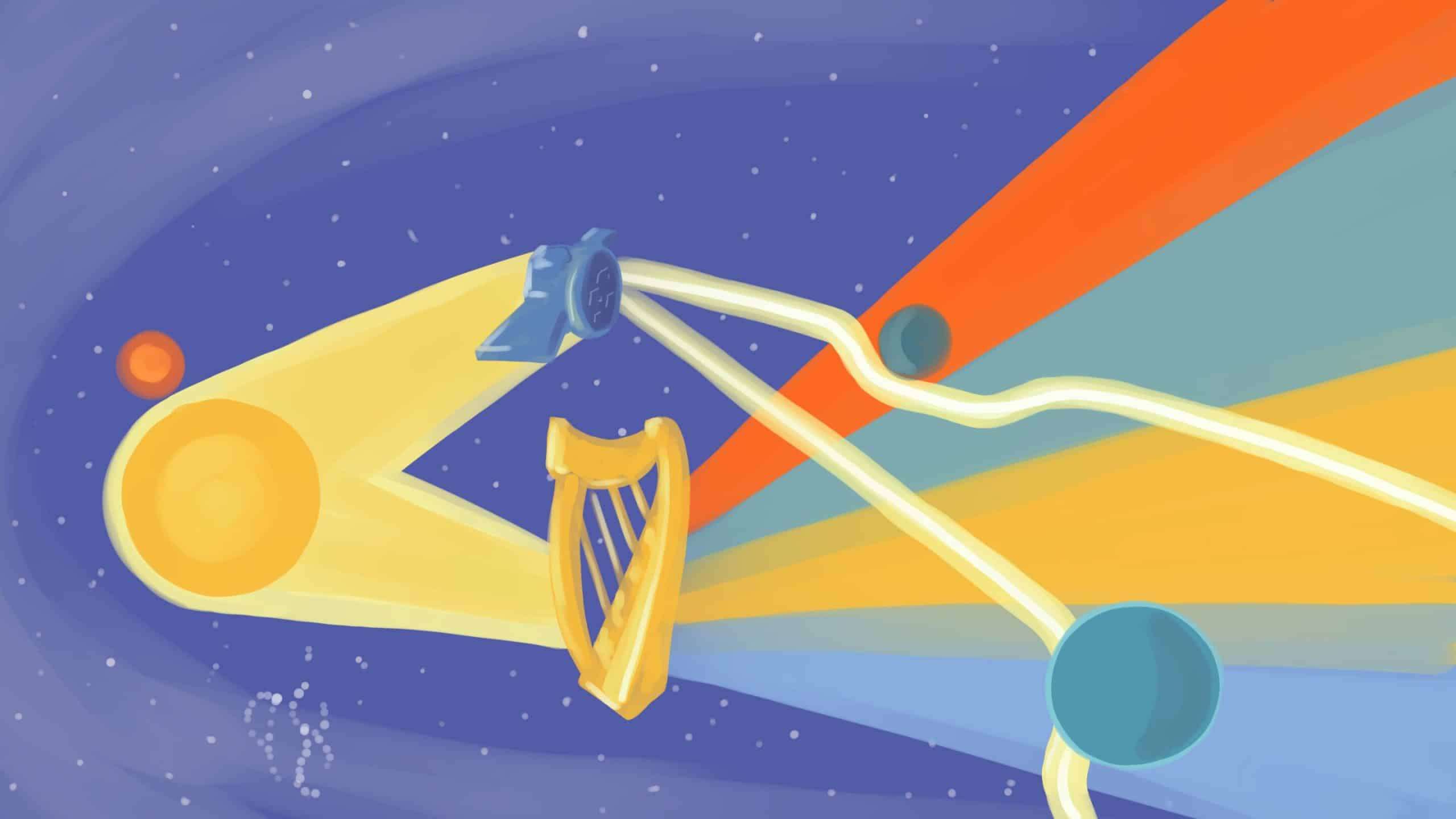
The published research in Astronomy & Astrophysics reveals that scientists employed two key methods to characterize TOI-1453 c. The transit technique, utilized by NASA’s TESS space telescope, measured the planet’s size by observing the dip in starlight during its passage in front of the host star. Meanwhile, the HARPS-N spectrograph applied the radial velocity method to detect star movement shifts caused by gravitational forces, determining the planets' masses.
Through these combined approaches, researchers found TOI-1453 c’s density to be surprisingly low, inconsistent with typical rocky or gas-rich planets.
Thick Atmosphere or Water World?
The very low density of TOI-1453 c points to two main theories. One suggests a thick hydrogen-dominated atmosphere surrounding the planet, which would account for its low mass relative to its sizable dimensions.
Alternatively, TOI-1453 c could be predominantly water-based, with abundant low-density materials forming a globe reminiscent of an ocean world with a slim gas layer atop.
Either scenario positions TOI-1453 c as a prime candidate for in-depth atmospheric examinations. Grasping its exact composition could unlock vital clues about how sub-Neptunes—a class absent in our solar system but common elsewhere—form and transform.
Unusual Orbital Synchrony
Adding to the curiosity, TOI-1453 b and TOI-1453 c exhibit a 3:2 orbital resonance, meaning that as TOI-1453 b completes three orbits, TOI-1453 c completes nearly two.
Such resonant orbits suggest planet migration from their initial formation spots, offering insights into the evolutionary histories of planetary systems.
James Webb Telescope to Probe Atmosphere
The discovery opens doors for further exploration. Upcoming observations with the James Webb Space Telescope (JWST) could decipher TOI-1453 c’s atmospheric makeup to determine if it has a hydrogen-rich layer or if it truly is a watery planet.
Should TOI-1453 c prove to be a novel type of exoplanet, unlike any previously known worlds, it might revolutionize our current ideas about planetary development and diversity across the cosmos. This remarkable find is sure to fuel the thrilling quest for extraordinary new planets.
- Categories:
- News






0 comments
Sign in to Comment