

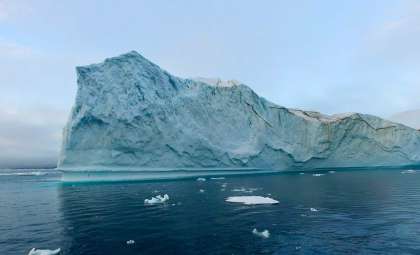
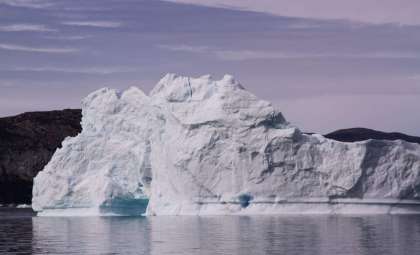
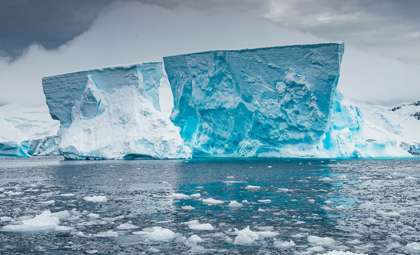
Iceberg A-23A, once crowned as the planet’s largest iceberg, is now showing unmistakable signs of imminent collapse. Recent imagery from NASA satellites reveals vibrant aquamarine meltwater pools forming on its surface—an indication that this enormous ice mass could disintegrate very soon. Experts warn that this glacier-sized iceberg might vanish within days or weeks.
For many years, it has fascinated scientists who have tracked its gradual shrinkage and oceanic drift. Though it may seem like just another iceberg calving, this event carries deeper significance.
An Incredible Voyage
Iceberg A-23A’s story is truly remarkable. Originating from the Filchner Ice Shelf in Antarctica in 1986, it initially measured about the size of Rhode Island, covering an astounding 1,500 square miles. It remained grounded on the southern Weddell Sea seabed until breaking free in the early 2020s and embarking on an extraordinary maritime journey.

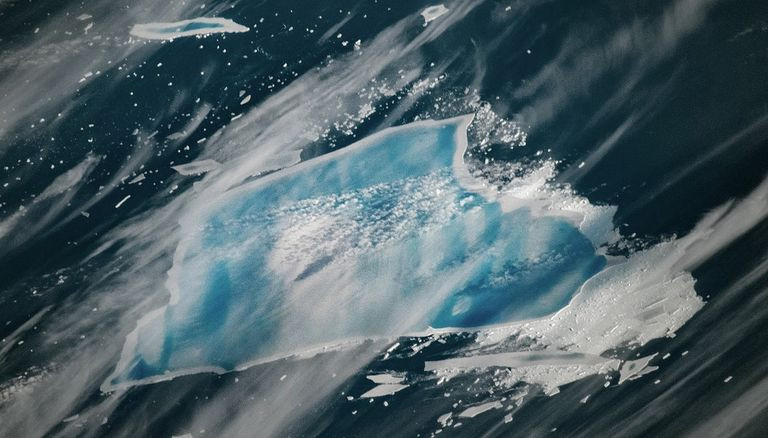
During its drift, the iceberg encountered a spinning current in the Drake Passage in March 2024. After being tossed about, it settled on the shallow coastal shelf south of South Georgia Island before breaking free once again.
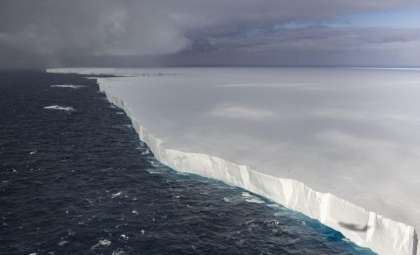
Its journey didn't continue much farther, as it came to rest north of South Georgia Island. Even in its diminished form, it still spans an impressive 456 square miles (over 1,000 square kilometers), a size notably larger than New York City, according to observations by NASA’s Terra satellite.
Meltwater Pools Reveal Accelerated Decay
Reports from NASA’s Earth Observatory highlight the emergence of meltwater ponds on the iceberg’s surface as a critical concern. These pools, vividly blue and documented by NASA’s MODIS satellite on December 26, 2025, serve as a warning signal.
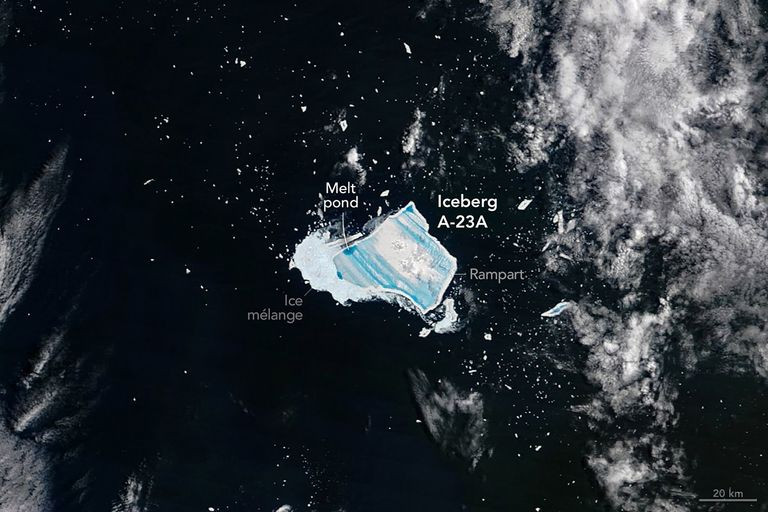
The iceberg is gradually becoming saturated with meltwater, weakening its structure and generating internal stresses that could lead to splitting. As Walt Meier, a senior scientist at the National Snow & Ice Data Center, explains:
“The striations formed parallel to the direction of flow, which ultimately created subtle ridges and valleys on the top of the iceberg that now direct the flow of meltwater.”
Distinctive markings, remnants from when the iceberg was part of a larger ice mass, remain visible despite ongoing melting. The formation of meltwater pools is particularly troubling because their presence, along with the white patches visible in satellite imagery, hints at accelerated deterioration and possible leakage.
Significance of Its Impending Demise
As Iceberg A-23A drifts into warmer ocean currents, researchers expect its eventual collapse. “I don’t anticipate A-23A to survive through the upcoming austral summer,” stated Chris Shuman, a former scientist at the University of Maryland Baltimore County.
“I’m incredibly grateful that we’ve had the satellite resources in place that have allowed us to track it and document its evolution so closely,” he added. “A-23A faces the same fate as other Antarctic bergs, but its path has been remarkably long and eventful. It’s hard to believe it won’t be with us much longer.”
Increasing fragmentation of Antarctic icebergs aligns with rising global temperatures, and A-23A is no exception. NASA’s Terra satellite images show it floating in water just 3°C (37°F), and with warmer waters approaching, its disintegration seems inevitable.
The current largest iceberg, A-23A
— Geography Host (@geographyhost) February 16, 2025
This is the course of planet’s current largest iceberg, A-23A. It separated from Antarctica in 1986. (Image Credit: NASA Visible Earth)
Area: approx 3,000 sq km (1,150 sq miles) (2024) pic.twitter.com/ADLxuSSVyC
- Categories:
- Climate change





0 comments
Sign in to Comment