
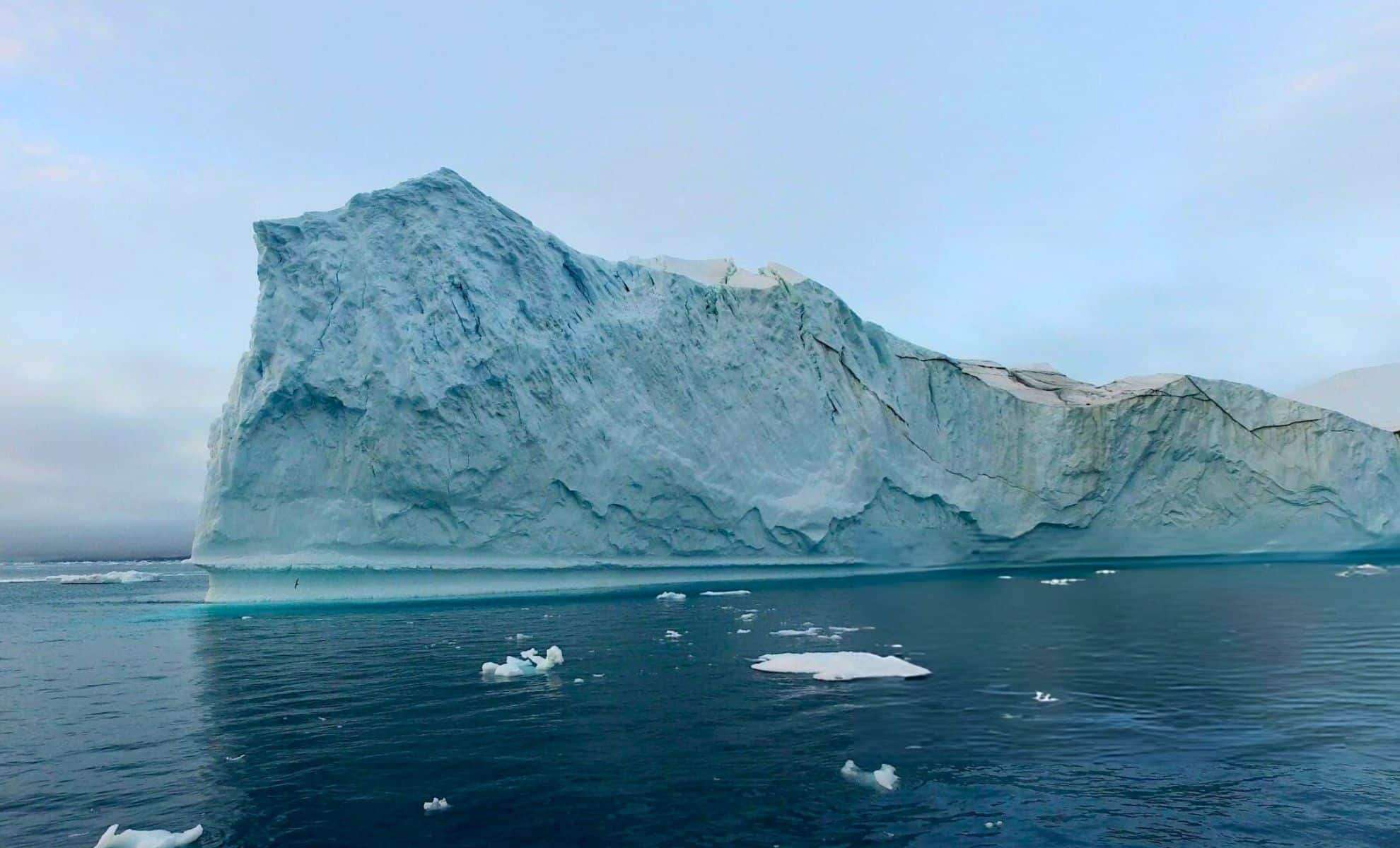
After remaining anchored in the Weddell Sea for more than 30 years, the colossal iceberg known as A23a has finally detached and is drifting northward. Weighing close to a trillion tonnes, this enormous ice mass is now navigating the Southern Ocean, sparking both scientific interest and ecological concern due to the potential environmental consequences of its movement.
About the Enormous Iceberg
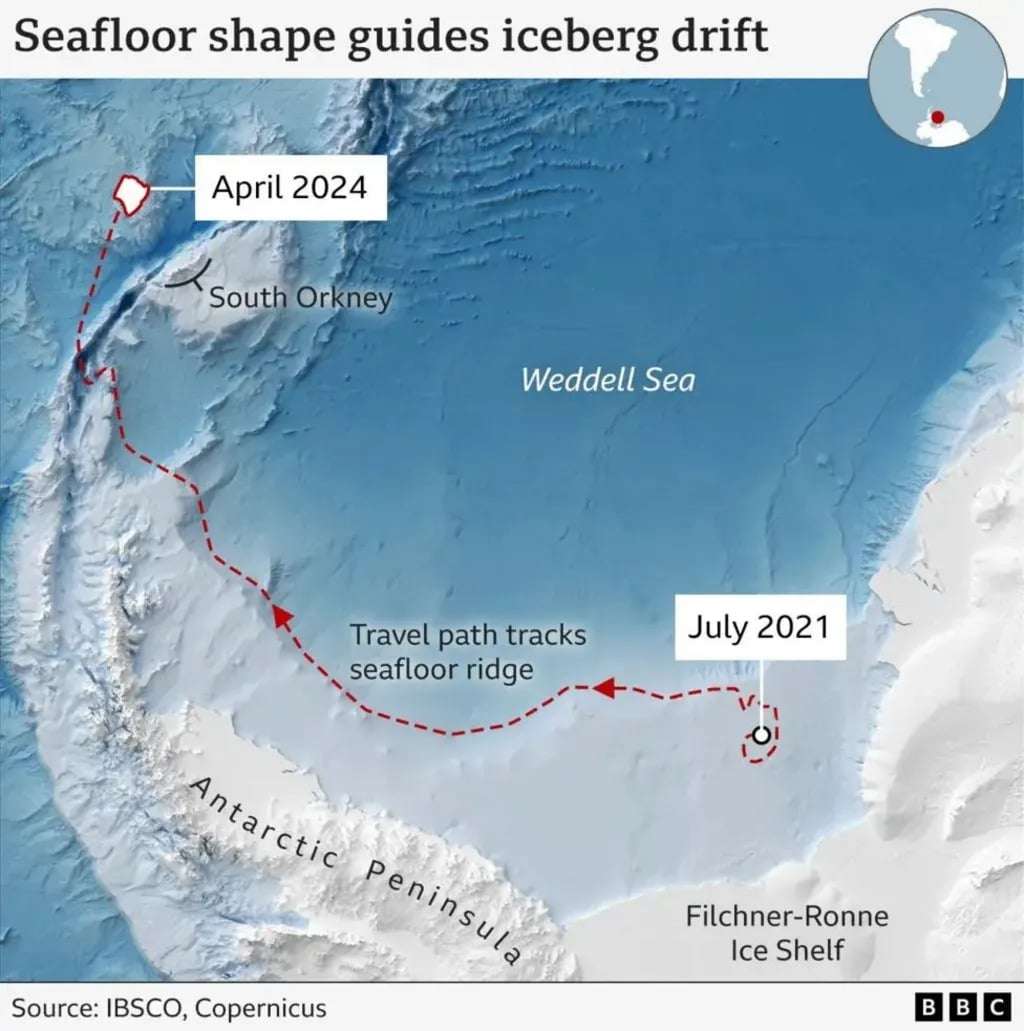
A23a spans around 3,800 square kilometers, making it over double the size of Greater London. It originally broke away from the Filchner Ice Shelf in Antarctica back in 1986. Since its calving, it remained fixed in place in the Weddell Sea with its base anchored to the ocean floor. This anchoring halted its drift until a Taylor Column current, a rotating water flow phenomenon, released it earlier in 2024.
Iceberg Facts:
- Name: A23a
- Area: 3,800 square kilometers (approx. 1,500 square miles)
- Mass: Nearly a trillion tonnes
- Origin: Filchner Ice Shelf, Antarctica
- Present Location: South of the South Orkney Islands, near Antarctica’s northern edge
- Duration Grounded: Over 30 years
- Current Movement: Heading north into the Southern Ocean
The Iceberg’s Recent Movement
Beginning in 2020, iceberg A23a initiated a slow northward drift after decades of being immobilized in the Weddell Sea. Its progress was hindered when it became trapped within a Taylor Column—a phenomenon that causes objects to remain suspended due to rotating currents above underwater rises. Observations showed the iceberg spinning in place, unable to freely drift.

Months of stagnation ended when satellite data confirmed that it had broken free and was once again making headway towards the Southern Ocean. It is expected to follow the path of the Antarctic Circumpolar Current. Analysts are watching carefully to see if A23a will trace routes taken by other massive Antarctic icebergs, like the B-15 and A68, known for their similar journeys.
Experts to Know:
- Dr. Andrew Meijers – Ocean researcher at the British Antarctic Survey (BAS). Dr. Meijers expressed enthusiasm about witnessing A23a’s renewed mobility after its lengthy stationary period and highlighted the scientific interest in tracking its route.
- Laura Taylor – Biogeochemist with BAS studying how the iceberg might affect local ecosystems by delivering nutrients that could invigorate marine life.
Ecological Consequences: Impact on Ocean Life
As A23a drifts north into the warmer waters of the Southern Ocean, fragmentation and melting are anticipated. Although gradual, the melting process will hold substantial ecological effects.
Previous studies show that vast icebergs like A23a contribute essential nutrients to the ocean, which can trigger plankton blooms and foster vibrant ecosystems in otherwise nutrient-poor waters. Yet, the precise influence of A23a is still under examination, as scientists seek to understand its effect on marine food chains and oceanic carbon dynamics.
Dr. Laura Taylor highlighted the value of assessing how giant icebergs influence ocean ecosystems: “These icebergs supply nutrients that help sustain marine life in often unproductive ocean regions.” She further noted, “We still need to learn how specific icebergs, their size, and their origins shape these processes.”
Ongoing Scientific Research
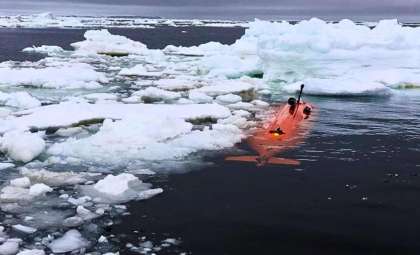
The research vessel RRS Sir David Attenborough is actively investigating how the iceberg interacts with its environment. Scientists aboard the ship are gathering water samples around A23a to evaluate changes in nutrient levels, biological activity, and ocean productivity. This work aims to reveal the iceberg’s role in carbon cycling and its broader implications for marine ecosystems.
Major Research Focus Areas:
- Release of Nutrients: Analyzing how the melting iceberg supplies nutrients that fuel plankton growth and support oceanic ecosystems.
- Carbon Dynamics: Investigating how the iceberg’s presence influences carbon exchange between the ocean and atmosphere, which could affect climate regulation.
- Biological Impacts: Observing marine life development near the iceberg and how it interacts with other species.
By sampling water from multiple positions relative to A23a, scientists hope to clarify how the iceberg shapes local oceanic systems. These insights could deepen our understanding of icebergs' role in regulating climate and enhancing the ocean’s capacity to absorb carbon.
- Categories:
- Climate change









0 comments
Sign in to Comment