
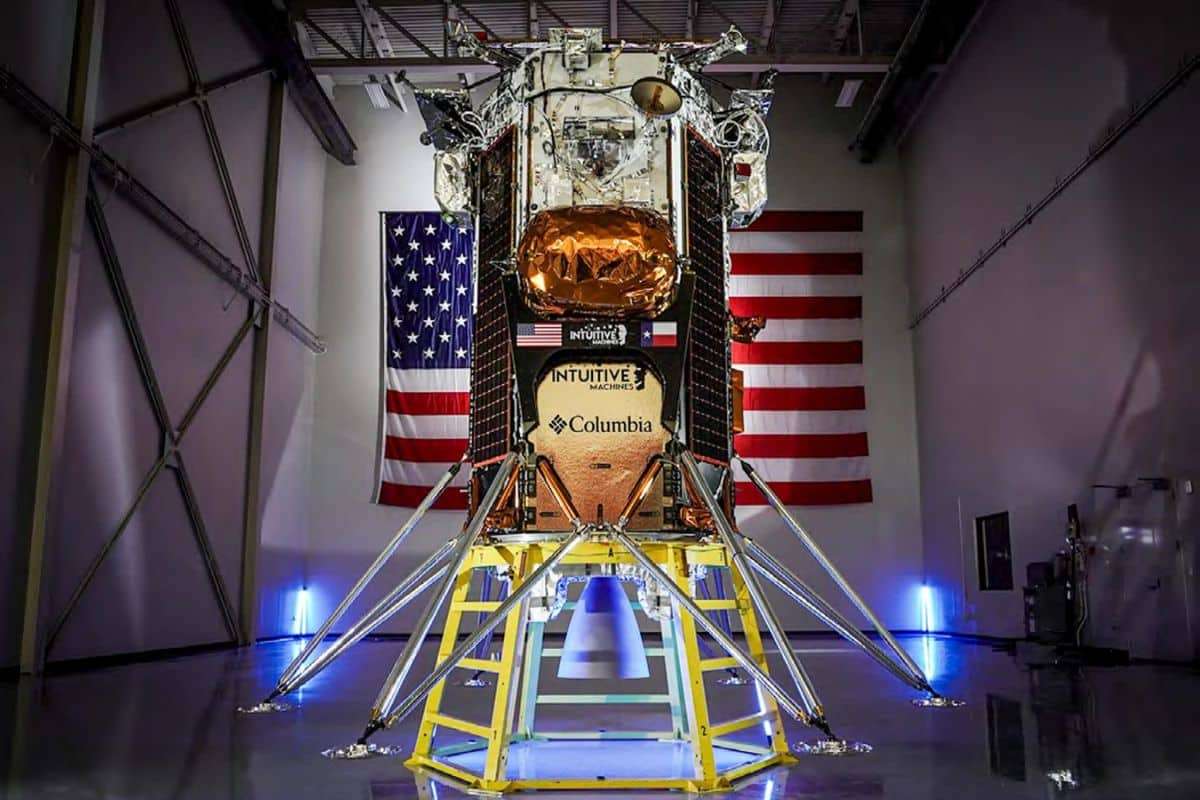
An innovative NASA initiative has achieved a historic feat by capturing radio astronomy data directly from the lunar surface, marking a transformative advancement in space-based studies of the universe's infancy.
Although the Odysseus lander had a turbulent touchdown, the ROLSES-1 instrument onboard succeeded in obtaining important measurements, setting a precedent for lunar scientific missions ahead.
Challenging Landing Leads to Surprising Scientific Gains
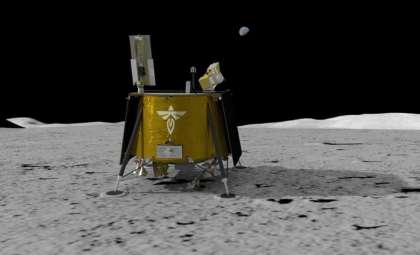
Deployed on the Odysseus spacecraft operated by Intuitive Machines, the ROLSES-1 (Radio wave Observations at the Lunar Surface of the photoElectron Sheath) experiment briefly functioned post its rough 2024 lunar descent.
Despite the lander overturning during landing and damaging much of its equipment, its spring-loaded radio antennas partially deployed before and after impact, allowing a limited timeframe for scientists to gather novel data from the moon’s surface.

Earth’s Flickering Signals, Galactic Radio Waves, and a Narrowly Missed Solar Event
During its operational period, ROLSES-1 detected radio waves emanating from Earth and from diverse points within the Milky Way. Remarkably, it recorded Earth’s radio signals "twinkling", an effect caused by atmospheric disturbances in the upper layers.
Joshua Hibbard of the University of Colorado, Boulder, suggests this phenomenon might aid in spotting advanced extraterrestrial life by analyzing similar atmospheric effects on exoplanets.
The instrument also identified cosmic radio emissions generated as high-energy cosmic rays interact with magnetic fields, though efforts to capture signals from the sun and Jupiter were thwarted by power loss. “We missed a solar burst by like a minute. It was really a pity,” Hibbard remarked.
The Lunar Advantage for Radio Observations
The moon provides a unique environment for radio astronomy, free from the incessant interference caused by Earthly radio transmissions. Positioned on the far side of the moon, telescopes can exploit a naturally radio-quiet zone, ideal for detecting faint signals from the cosmic dark ages—the era following the Big Bang before stellar formation.
By probing these signals, researchers hope to unlock mysteries about dark matter and the early universe’s energy makeup. Stuart Bale from UC Berkeley highlights that these findings could illuminate how the cosmos evolved prior to complex structures emerging.
Future Endeavors: LuSEE and the Next Wave of Lunar Radio Missions
The achievements of ROLSES-1, despite its compromised state, represent merely the initial phase. NASA is preparing to deploy LuSEE-Lite later this year, followed by even more sophisticated instruments such as LuSEE-Night and ROLSES-2 slated for 2026.
These projects will extend lunar radio astronomical surveys. Looking further ahead, ambitious proposals aim to build a large-scale radio telescope within a lunar crater, utilizing the moon’s natural terrain and radio silence for transformative scientific observations.
ROLSES-1’s pioneering efforts signal a promising new chapter in astronomical research. As additional devices are deployed on the lunar surface, scientists anticipate groundbreaking discoveries about our galaxy and the universe’s primordial times.
- Categories:
- Space







0 comments
Sign in to Comment