
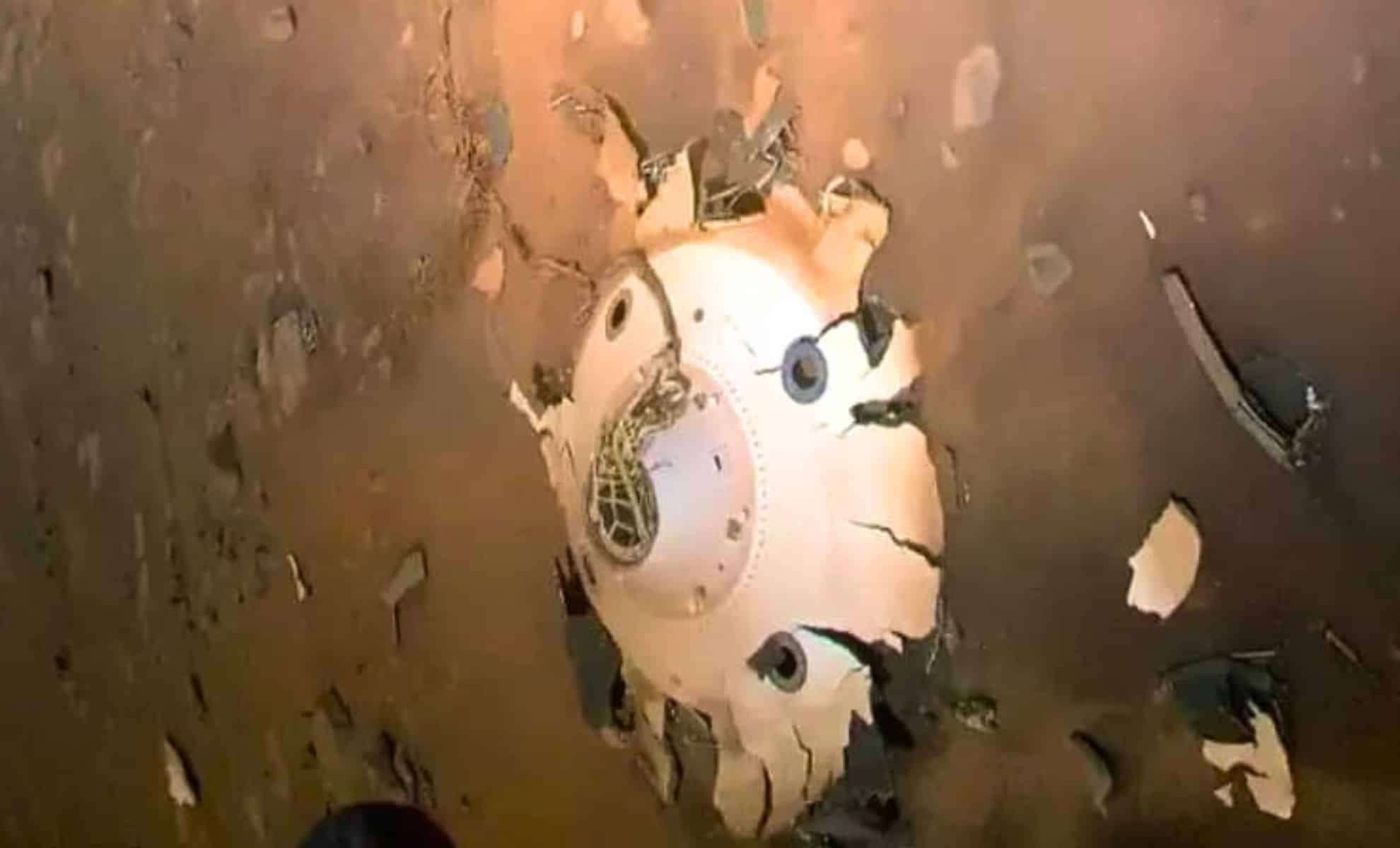
Originally intended for only five journeys, NASA’s Ingenuity helicopter has impressively achieved 72 successful flights on Mars. Recently, it revealed an unforeseen scene: scattered debris peppering the Martian terrain. These fragments, a testament to human engineering, also spotlight urgent concerns regarding space pollution and the ethical challenges in extraterrestrial exploration.
Unearthing Unusual Debris on the Martian Surface
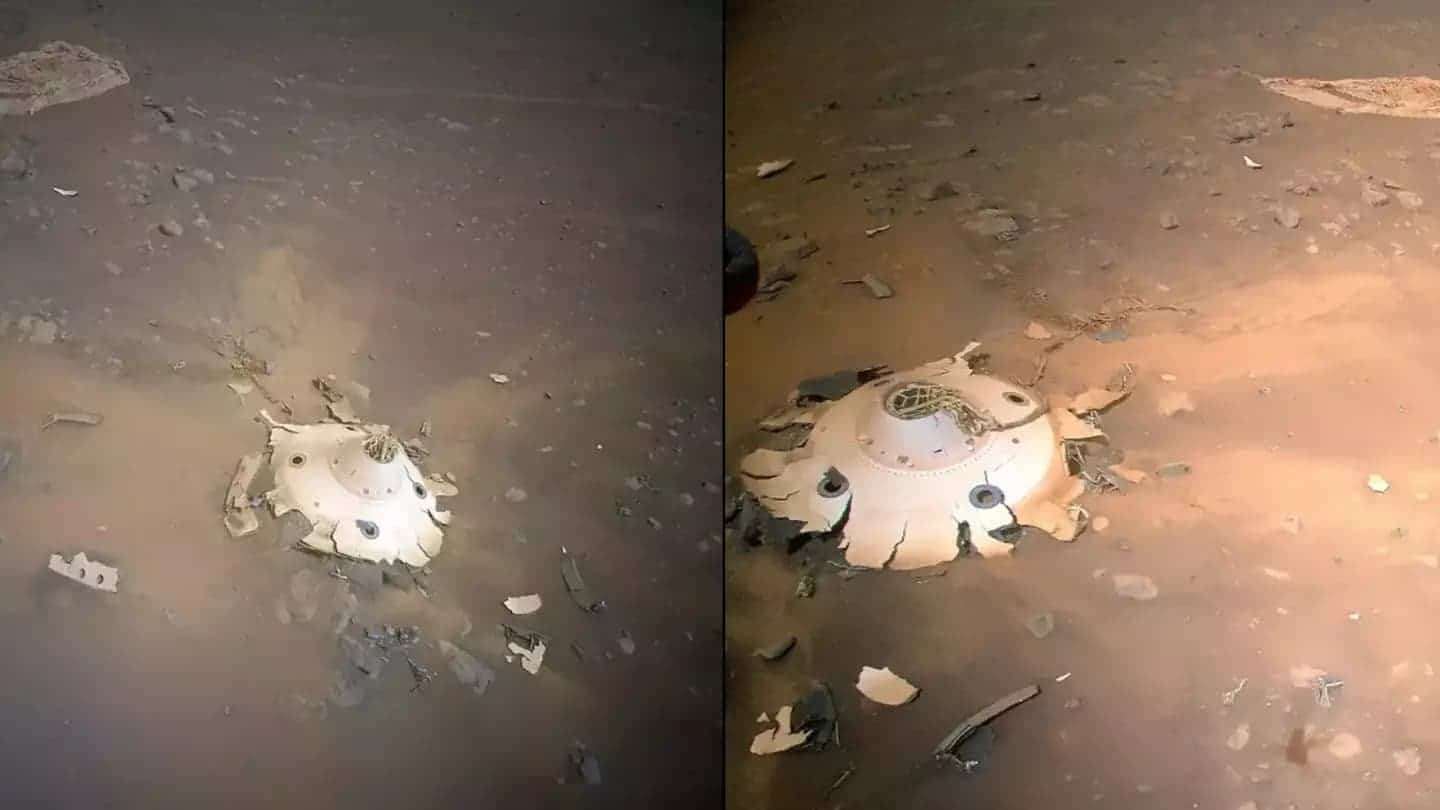
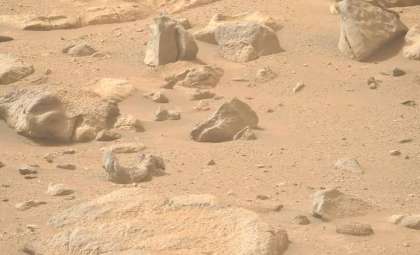
While surveying the Jezero Crater, Ingenuity photographed pieces of human-made equipment scattered across the barren Martian landscape. These remnants originate from the landing system used to deploy both Perseverance Rover and Ingenuity during their arrival in February 2021. Visible components include fragments of the skycrane apparatus that gently lowered the rover and parts of the parachute system that slowed its descent.
Captured in 2022 as Ingenuity explored regions beyond the Perseverance Rover’s reach, this scene caught the attention of Ian Clark, a parachute engineer on the Perseverance project. He described it as having a distinct “science fiction aura” and emphasized its value in offering invaluable engineering insights for forthcoming Mars endeavors.

Space Debris: The Invisible Price of Cosmic Advancement
The appearance of discarded hardware on Mars highlights the often overlooked repercussions of space missions. As we advance technologically, traces of our explorations remain on extraterrestrial surfaces. Ingenuity’s snapshots immortalize pieces of its own landing aids, embodying both achievement and the unresolved issue of unmanaged space clutter.
With space agencies ramping up their efforts to explore Mars, the problem of space debris grows more pressing. Our planet’s orbit already hosts over 2,000 operational satellites alongside countless smaller fragments, threatening operational spacecraft. Mars, once untouched, may face similar contamination from mission leftovers and obsolete materials.
Lessons for the Next Generation of Space Pioneers
The scattered remains prompt critical reflections on balancing exploration with planetary preservation. As we deploy more technology to Mars, strategies for managing space debris must become a priority.
Ingenuity’s finding underscores the necessity for responsible and sustainable space exploration. The question remains: will future explorers find Mars saturated with relics of early expeditions, or will preventive measures guard against accumulating space waste? These considerations bring to light the ethical dilemma of preserving alien worlds amidst human curiosity.
Preserving Mars: Ethical Responsibilities in Space Exploration
The debris found on Mars exemplifies humanity’s expanding imprint across the cosmos. Though currently small, these remnants prompt vital ethical debates. Ian Clark articulated the paradox: while the wreckage offers useful engineering knowledge for upcoming projects, it also spotlights the consequences of neglecting environmental stewardship in space.
As missions multiply toward Mars and beyond, we must ask ourselves: Will our legacy be one of scientific treasures or an ever-growing cadre of space junk threatening future exploration?
Balancing Exploration with Environmental Stewardship
The visuals provided by Ingenuity emphasize a growing challenge: How can humanity advance space exploration without harming the fragile environments we investigate? Mars could become an example of unintended harm caused by human presence if sustainable technologies and policies to address space pollution are not implemented.
Solutions may include initiatives for removing debris, developing reusable equipment, and enforcing space environmental regulations to minimize waste, ensuring clean and responsible exploration.
As we aim for Mars, the mission extends beyond innovation to encompass the ethical management of space debris, which is as vital as the scientific ambitions driving us forward.
Ultimately, the challenge lies in harmonizing discovery with conservation to protect Mars and other celestial bodies for generations yet to come.









0 comments
Sign in to Comment