
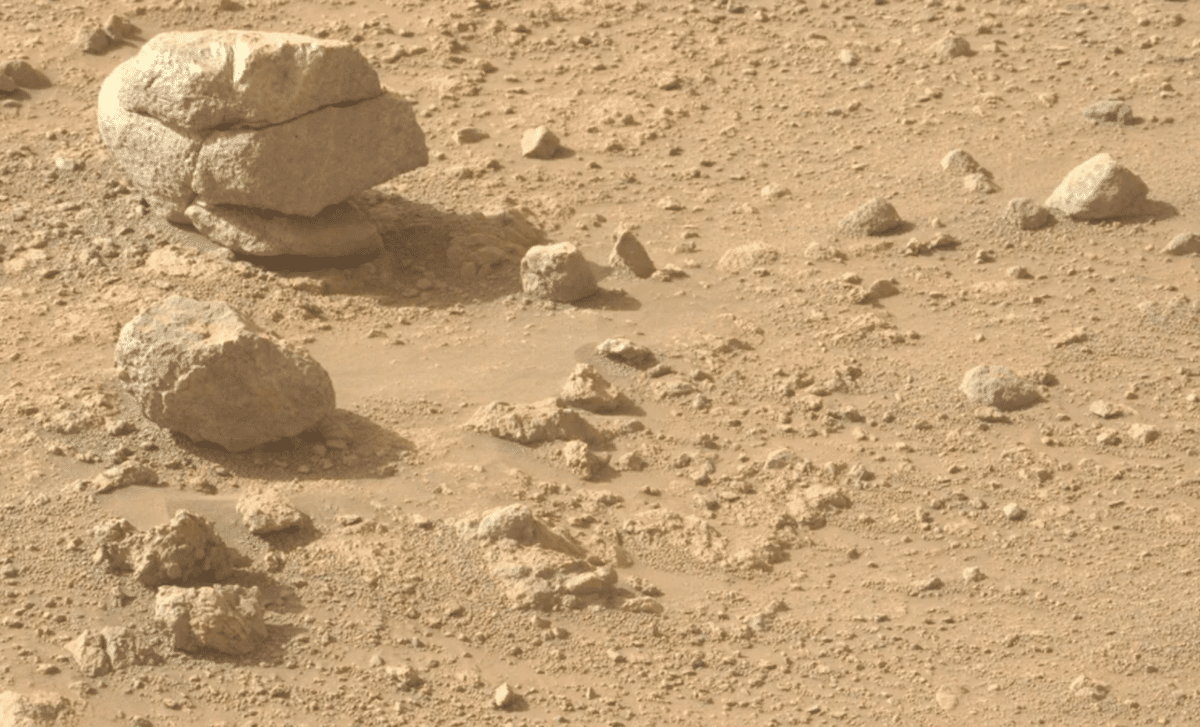
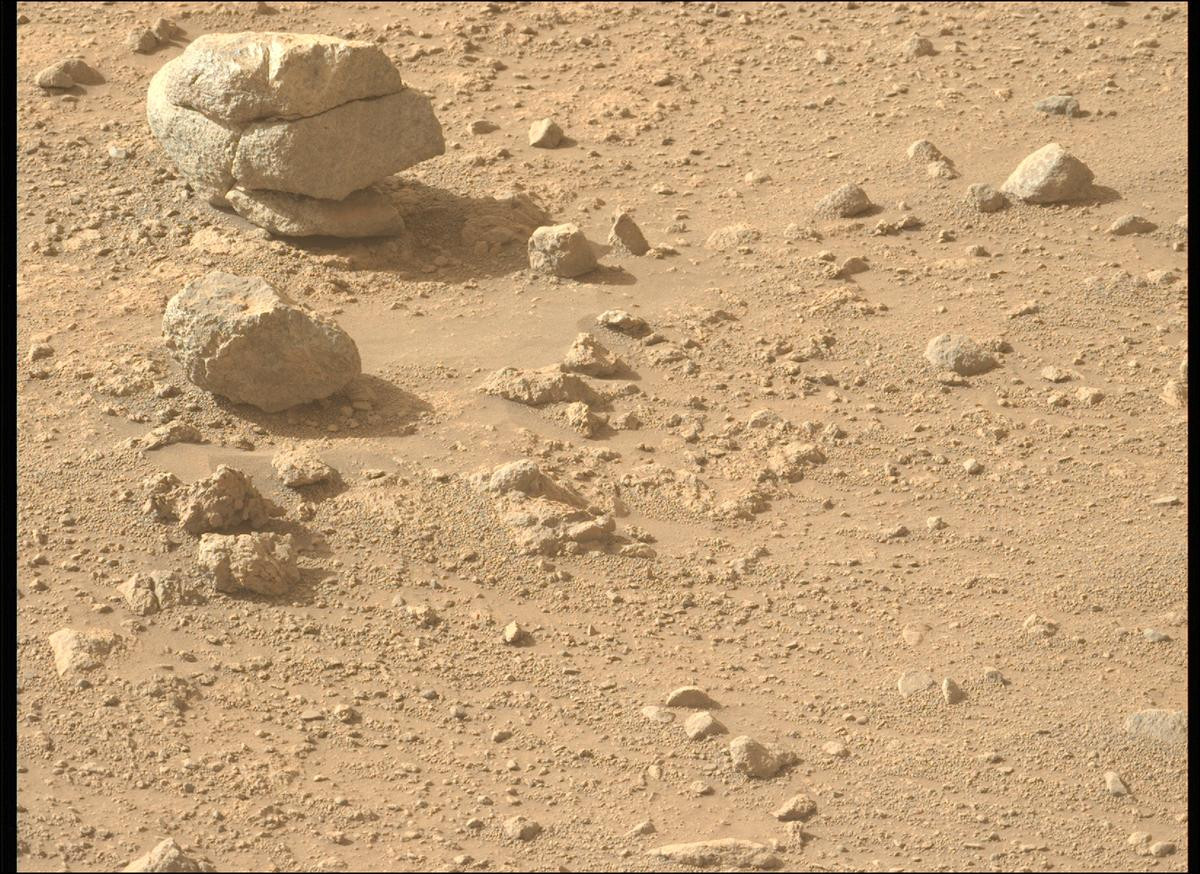
The Perseverance rover from NASA has captured images of an unusual rock formation on Mars that appears as though stones have been carefully piled one on top of another. Taken on May 13, 2026 (Sol 1859), this striking feature could help scientists unlock secrets about Mars’ geological evolution and surface-shaping processes. The rover’s Mastcam-Z camera acquired these high-resolution images, offering an in-depth look at the dusty Martian landscape.
Examining Perseverance’s Unusual Rock Structure
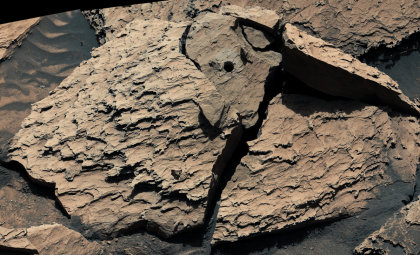
The formation resembles a deliberate stack of rocks, almost like a miniature tower, but its origin is natural rather than artificial. Unlike man-made cairns on Earth used for navigation or symbolism, this structure is believed to result from natural phenomena such as wind erosion, ancient water flows, or gradual fracturing of a single rock over millions of years. Positioned atop Perseverance’s mast, the Mastcam-Z system captured detailed angles highlighting the sharp contours and subtle stratification indicative of natural geological forces at work.
The tower-like impression comes from three distinct segments that might appear as separate stones balanced precariously. However, NASA experts think this effect is caused by one rock splitting and evolving in shape over time. Previous observations by the Curiosity rover have highlighted how powerful Martian winds continuously sculpt the planet’s surface, modifying and shifting rocks across plains and crater locations. These persistent winds, active for hundreds of millions of years, are capable of surprising even seasoned planetary geologists with the intricate forms they create.

Importance of This Geological Find
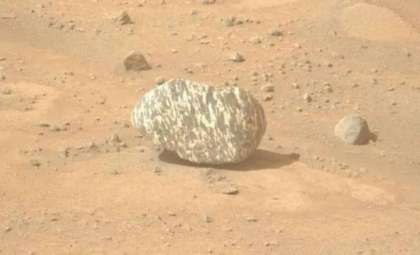
While Mars has revealed many distinctive rock formations, including spherical and banded varieties, this discovery enriches the catalog of remarkable geological features. Each unique formation offers important clues into Mars’ former environmental conditions, assisting researchers in piecing together eras where wind or water activity actively changed the surface. Unlike past images that fueled conspiracies—such as the Viking mission’s infamous “face on Mars” in 1976—this discovery clearly represents natural geological processes.
These structures also contribute valuable data for understanding Mars’ broader planetary development. Analyzing how rocks crack, erode, and arrange themselves enables scientists to infer historical wind velocities, climate variations, and surface materials. Perseverance’s ongoing investigations of these features will support models of Martian weathering, sediment dynamics, and potentially identify spots where traces of ancient microbial life could be preserved.
Scientific Perspectives on the Formation
Researchers at NASA reiterate that no human or robotic activity has influenced the stacking of these rocks. The extremely harsh Martian environment is hostile to humans, and Perseverance remains the only rover present in the vicinity. Thus, the rock assembly is purely the product of long-term natural geological forces. Data from both Curiosity and Perseverance missions demonstrate that wind and episodic flows of water suffice to create striking rock shapes that might look engineered but are entirely natural.
Studying such formations also helps predict challenges for future human exploration. Understanding how rocks endure erosion and how stable the terrain is will be crucial for selecting rover pathways, landing zones, and construction sites for habitats. Each unusual rock contributes to our understanding of Mars’ billions of years of evolution.
Revealing Mars’ Ancient Geological Stories
Every peculiar rock formation offers insights into the dynamic processes that have shaped Mars’ terrain. Structures that seem stacked or fractured reveal past episodes of wind and water action, providing scientific evidence to reconstruct ancient Martian climates. Such data is essential to understanding how Mars transformed from a wetter, more active world into today’s arid, dusty planet. Perseverance’s continuous recording of these sites ensures discoveries are documented with scientific rigor rather than speculative interpretations.
As NASA keeps transmitting images from Mars, formations like this will continue to inspire curiosity and research. Each rock layer and fissure tells a story about billions of years of planetary forces shaping the Red Planet’s history.
- Categories:
- Nasa







0 comments
Sign in to Comment