

Nearly 190 million years ago, long before Antarctica was encased in ice, a giant herbivorous dinosaur roamed the region. Its fossilized remains, entombed deep within ancient frozen rock, have now been thoroughly analyzed and classified as a newly identified species named Glacialisaurus hammeri.
This fossil discovery dates back several decades. A paleontology team led by William Hammer initially uncovered the bones during the early 1990s on Mount Kirkpatrick near the Beardmore Glacier. Due to the harsh Antarctic conditions, extracting the fossils required multiple strenuous seasons of chiseling and sawing through ice and stone. For many years, the specimens remained unclassified until researchers Nathan Smith and Diego Pol later examined them closely and added the species to the dinosaur lineage.
Recovering Fossils Amid Harsh Extremes
The remains of Glacialisaurus were embedded in solid rock at elevations exceeding 13,000 feet, presenting formidable challenges to the excavation crew. Removing the fossils demanded the use of jackhammers and rock saws in a grueling, painstaking effort.

“The fossils were painstakingly removed from the ice and rock,” explained Nathan Smith, a Postdoctoral Research Scientist at the Field Museum of Natural History, describing the tough work across two separate field seasons.
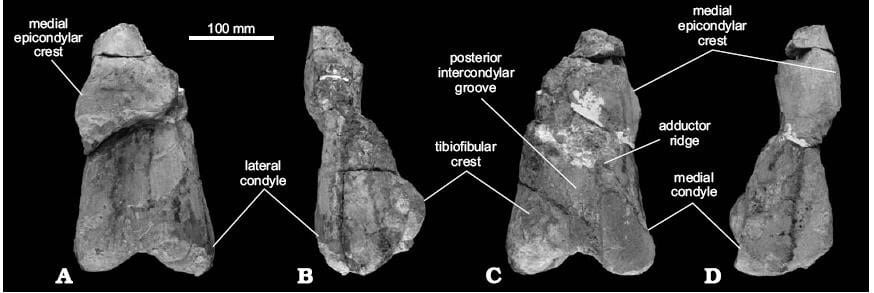
The fossilized remains were incomplete, consisting mainly of leg, foot, and ankle bones. However, these fragments displayed distinctive traits that warranted classification as a distinct genus and species. The formal description appeared in Acta Palaeontologica Polonica, marking a significant milestone for William Hammer, who oversaw the original excavation.
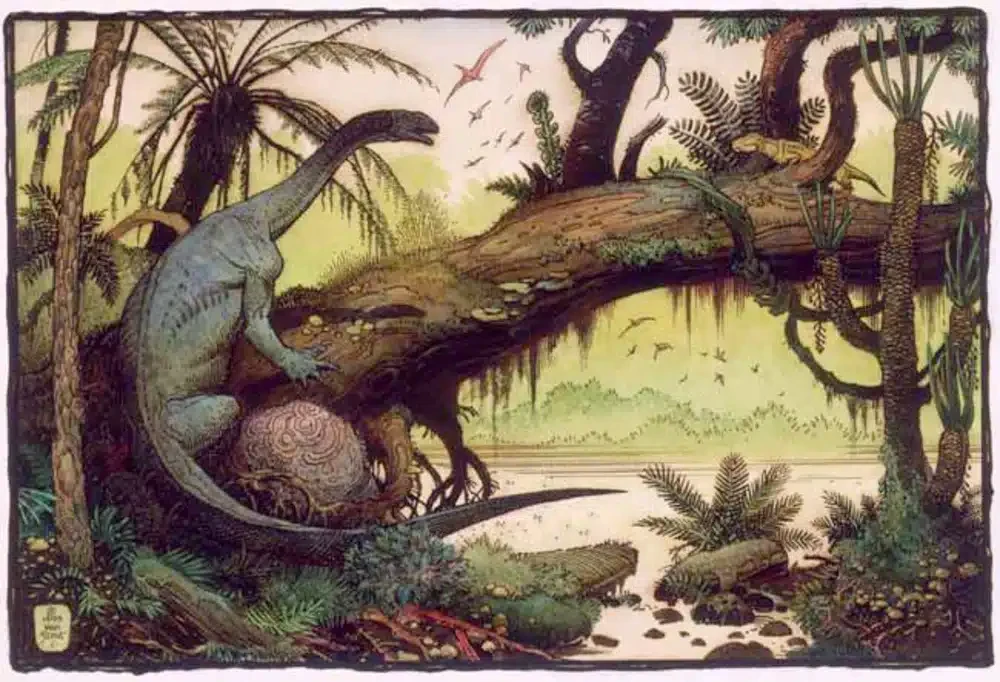
Characteristics of Glacialisaurus
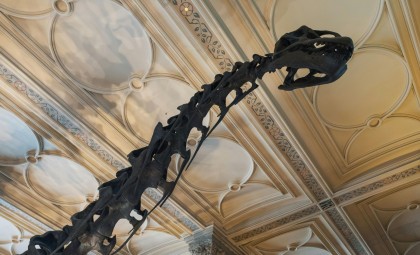
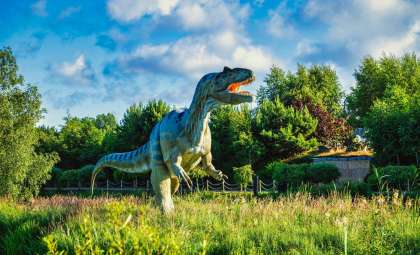
What kind of dinosaur is Glacialisaurus hammeri? It belonged to the sauropodomorph group, ancestors to the colossal herbivorous dinosaurs such as Apatosaurus and Diplodocus. This dinosaur likely measured around 20 to 25 feet in length and weighed between 4 and 6 tons, smaller than its gigantic successors.
“Throughout the evolution of sauropodomorphs, there appears to be a general trend of increasing body size, and Glacialisaurus would likely fit somewhere in the middle of this evolutionary trend,” explained Smith.
Given that sauropodomorphs evolved from bipedal herbivores into massive quadrupeds, Glacialisaurus provides critical insight into this transition. According to Smith and Diego Pol, it lived during an era of rapid diversification and expansion of early dinosaurs.
While the tail of Glacialisaurus is incomplete, it may have played a defensive role. Some relatives reportedly cracked their tails like whips, creating loud noises, potentially even supersonic sounds. Although this behavior remains unconfirmed for Glacialisaurus, it hints at the intriguing adaptations this dinosaur might have possessed.
Unveiling a Diverse Jurassic Ecosystem Beneath Antarctic Ice
The site yielded more than just Glacialisaurus bones. Researchers also discovered remains of the theropod Cryolophosaurus ellioti, fragments suggestive of a sauropod, a pterosaur wing bone, and even a tooth from a tritylodont, a mammal-like reptile with uncertain classification.
These findings indicate Jurassic Antarctica hosted a dynamic ecosystem capable of sustaining a variety of species, despite the cold and seasonal climate. As reported by Live Science, the coexistence of both primitive and advanced dinosaurs implies overlapping evolutionary stages. Smith commented:
“Either these groups were directly competing with each other for resources, or they somehow occupied slightly different niches within the environment.”
The discovery of Glacialisaurus and its contemporaries highlights the extensive geographical range of early dinosaurs, even in unexpected environments.
- Categories:
- News



0 comments
Sign in to Comment