
A publicly accessible database containing login credentials for some of the most widely used online services was recently uncovered, highlighting the extensive impact of malware-driven credential theft worldwide. The exposed data was available until late 2025 before it was finally removed.
Early investigations revealed an enormous collection of usernames, passwords, and platform-specific login URLs harvested from victims globally. Unlike a conventional hack, this breach resulted from malware quietly extracting login information directly from infected devices. No passwords were encrypted or protected by access controls.
Millions of Credentials from Gmail, Facebook, and Financial Sites Compromised
Cybersecurity analyst Jeremiah Fowler discovered the leak in late 2025 and documented his findings in an exhaustive report published by ExpressVPN. The unsecured cloud database contained more than 149 million distinct login entries, comprising roughly 96 gigabytes of data. Gmail accounts made up the largest portion with approximately 48 million exposed credentials, followed by Facebook (17 million), Instagram (6.5 million), and Netflix (3.4 million).

The exposed dataset's distribution across email services includes:
Email Providers Represented in the Leak
- 48 million – Gmail
- 4 million – Yahoo Mail
- 1.5 million – Outlook
- 900,000 – iCloud
- 1.4 million – .edu domains
Additional Platform Credentials Exposed
- 17 million – Facebook
- 6.5 million – Instagram
- 3.4 million – Netflix
- 780,000 – TikTok
- 100,000 – OnlyFans
- 420,000 – Binance
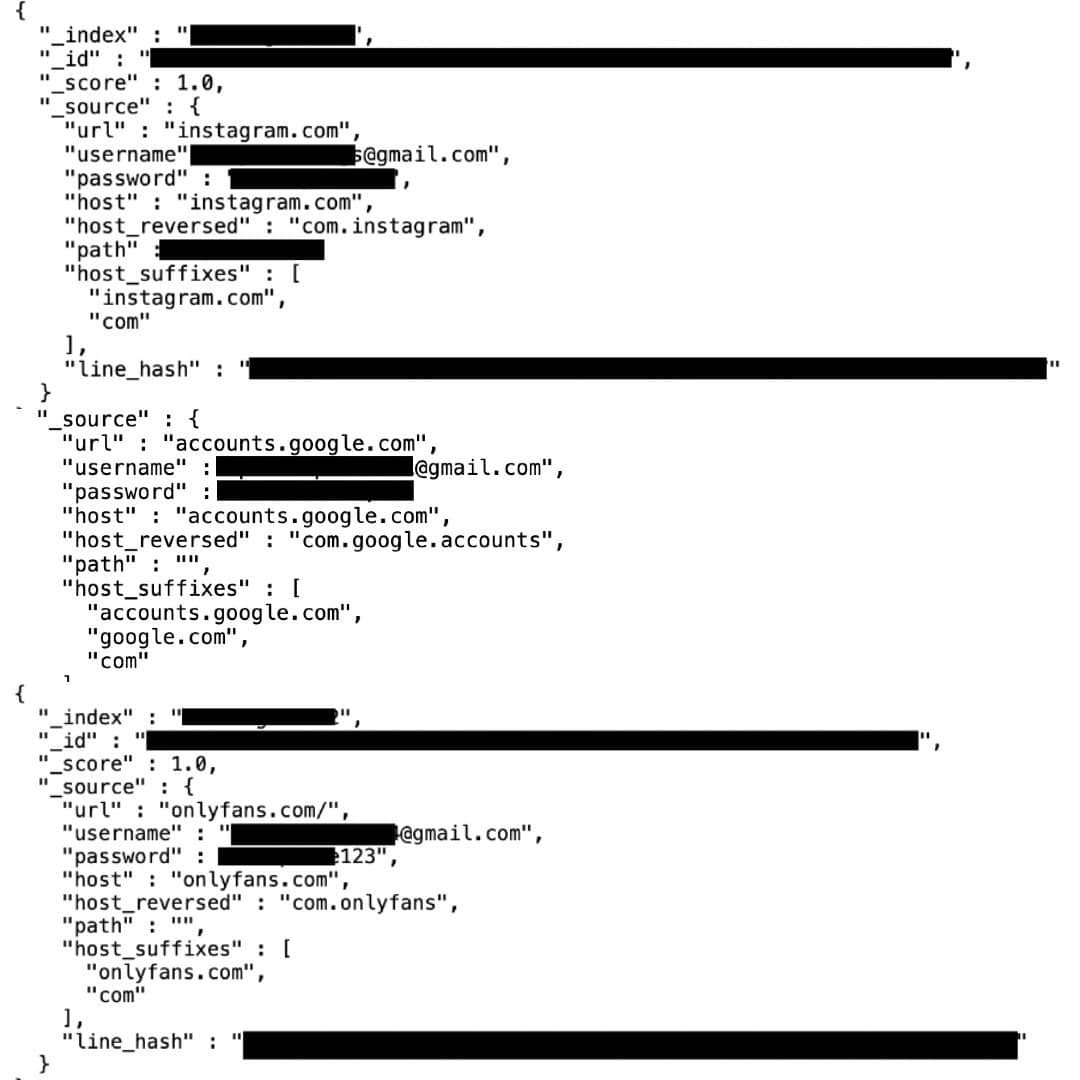
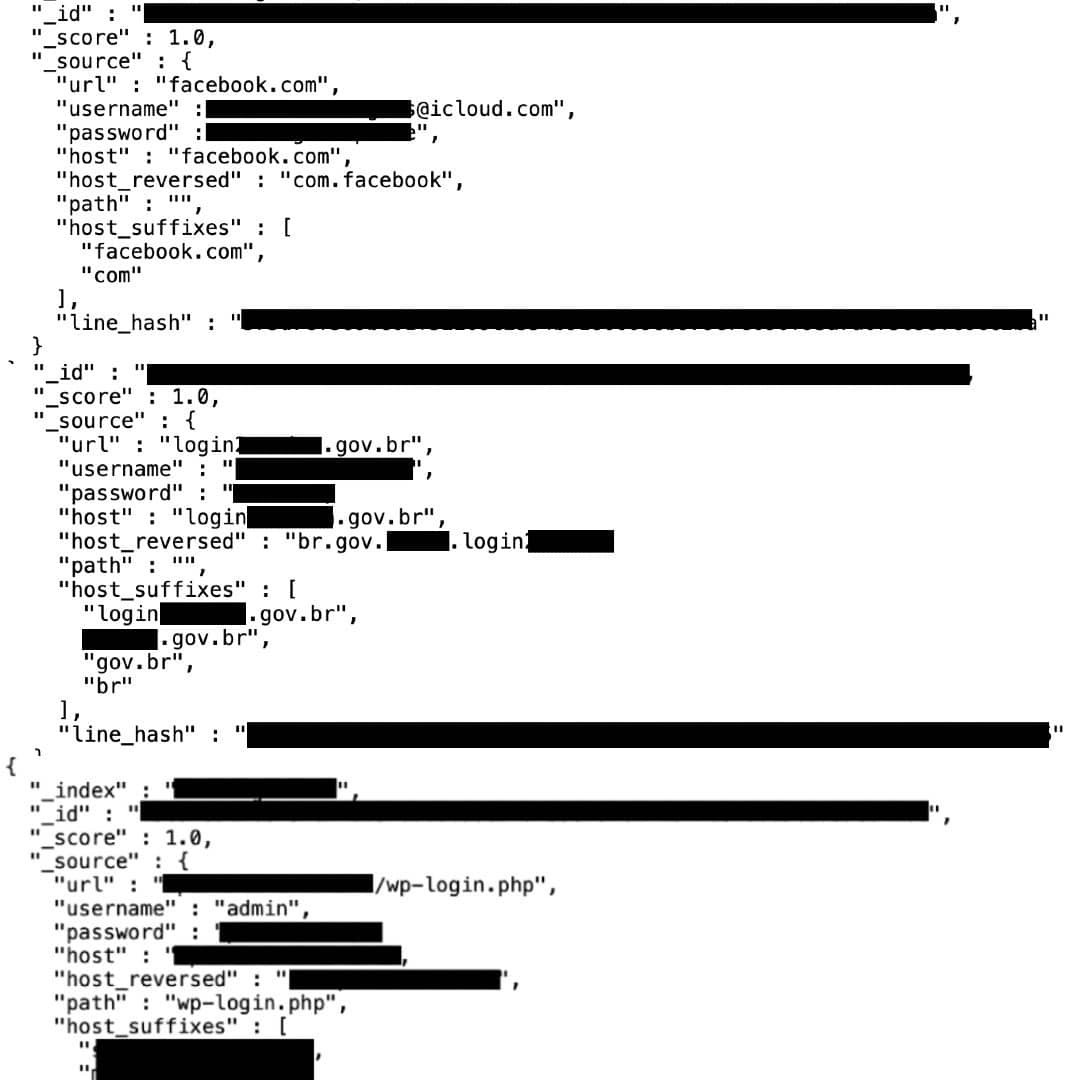
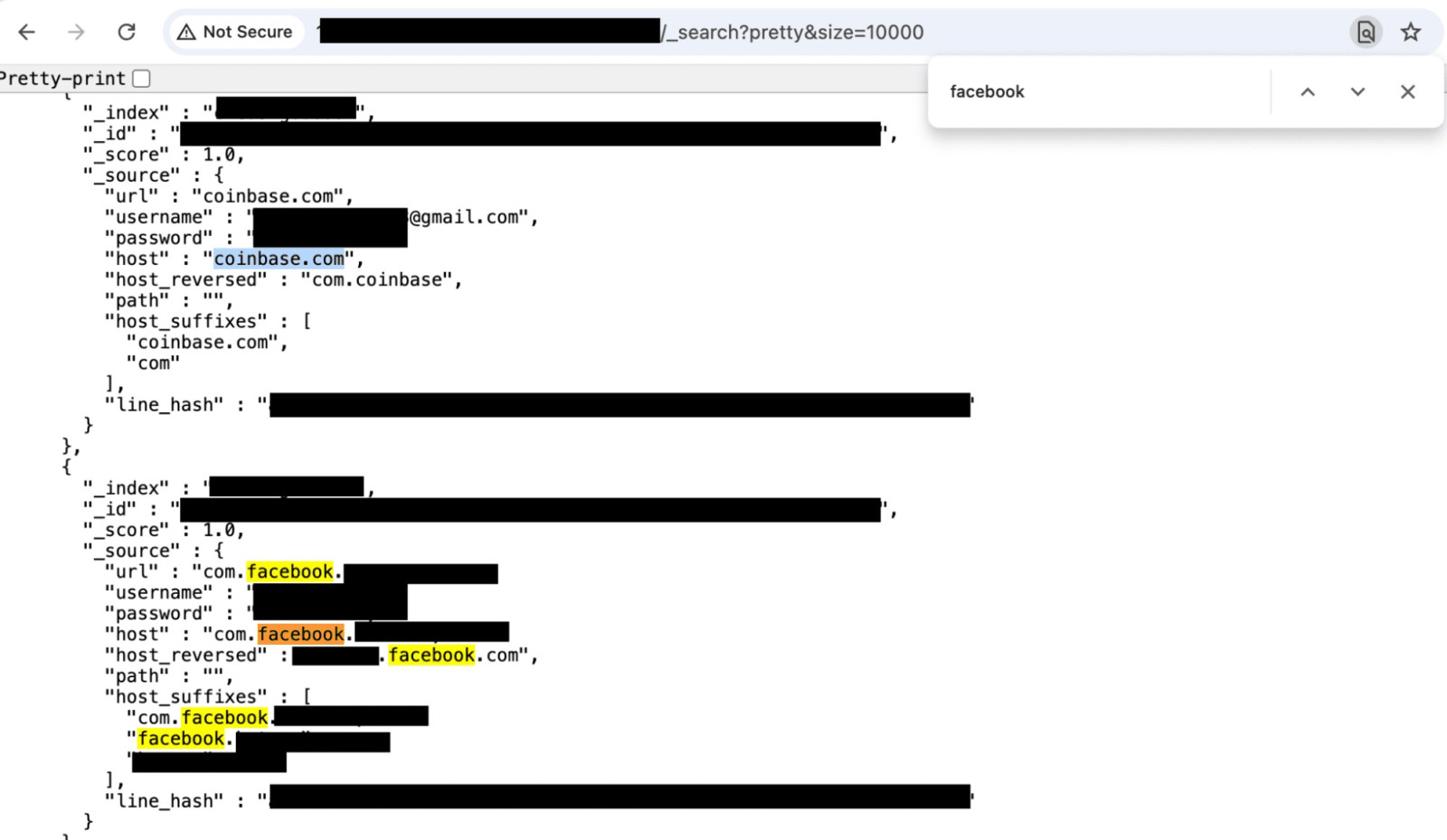
The Independent later verified that these credentials were collected using malware classified as infostealers. Other affected platforms featured Yahoo Mail, Outlook, TikTok, OnlyFans, Binance, and several government-affiliated email services. Fowler reviewed screenshots exposing login URLs, host details, and admin panel information in thousands of records.
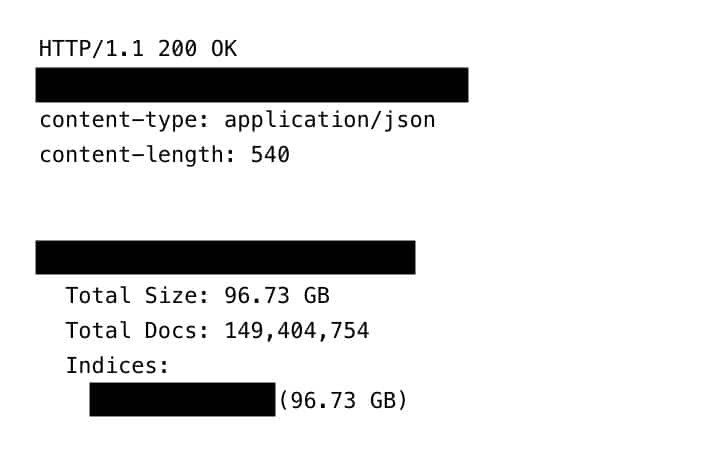
The data was available in an unencrypted state, with no password protection or user identification. The leak's format enabled anyone with the link to browse millions of compromised accounts through a standard web browser interface.
The Breach Originated from Malware, Not Server Hacks
Rather than stemming from an attack on corporate infrastructure, the breach originated from infostealer malware installed on individuals' devices, quietly capturing login credentials over time. Delivery of this malware generally happens via malicious email attachments, fake updates, tampered browser extensions, and misleading advertisements.
In a Daily Mail report, Fowler highlighted the presence of unique metadata in the records that is uncommon in earlier leaks, such as individualized hash IDs and reverse-formatted hostnames to ease deduplication and indexing.
Despite notifying the hosting provider, Fowler revealed that it took nearly a month and multiple abuse reports before the database was taken down. The hosting service declined to disclose details about the account holder responsible for the server.
Implications for Gmail, Government Email, and Cascade Risks
With Gmail representing about one-third of the compromised accounts, concerns have risen given its role as a key identity provider across numerous platforms. A Google representative, cited by Daily Mail, validated the dataset’s authenticity but stressed that Gmail’s own infrastructure was not compromised.
“This collection consists of logs generated by ‘infostealer’ malware gathering credentials from infected devices, accumulated over time,” the statement read.
Google confirmed it employs automated security measures that lock accounts and prompt password changes when compromised credentials are detected. The company remains vigilant in monitoring such threats across its ecosystem.
The data cache also contained credentials linked to .gov domains. While many government accounts may not possess elevated privileges, they can still be exploited through targeted phishing attacks or to gain access to more secure systems. Security experts warn that these leaks pose a significant and ongoing threat to public sector cyberspace.
Unsecured Data Highlights Persistent Security Challenges
This incident demonstrates that simply updating passwords is insufficient if devices stay infected. Fowler urged anyone possibly affected to immediately update all devices, install reputable antivirus software, scrutinize permissions, and monitor for suspicious account activity. His ExpressVPN blog also cited statistics showing that only 66% of U.S. adults used antivirus tools by 2025.
While password managers help avoid credential reuse and basic keylogging, they cannot fully protect against malware that captures clipboard contents or active browser sessions. Cybersecurity professionals recommend enabling multi-factor authentication (MFA) and regularly auditing login activity for irregularities.
The discovery of this massive leak has intensified demands for stricter reporting protocols among infrastructure providers. Despite multiple warnings, the hosting company delayed action, and the exact duration of exposure remains unknown. No one has claimed responsibility for the leaked database.
- Categories:
- News












0 comments
Sign in to Comment