
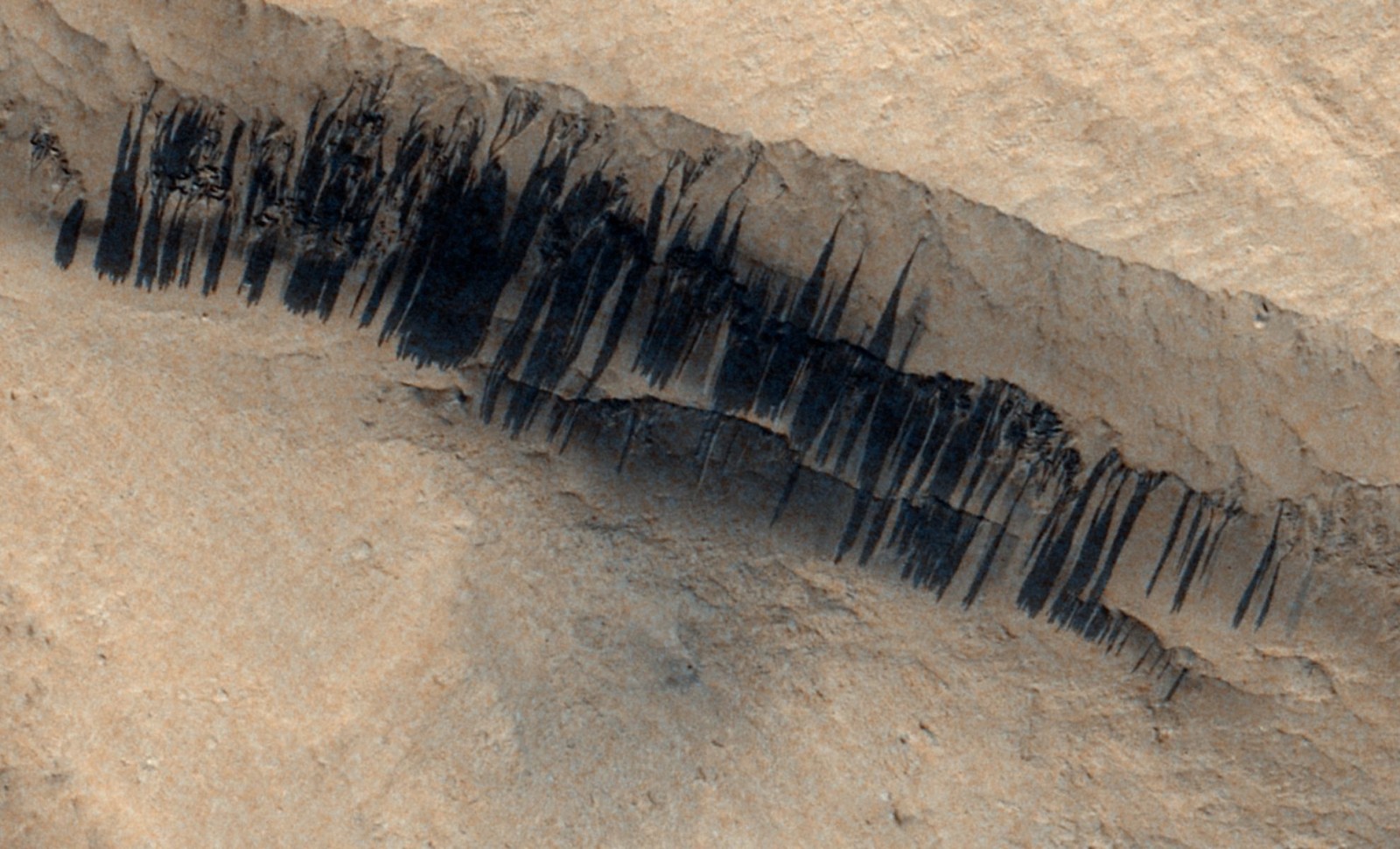
An uncommon meteoroid collision on Mars has generated a striking series of dust avalanches, documented by the European Space Agency’s ExoMars Trace Gas Orbiter. The impact site near Apollinaris Mons left visible marks on the Martian surface, offering fresh perspectives on the planet’s geological activity.
While impacts from meteorites occasionally disturb Mars’ terrain, this event is a rare example where the surface alterations are clearly observable. Such incidents, though infrequent, provide crucial insights alongside the more typical effects of wind-driven surface changes.
Impact Event Causes Noticeable Surface Features
On Christmas Eve 2023, the orbiter’s Color and Stereo Surface Imaging System (CaSSIS) captured vivid images showing dust avalanches triggered by a meteoroid strike near Apollinaris Mons. The shockwave from the collision released dust down the slopes, producing more than one hundred fresh streaks on the surface.

The European Space Agency noted that such clear surface changes from impacts are unusual. The images also reveal a faint array of impact craters that pinpoint the exact location of the meteoroid’s arrival.
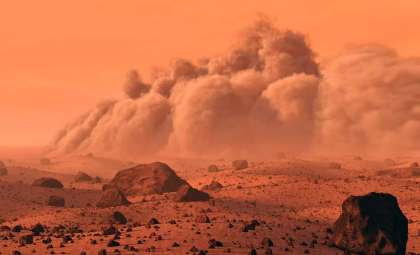
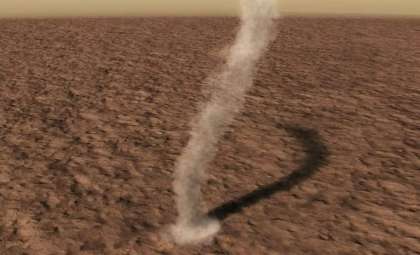
This event contrasts with the prevalent dust movement on Mars, typically driven by atmospheric winds. Whereas most streaks arise from seasonal wind fluctuations, this meteoroid-induced disturbance highlights the occasional role of extraterrestrial influences in sculpting the Red Planet’s landscape.
Dominant Role of Wind in Shaping Martian Surface
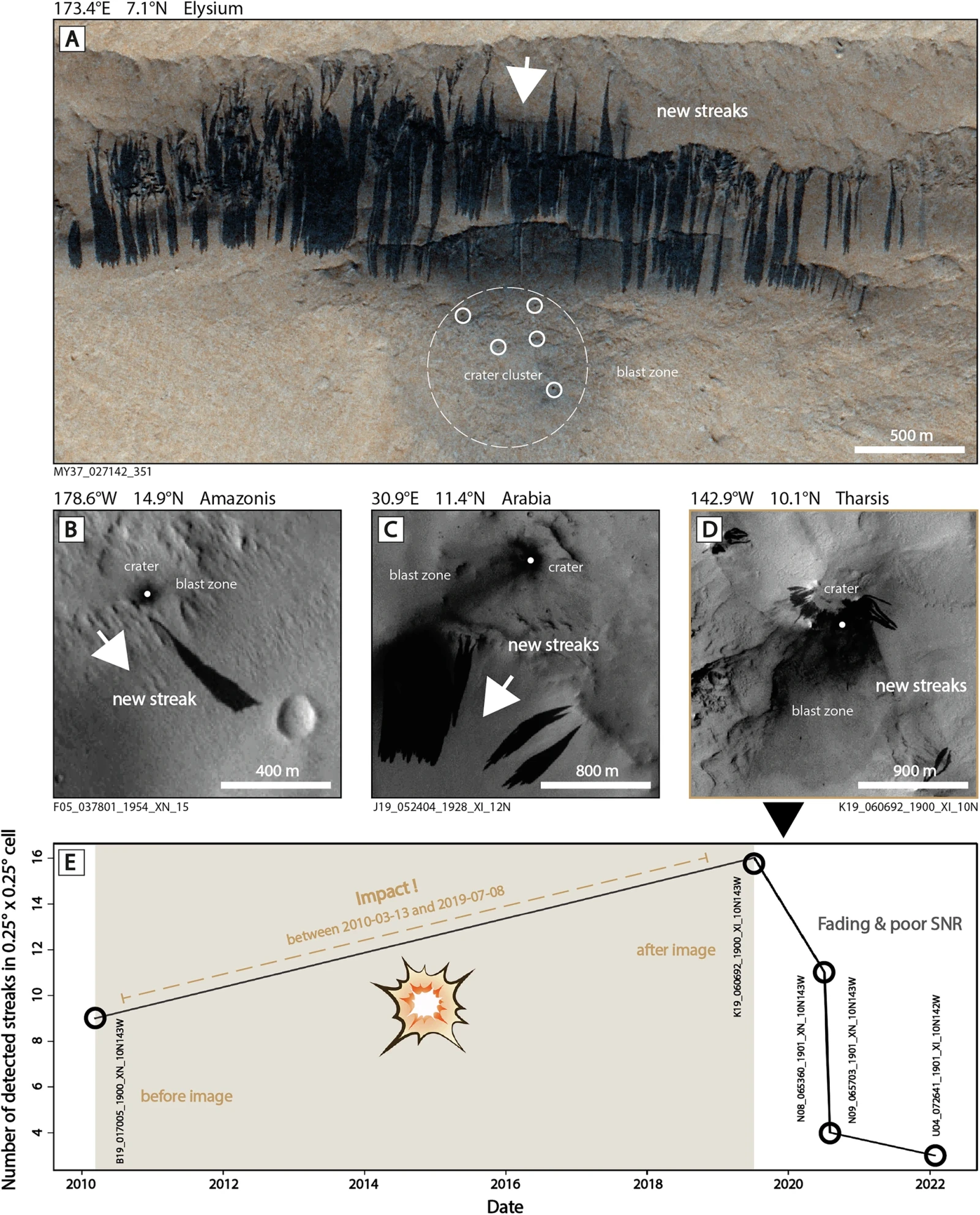
Although meteoroid impacts like this one occur sporadically, they do not primarily cause the streak features observed on Mars. A recent paper published in Nature Communications, led by Valentin Bickel from the University of Bern, found that over 99% of these streaks result from interactions between wind and dust. By examining millions of streak images from NASA’s Mars Reconnaissance Orbiter, Bickel’s team determined that dust sliding off steep inclines in response to seasonal winds is the primary cause.
The study estimates that fewer than one in a thousand streaks are the product of meteoroid impacts.
“Dust, wind and sand dynamics appear to be the main seasonal drivers of slope streak formation. Meteoroid impacts and quakes seem to be locally distinct, yet globally relatively insignificant drivers,” said Bickel.
ExoMars Orbiter Sheds Light on Martian Geological Dynamics
The ExoMars Trace Gas Orbiter plays an essential role in tracking changes in Mars’ atmosphere and terrain, generating valuable data for scientists. High-resolution images such as those depicting dust avalanches near Apollinaris Mons assist researchers in deciphering the planet’s evolving environment. Beyond studying current atmospheric conditions, the mission seeks to reveal aspects of Mars’ geological history and its potential for supporting life.
ESA’s project scientist Colin Wilson highlights the importance of ongoing observation for understanding Mars’ active processes.
“These observations could lead to a better understanding of what happens on Mars today. Obtaining long-term, continuous and global-scale observations that reveal a dynamic Mars is a key objective of present and future orbiters.”
- Categories:
- Space




0 comments
Sign in to Comment